What is sealcoating?
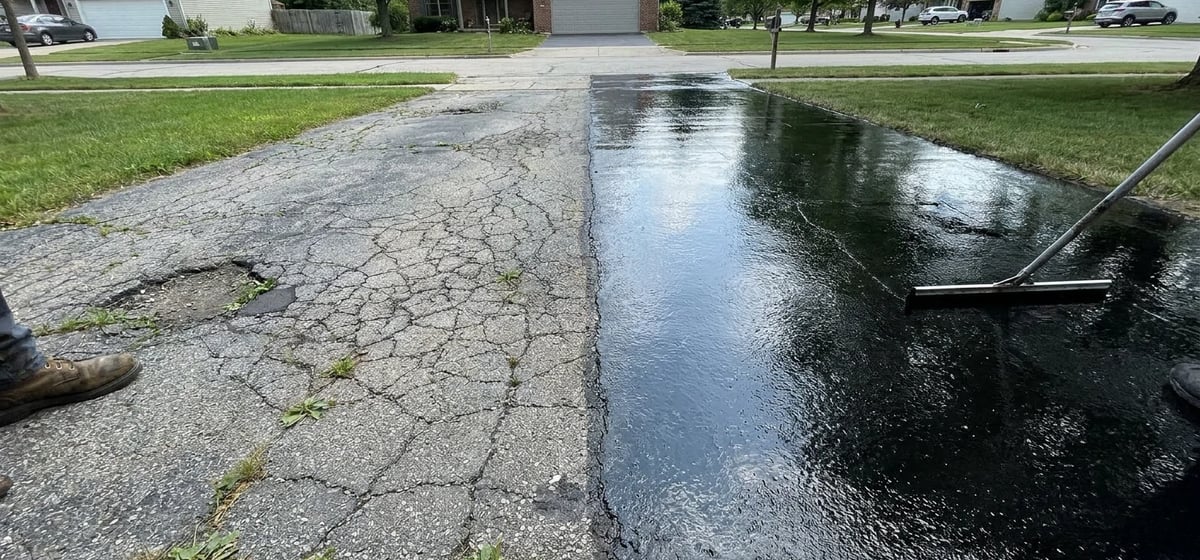
Sealcoating is a protective liquid layer you spread over an asphalt driveway. It shields the rough surface from water, motor oil, and harsh sunlight. Think of it like a heavy duty sunscreen for your pavement that keeps it looking new.
Over time, fresh black asphalt turns dull gray and becomes very brittle. The hot sun dries out the flexible binding oils that hold the crushed rocks together. Sealcoating replaces those surface oils and restores that rich, deep black color to your home entrance.
This liquid coating also fills in tiny surface cracks before they grow larger. That stops rainwater from seeping down into the dirt base layers of your driveway. Keeping water out is the absolute best way to make your pavement last for decades.
Why your driveway needs it
Your driveway takes a beating from the weather and your vehicles every single day. Leaving the asphalt bare exposes it to everyday elements that slowly destroy it. A good sealcoat protects your pavement from three main threats that cause expensive damage over time.
- Water damage: If rain gets into small cracks, it washes away the dirt beneath the driveway. That leads to sinking spots and large potholes.
- Ice expansion: Water expands when it freezes into solid ice. That freezing action pushes tiny cracks wide open and destroys the asphalt from the inside out.
- Chemical spills: Motor oil and gas leaks dissolve the tar glue that holds the driveway together. Sealcoat acts as a barrier against these fluids.
Stopping these problems early saves you a lot of money in the long run. Replacing an entire driveway costs thousands of dollars, while sealing it only costs a few hundred. You can easily budget for this maintenance just like you do for painting your house.
Costs and timeline
Most homeowners pay between $150 and $400 to sealcoat a standard two car driveway. Prices always vary based on your local area and the exact size of your parking pad. You will pay more if the crew needs to patch large cracks first.
You should plan to sealcoat your driveway every two to three years. If you apply it too often, the thick layers will eventually peel and flake off. If you wait too long, the asphalt will crumble and you will need a total replacement.
Always wait at least six months before sealing a brand new driveway. Fresh asphalt needs plenty of time to cure and release its internal oils. You can learn more about managing your outdoor spaces in our guide to Exterior: Siding, Garage & Decks.
Hiring a pro versus doing it yourself
You can buy heavy buckets of sealcoat at the hardware store and apply it yourself. However, it is a very messy job that easily ruins your clothes and shoes. You also have to power wash and clean the driveway perfectly before you start.
Many homeowners prefer to hire a local company for this specific task. Professionals use heavy duty sprayers or large squeegees to get a perfectly even coat. Check out our guide on DIY vs. Hiring a Pro to help you decide what fits your skills.
A reputable contractor will always give you a written estimate before starting work. They will also carefully tape off your concrete sidewalks and garage floor to prevent ugly stains. Once they finish, you must keep cars off the driveway for at least 24 to 48 hours.