What Is a Sediment Trap
A sediment trap is a small fitting connected to your gas Plumbing right before the line enters your appliance. It catches dirt and moisture so they do not clog up your furnace or water heater. You will usually see it as a straight piece of pipe that caps off at the bottom to form a catch basin. The term comes from the Latin word sedimentum meaning a settling or sinking down. Plumbers started requiring these traps in the mid 1900s as natural gas became a common heating fuel in American homes.
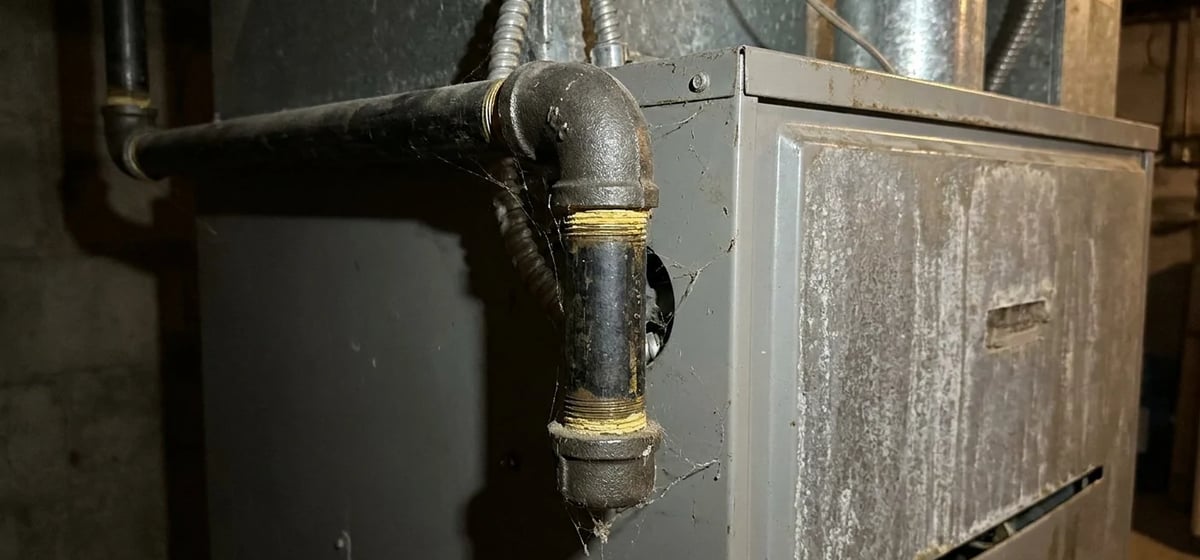
A trap is made of standard black iron pipe fittings. The main part is the tee fitting. The gas enters the tee and is forced to change direction by 90 degrees. Because dirt and water are heavier than natural gas, they cannot make that sharp turn. Gravity pulls the heavy debris straight down into a short length of capped pipe. This capped section is the actual trap, often called a drip leg.
Why It Matters to You
Natural gas is not perfectly clean. As it travels through miles of underground city pipes to reach your house, it picks up tiny bits of rust, dirt, and moisture. Utility companies doing repair work can also introduce soil or metal shavings into the system. If this debris gets inside your gas appliances, it causes major problems.
Modern gas valves are very delicate. Even a tiny piece of rust can prevent a valve from closing all the way. This leads to dangerous gas leaks or a system that refuses to shut off. Dirt can also clog the tiny burner nozzles, creating an uneven flame or causing the appliance to stop working entirely. A sediment trap acts like a simple filter without any moving parts. This basic metal fitting protects the expensive equipment in your HVAC & Climate Control system. It prevents costly breakdowns and keeps your family safe from gas malfunctions.
Where You Run Into It
You will find sediment traps on the gas lines connected to most major gas appliances in your home. Look near the bottom of your gas water heater. You will also see them right outside the metal cabinet of your gas furnace or gas boiler. If you have a tankless water heater, it will have one too.
The trap must be installed as close to the appliance inlet as possible. It is always placed after the main gas shutoff valve. This way, a plumber can turn off the gas before opening the trap to clean it out. You usually will not see sediment traps on decorative gas fireplaces, gas stoves, or gas clothes dryers. The national gas codes generally exempt these specific appliances because they are less prone to debris issues, though local rules can sometimes differ.
What to Watch For
When you buy a house, a missing or incorrectly installed sediment trap is a very common flag on a home inspection report. Many older homes were built before these traps were required. Sometimes, a previous homeowner or a handyman will install a new water heater and skip the trap because they do not know the current building codes. You can learn more about handling inspection surprises in the Buying a Home guide.
A trap is useless if the gas flows straight through the top of the tee without changing direction. If the gas does not turn 90 degrees, the trap cannot do its job. The dirt will just blow right past the catch basin and into your appliance.
If your home inspector or plumber tells you that you need to add or fix a sediment trap, it is a fast job for a professional. You can expect to pay 150 to 300 dollars for a licensed pro to install one. Costs vary based on your local labor rates and how easy it is to reach the pipe. Once installed, a sediment trap rarely needs attention. A professional will check and empty it during your annual furnace or water heater tune-up.