What It Is
A septic tank is a large underground box that holds and treats all the wastewater from your house. If you live outside city limits, you're probably using one instead of a city sewer connection. Every time you flush a toilet, take a shower, or run the washing machine, the water goes down your pipes and into this tank. Most tanks are made of heavy concrete, tough fiberglass, or thick plastic. A typical home tank holds 1,000 to 1,500 gallons of water.
Inside the tank, gravity does the hard work. Heavy solid waste sinks to the bottom and forms a layer of sludge. Lighter waste like cooking grease and soap scum floats to the top and forms a scum layer. The watery liquid in the middle flows out into a drain field in your yard. The soil naturally filters this water before it reaches the groundwater.
Why It Matters to You
A septic tank is a major part of your home Plumbing system. If you ignore it, you'll face massive repair bills and a terrible mess inside your house. When the sludge layer at the bottom gets too thick, it leaves no room for the liquid. The solids can then clog your pipes or ruin your drain field.
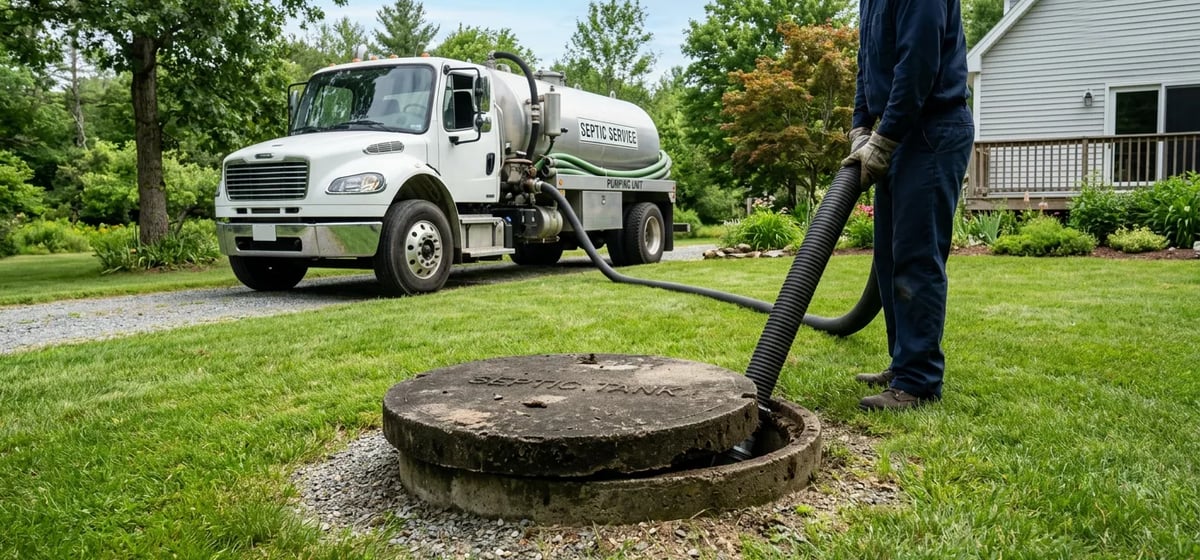
You need to hire a professional vacuum truck to pump out the tank every three to five years. Pumping usually costs 300 to 600 dollars, though prices vary depending on where you live and the size of your tank. Replacing a failed septic system is a huge project that can cost 5,000 to 15,000 dollars or more. Regular pumping is the absolute cheapest way to protect your property. If you're buying a home, always pay for a separate septic inspection. A standard home inspector won't open the tank to check the sludge levels.
What to Watch For
Your septic system will usually give you warning signs before it completely fails. Pay close attention to how your drains behave and what your yard looks like. Catching a problem early can save you thousands of dollars.
Watch out for these common red flags:
- Toilets that flush very slowly or make a gurgling sound.
- Dirty water backing up into your bathtubs or floor drains.
- Foul sewage smells inside your house or out in the yard. See Smells & Odors for more help.
- Patches of grass over the drain field that are suddenly very green and lush compared to the rest of the lawn.
- Puddles of dark, smelly standing water near the tank area.
If you notice any of these signs, you should call a septic professional immediately. Don't wait to see if the problem goes away on its own.
How to Protect Your System
You control exactly what goes into your septic tank. Good daily habits will help the natural bacteria inside the tank break down the solid waste efficiently.
Be careful with your water usage. Space out your laundry loads over the entire week so you don't flood the tank with too much water on a single day. Don't pour grease, oil, paint, or harsh cleaning chemicals down your sink drains. These substances kill the helpful bacteria your tank absolutely needs to work. Finally, never park cars or build heavy sheds over your tank or drain field. Heavy weight can easily crush the underground pipes and ruin your Landscaping, Drainage & Outdoor space.