What is a SEER Rating?
SEER stands for Seasonal Energy Efficiency Ratio. Think of it like the miles per gallon rating for your car, but for your air conditioner. It tells you exactly how much cooling your system gives you for every dollar of electricity it uses over a typical summer season. A higher number means the unit is more efficient and costs less to run.
The US government created this standard back in the 1980s. They wanted to help consumers compare different appliances easily. The acronym comes from a specific math formula. Testers take the total cooling output during a normal cooling season and divide it by the total electrical energy input. Today, you'll see this rating on central air conditioners and heat pumps.
Why It Matters for Your Wallet
Your air conditioner uses a massive amount of electricity. When you look at HVAC & Climate Control systems, the efficiency directly impacts your monthly utility bill. Upgrading from an old 10 SEER unit to a new 16 SEER unit can cut your cooling costs by a large amount.
However, higher efficiency units cost more upfront. A basic 14 or 15 SEER air conditioner might cost between 3,500 and 5,500 dollars to install. A high efficiency 18 to 20 SEER system can easily cost 6,000 to 10,000 dollars or more. These ranges vary widely based on your location and the size of your home. You have to do a little math to see if the monthly energy savings will pay back that higher upfront cost over the lifespan of the unit.
How Systems Reach Higher Ratings
Basic units with lower ratings usually have a single stage compressor. This means the air conditioner only has one speed. It's either completely on and blasting cold air, or it's completely off. This takes a lot of electricity because the system has to surge with power every time it starts up.
Units with higher ratings use two stage or variable speed compressors. These systems can run at lower speeds for a longer time. They don't turn on and off as often. This saves a massive amount of electricity. It also keeps your house much more comfortable because it removes humidity from the air constantly. If you hate feeling sticky indoors during July, a variable speed unit with a high rating will solve that problem.
Keep in mind that a high rating only works if you maintain the system. If you buy a top of the line 20 SEER unit but never change the air filter, it will work twice as hard. A dirty system acts like a cheap, inefficient system. You have to keep the outdoor coils clean and replace your indoor filters regularly to actually get the energy savings you paid for.
Where You'll See It
You'll run into this term in a few common places as a homeowner.
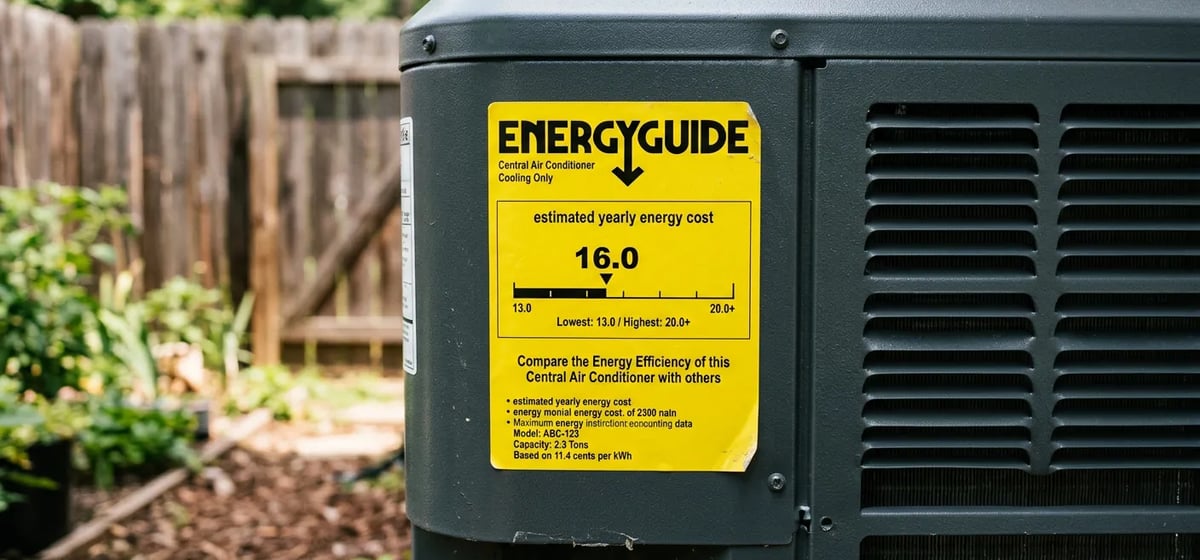
- Yellow Energy Guide labels: Every new unit has a bright yellow sticker showing the rating and estimated yearly operating cost.
- Contractor bids: When you need a new system, companies will give you quotes with different options. They usually offer a good, better, and best tier based on these numbers.
- Home inspections: If you are Buying a Home, the inspector will usually note the age and efficiency rating of the current air conditioner in their report.
What to Watch For
The federal government sets minimum efficiency rules for new air conditioners. You can't legally buy or install a unit that falls below these limits. In the northern United States, the minimum is currently 14. In the southern United States, the minimum is 15. This is because southern homes rely on cooling much more heavily.
You should also know that the industry recently updated how they test these systems. You might hear contractors talk about SEER2. This is just a stricter, more accurate version of the old test. It better reflects real world conditions like ductwork airflow limits. A 14.3 SEER2 rating is roughly equal to an old 15 SEER rating.
Don't feel pressured to buy the highest number available when Hiring Contractors & What Things Cost. The jump from 14 to 16 saves you a lot of money. The jump from 18 to 22 costs thousands of dollars more upfront, but only saves a few extra dollars a month. Talk to your installer about the sweet spot for your specific climate and budget.