What It Is
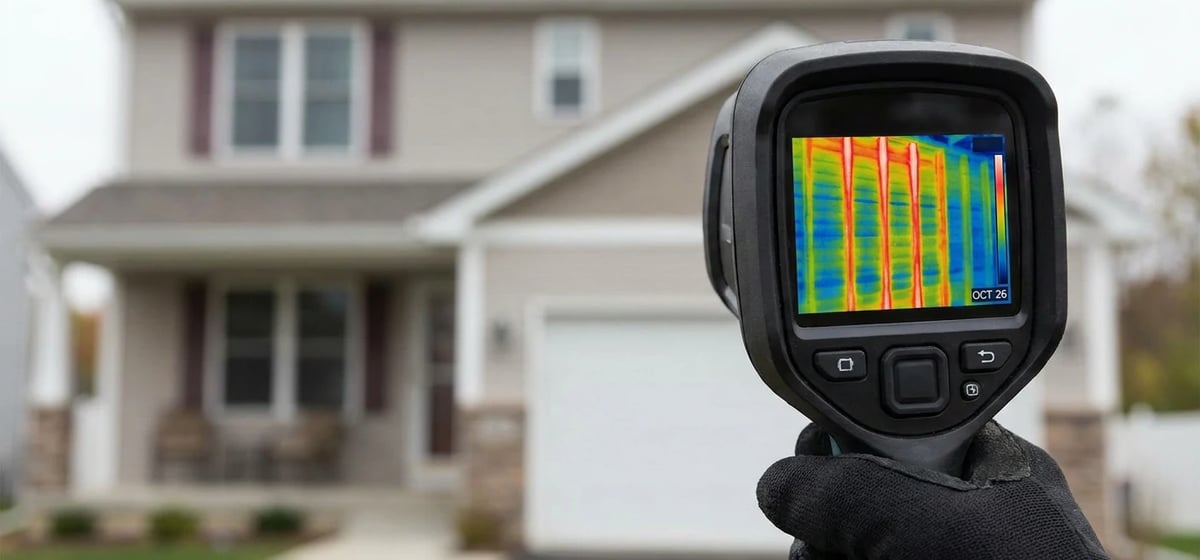
Your home relies on insulation to keep warm air inside during the winter and hot air outside during the summer. But insulation doesn't cover everything. The wooden studs inside your walls connect the inside drywall to the outside siding. Wood conducts heat much better than fluffy fiberglass insulation does. This creates a bridge for heat to travel across. We call this thermal bridging.
Heat always wants to move from a warm place to a cold place. During winter, your expensive heated air bypasses your wall insulation by traveling right through the wood studs. The same thing happens with metal fasteners, steel beams, and concrete slabs. When heat finds these easy paths, your HVAC system has to work much harder to keep your rooms comfortable.
Why It Matters To You
Thermal bridging quietly costs you money and comfort. Since heat escapes through the studs, your heating system runs longer. This drives up your monthly utility bills. But the problems go beyond just energy costs.
This hidden heat loss also creates cold spots on your walls and ceilings. You might notice these spots when you sit near an outside wall on a freezing day. Worse, warm indoor air hitting a cold spot can cause condensation. Moisture builds up on your drywall or inside the wall cavity. Over time, this trapped moisture can grow mold or rot the wood frame of your house.
Where You Find It In Your Home
Thermal bridging happens anywhere a solid material breaks through your insulation layer. You will find it in several common areas of a typical house.
- Wall studs: Standard wood framing makes up about 25 percent of a typical wall. That means one quarter of your wall has zero insulation value.
- Window frames: Old aluminum window frames are terrible for energy efficiency. Metal is a fantastic heat conductor. This is why modern windows and doors use materials that block heat transfer.
- Attic hatches: The pull down stairs in your hallway often lack insulation. Heat rises and escapes right through the thin wood panel.
- Concrete balconies: A concrete slab that extends from the inside floor to an outside patio acts like a massive cooling fin. It pulls cold weather straight into your foundation and structure.
How To Fix It And What It Costs
You can't remove the wood studs holding up your house. Instead, builders use a strategy called a thermal break. A thermal break is a layer of insulation that stops the heat before it crosses the bridge.
If you are building a new house or doing a major siding replacement, contractors can wrap the outside of your house in rigid foam boards. This continuous insulation covers the wood studs completely. Adding rigid foam during a siding job usually costs 1,500 to 3,000 dollars depending on the size of your home. Keep in mind that material and labor ranges vary based on where you live.
For a cheaper fix, you can tackle small thermal bridges yourself. You can buy an insulated tent for your attic hatch for 30 to 60 dollars. You can also use expanding foam spray around pipes and wires that poke through your exterior walls. Stopping these small leaks will make a big difference in how your home feels.