What a thermocouple is and why it matters
A thermocouple is a small safety device. You will find it sitting right next to the pilot light on older gas water heaters and gas furnaces. Its main job is to keep your home safe from gas leaks. Gas leaks are extremely dangerous. A steady buildup of natural gas can lead to an explosion or serious health risks. The thermocouple acts as a backup safety measure. It doesn't need batteries or outside power to work. It relies completely on the heat of the flame. This means it will still protect your home even during a power outage.
If the pilot light goes out, the thermocouple senses the drop in heat. It then tells the gas valve to shut off. This stops unburned gas from filling your basement or utility closet.
How this little sensor works
The word blends thermo for heat and couple for the joining of two items. German physicist Thomas Johann Seebeck discovered the science behind it in 1821. He found that joining two different metals creates a tiny electrical current when they get hot.
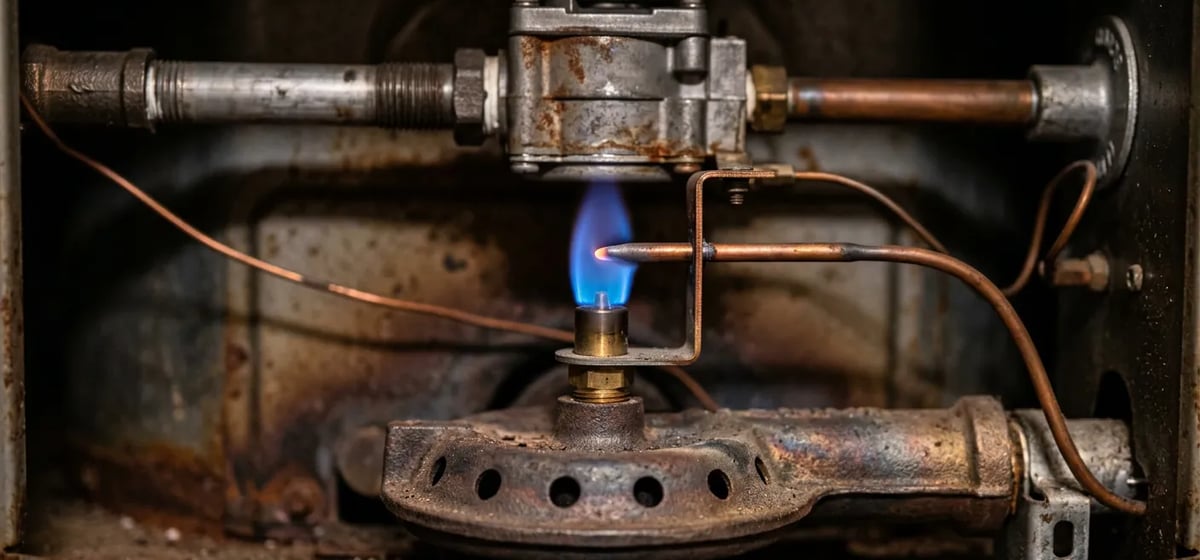
Inside your water heater or furnace, the pilot flame heats the tip of the thermocouple. This heat creates a small voltage. That voltage travels down a copper wire to the main gas valve. As long as the voltage flows, the gas valve stays open. If a strong draft blows out the pilot light, the metal tip cools down fast. The electrical current stops. Without that current, a spring inside the valve snaps shut. The gas flow stops completely.
Where you run into it
You usually only think about a thermocouple when you lose hot water or heat. If you wake up to a cold shower, your water heater pilot light might be out. You might go to the basement and try to relight it. When you relight a pilot, the instructions usually tell you to hold the gas valve knob down for one minute. This gives the thermocouple time to heat up. Once it gets hot enough, it generates the electricity needed to keep the valve open. If you let go and the flame dies immediately, the sensor is not doing its job. It's either coated in too much soot to feel the heat, or it is completely broken.
You will find these sensors on older gas appliances. Newer appliances often use electronic ignitions instead of standing pilot lights. But if you have an older system, this part is a very common point of failure. You can learn more about how your furnace and water heater work in our HVAC & Climate Control and Plumbing guides.
What to watch for
A bad thermocouple gives off a few clear warning signs.
- The pilot light won't stay lit after you hold the button down for a full minute.
- The tip of the sensor looks bent, broken, or heavily covered in black soot.
- Your gas furnace blows cold air because the main burners never ignite.
Replacement costs and fixing it
Thermocouples are cheap. You can buy a universal replacement part at any hardware store for 15 to 25 dollars. The part looks like a thick copper wire with a metal probe on one end and a threaded nut on the other. When you buy a replacement, make sure you get the right length. They usually come in sizes ranging from 18 to 36 inches. You can gently bend the copper tubing to fit your specific appliance. Just be careful not to kink the line.
The real cost comes from labor if you hire a professional. A plumber or HVAC technician will usually charge 150 to 250 dollars to come to your house and swap it out. Keep in mind that prices vary based on where you live and how busy the pros are. Replacing it yourself is a very common beginner project. You just need a wrench to unscrew the old line and attach the new one. If you want to tackle this job, read our guide on DIY vs. Hiring a Pro to see if you feel comfortable working around gas lines.