What tons of cooling means
When you hear an air conditioning expert talk about tons, they are not talking about how much the equipment weighs. Tons of cooling is a measurement of how much heat an air conditioner can remove from your home in one hour. A single ton of cooling means the system can remove 12,000 British Thermal Units of heat per hour. Most average homes need a unit sized between 2 and 5 tons to stay cool.
The term actually dates back to the 1800s before mechanical air conditioning existed. People bought giant blocks of ice to cool their buildings. Engineers measured cooling power by how much ice was needed per day to keep a space cold. One ton of cooling equals the amount of heat it takes to melt 2000 pounds of ice in a single day.
Why the right size matters
Getting the right tons of cooling for your home is incredibly important. You might think bigger is always better, but that is a costly mistake. If your system has too many tons of cooling for your square footage, it will cool the house down too fast and shut off. This is called short cycling.
Short cycling prevents the air conditioner from running long enough to pull humidity out of the air. Your house will feel cold but clammy. The constant starting and stopping also wears out the parts faster and drives up your electric bill.
On the other hand, if your system does not have enough tons of cooling, it will run all day and never reach the temperature you set on the thermostat. This also wastes energy and puts a massive strain on the equipment. A professional will perform a calculation to find the perfect size for your specific home layout.
How to find your system size
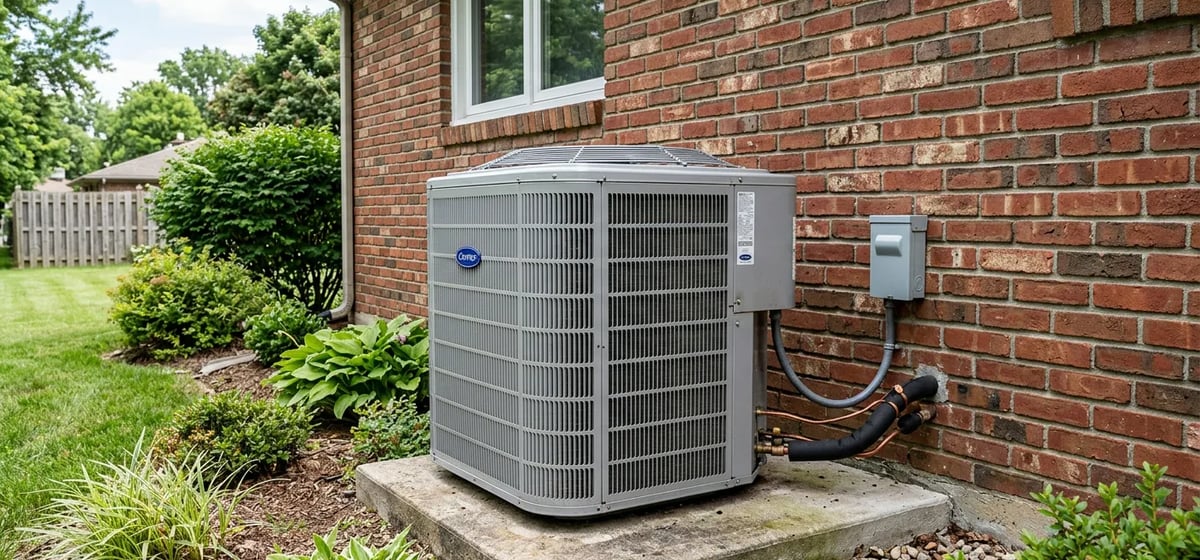
You can usually figure out how many tons of cooling your current system has by looking at the outdoor unit. Find the manufacturer sticker on the side of the metal cabinet. Look for the model number, not the serial number. You are looking for a two digit number that is divisible by 6 or 12.
- A 12 in the model number means 1 ton.
- A 24 in the model number means 2 tons.
- A 30 in the model number means 2.5 tons.
- A 36 in the model number means 3 tons.
- A 48 in the model number means 4 tons.
If you cannot find the sticker or it has worn off, you can ask a technician during your next routine maintenance visit. You can read more about maintaining these systems in our HVAC & Climate Control guide.
What affects the tonnage calculation
Square footage is the biggest factor in deciding how many tons of cooling your home needs, but it is not the only one. A contractor uses a complex formula called a Manual J calculation to find the exact number. This formula looks at many details about your house.
- The climate where you live and how hot your summers get.
- The number of windows in your home and which direction they face.
- The quality and thickness of the insulation in your walls and attic.
- The height of your ceilings, since tall ceilings mean more air to cool.
- The amount of shade your house gets from nearby trees.
If you add an extension to your house or finish your basement, you are adding more air space. Your current air conditioner might not have enough tons of cooling to handle the extra room. You might need to upgrade to a larger unit or install a separate mini split system for the new space.
What replacement costs
When it is time to replace your air conditioner, the tons of cooling will heavily influence the price. A larger home requires a larger unit, which costs more to buy and install. The exact price depends on your location, the brand you choose, and the efficiency rating of the equipment. Keep in mind that these ranges vary based on local labor rates.
For a basic central air conditioning replacement, you can expect to pay around $3,000 to $4,500 for a 2 ton unit. A 3 ton unit typically costs between $4,000 and $6,000 to install. If you have a large home that needs a 5 ton unit, the price can easily range from $6,000 to $9,000 or more. If you need to replace your ductwork or furnace at the same time, the project will cost thousands more. You can learn more about managing these large projects in our Hiring Contractors & What Things Cost guide.