What Is a Top Plate?
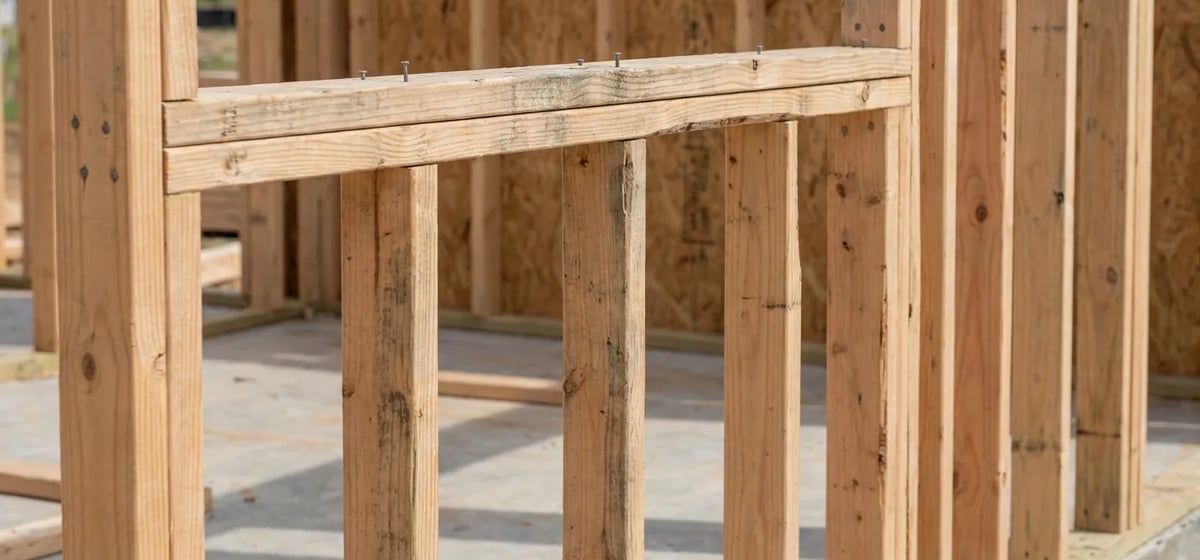
If you look at the skeleton of a house, you see vertical boards called studs. The top plate is the horizontal board that caps these studs. It runs along the very top of a framed wall. The studs nail directly into it from below. Carpenters call flat horizontal framing members plates based on the Old French word plate. The word top was added to separate it from the bottom sill plate of a wall. In most homes, builders make this piece out of standard 2 by 4 or 2 by 6 lumber.
Most modern homes actually use a double top plate. This means builders stack two horizontal boards on top of each other. They do this to add extra strength. The double layer also helps tie intersecting walls together at the corners of a room. The top board overlaps the bottom board where two walls meet, locking the whole structure in place.
Why It Matters for Your Home
A top plate does a lot of heavy lifting. It performs three main jobs for your house:
- It supports the roof. The plate transfers the massive weight of your roof or the second floor down into the vertical wall studs.
- It keeps the walls straight. Without a solid piece of wood across the top, the individual wall studs could twist or bow out of place.
- It provides a nailing surface. When builders install the ceiling, they need solid wood to attach the drywall. The top plate gives them that solid edge along the top of every room.
Those studs then carry the weight down to the ground. You can read more about how your home supports weight in our guide to Foundation & Structure.
When You Might Deal With It
You rarely see this piece of wood because it hides behind your drywall. But you will definitely run into it if you do major renovations. If you want to add a new ceiling light, an electrician has to drill a hole through the top plate to drop the wire down the wall. If you add a new bathroom upstairs, a plumber might need to run pipes through it. Check out our Electrical guide for more on how wires travel through your home.
You also have to think about this framing member when you want to remove an interior wall. If the top plate supports floor joists or roof trusses, that wall is load bearing. You can't just tear it down. You have to hire a structural engineer to design a new support beam.
What to Watch Out For
Because this piece of wood sits right below the roof, it's vulnerable to water damage. If your roof leaks, water can travel down the rafters and soak the top plate. Over time, the wet wood will rot. Termites and carpenter ants also love damp wood. If they find their way into your attic, they might start eating the top plate first.
Drilling is another big risk. Plumbers and electricians sometimes drill holes that are too large. Building codes say you can't drill a hole larger than half the width of the board. If you cut out too much wood, the plate loses its strength.
Fixing a damaged top plate isn't a simple weekend project. A contractor has to build a temporary wall to hold up the roof while they replace the rotten wood. Repairing a small section of a load bearing wall top plate usually costs 800 to 2,500 dollars. Keep in mind that ranges vary widely depending on your local labor rates, the cost of materials, and how much drywall they have to remove and patch.