What is a vapor barrier?
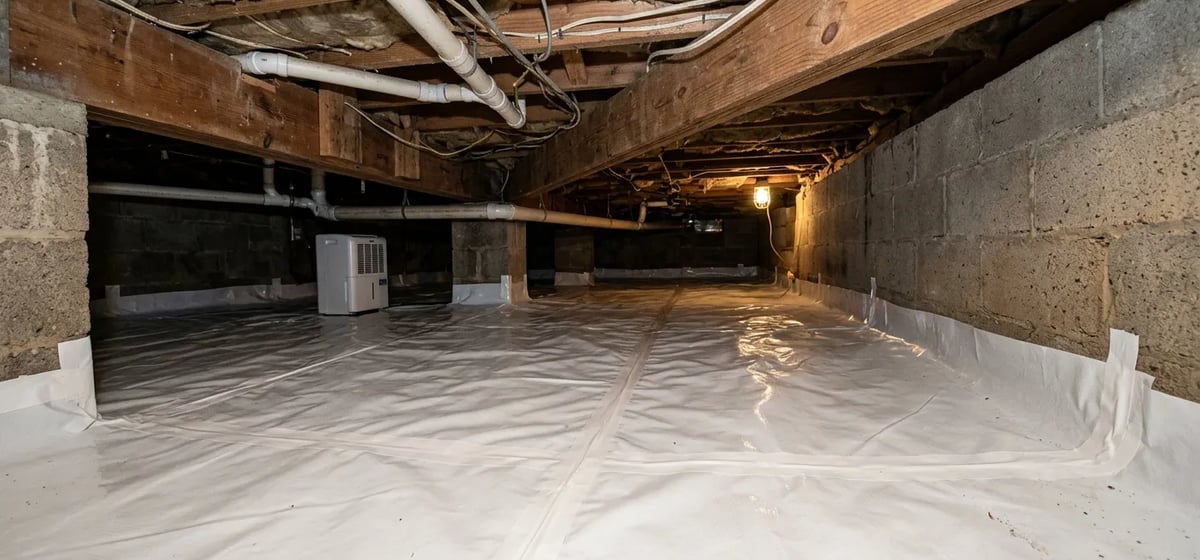
A vapor barrier is a thick plastic sheet used to keep moisture out of your home. You'll often see it laid over the dirt in a crawlspace or placed behind drywall. It stops ground water or humid air from rotting your wood framing. Builders use these sheets to block water vapor from moving through walls, ceilings, and floors. In most homes, this barrier is made of polyethylene plastic. The plastic comes in different thicknesses. Contractors measure this thickness in mils. A standard crawlspace barrier is usually 6 to 10 mils thick. Heavy duty barriers can be up to 20 mils thick. The thicker the plastic, the better it stops moisture and resists tearing. It acts like a raincoat for your house, keeping the inside dry no matter what happens outside.
Why it matters to you
Moisture is the enemy of a healthy house. When damp air gets into your wood framing, it causes major problems over time. Wood rot weakens the bones of your house and leads to expensive repairs. Mold grows fast in dark, damp spaces and can make your family sick. A good vapor barrier stops this moisture in its tracks. It keeps the humidity low inside your walls and floors. This actually makes your home easier to heat and cool. Dry air takes less energy to condition than damp air, so a good barrier lowers your utility bills. It also keeps bugs away because many pests, like termites and carpenter ants, love damp wood. If you notice a musty smell in your house, you might have a moisture problem. You can learn more about finding the source in our guide to Smells & Odors.
Where you will find it
You'll run into vapor barriers in a few common places around your property. The most obvious spot is the crawlspace. If your home sits on dirt, a thick sheet of plastic should cover that dirt completely. This protects your Foundation & Structure from ground moisture evaporating upward. You'll also find vapor barriers in basements, usually tucked behind the finished walls. In colder climates, builders put a vapor barrier inside the exterior walls just behind the drywall. You can read more about wall layers in our guide to Interior: Paint, Drywall & Trim. Bathrooms and showers also use special waterproof barriers behind the tile to stop leaks from ruining the wood studs. Even laminate flooring needs a thin foam vapor barrier underneath to protect the planks from concrete moisture.
What to watch out for
Vapor barriers only work if they're completely intact. Over time, plastic can tear or break down. If you or a plumber crawl under your house to fix a pipe, you might accidentally rip the plastic with your knees. When checking your crawlspace, look for a few common problems:
- Exposed patches of dirt where the plastic has shifted or torn.
- Puddles of water sitting on top of the plastic sheet.
- Seam tape that is peeling away where two sheets connect.
A bad installation can trap moisture inside your walls instead of keeping it out.
Costs to repair or replace
Fixing a torn vapor barrier is usually an easy and cheap project. You can buy a roll of thick plastic and special seam tape at the hardware store for 50 to 100 dollars. Hiring a professional to install a brand new vapor barrier in an average crawlspace costs between 1,200 to 3,000 dollars. Prices depend on the size of your home and how hard it is to move around under the house. Remember that local labor rates and material costs mean these ranges vary. Upgrading to a fully sealed crawlspace system costs much more. That process is called encapsulation. It seals the vents and covers the walls in plastic, and it usually runs from 4,000 to 10,000 dollars.