What is a vent stack?
A vent stack is a vertical pipe that runs from your plumbing system up through your roof. It has two main jobs. First, it lets dangerous sewer gases escape outside. Second, it pulls fresh air into your pipes. This air pressure helps water drain smoothly without making weird gurgling noises.
The word stack comes from Old Norse and refers to a tall pillar or chimney. Plumbers started using vent stacks in the late 1800s. They realized they needed a reliable way to stop bad smells from entering homes. Today, every modern home has at least one of these pipes sticking out of the roof.
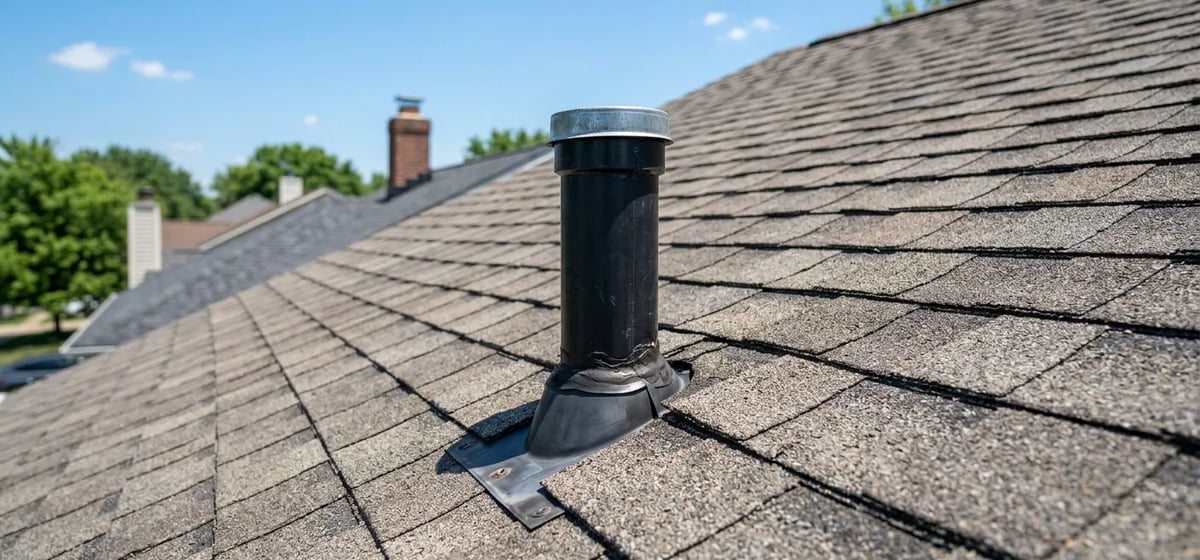
You'll usually spot the vent stack if you stand in your yard and look up. It looks like a short, open pipe jutting out of the shingles. It connects directly to your main drain lines hidden inside your walls.
Why it matters to you
Think about holding your finger over the top of a straw filled with water. The water stays trapped inside. When you move your finger, air enters the top and the water flows out. Your Plumbing system works the exact same way.
Without air entering the system from the roof, water struggles to move down the drain. The vent stack provides that essential breathing room. It prevents vacuums from forming inside your pipes.
It also protects your family from toxic fumes. Every drain in your house has a curved pipe underneath called a trap. This trap holds a small amount of water to block sewer gases. If your vent stack is clogged, the suction from draining water can pull that protective water right out of the trap. This leaves an open path for nasty sewer gases to enter your living space.
Common problems to watch for
Because the vent stack is open at the top, it can easily get blocked. Leaves, twigs, bird nests, and even dead rodents can fall inside. In very cold climates, heavy snow or ice can freeze over the opening. Here are the main signs your vent stack is blocked or broken:
- Gurgling noises: If you hear a bubbling sound from your tub when you flush the toilet, your system is starving for air.
- Slow drains: A blocked vent acts just like a clogged drain line. Water will pool in your sinks and tubs.
- Bad smells: If you notice a rotten egg scent in your bathroom, the water seal in your trap might be gone. You can learn more about tracking down these scents in our guide on Smells & Odors.
- Water stains on the ceiling: The rubber boot that seals the pipe on your roof can dry out and crack over time. This lets rainwater sneak into your attic and drip onto your ceiling.
What it costs to fix
Fixing a vent stack issue usually involves hiring a plumber or a roofing contractor. Prices will always vary based on your location and the exact problem, but here are some typical ballpark costs to expect.
Clearing a simple clog from the roof usually costs 150 to 300 dollars. A plumber will run a special snake tool down the pipe to push the debris out. If the pipe is broken inside the wall, repairs get much more expensive because the plumber has to cut through the drywall.
Replacing the rubber roof boot around the pipe is a very common repair. This usually costs 200 to 400 dollars. If you're already paying for routine Roofing maintenance, the roofer can swap this rubber seal out very quickly for less money.
If you live in an older home and need to add a completely new vent pipe to bring the system up to code, expect to pay 500 to 1,000 dollars or more. This requires cutting through floors, ceilings, and the roof deck.