What Is Voltage Drop
Voltage drop is a loss of electrical power that happens when electricity travels through a very long wire. Think of a garden hose. If you have a short hose, the water blasts out with high pressure. If you connect five hoses together, the water loses pressure along the way and just trickles out at the end. The exact same thing happens with electricity. The natural resistance of the copper wire eats up some of the energy before it reaches your device. The term combines the word voltage, named after Italian physicist Alessandro Volta, with the word drop to describe the literal fall in electrical pressure. Electricians have used this phrase since the early days of power grids. It's a basic rule of physics that affects every wire in your home.
Why It Matters To You
Your home appliances and tools expect a steady supply of power to run correctly. Most standard outlets in your house provide about 120 volts. If the power has to travel too far through a thin wire, that number might drop down to 110 volts or even less by the time it reaches the plug. When an electric motor gets less voltage than it needs, it has to work much harder to spin. It pulls more current to make up the difference. This extra effort creates a massive amount of heat inside the motor. Over time, that heat melts the delicate wiring inside your expensive power tools, vacuum cleaners, or pool pumps. You might not notice the damage right away. Your favorite tool will just suddenly die one day, and you'll have to buy a replacement.
Where You Run Into It
You'll usually notice this problem in a few specific areas around your property. These are the most common spots to see a loss of power:
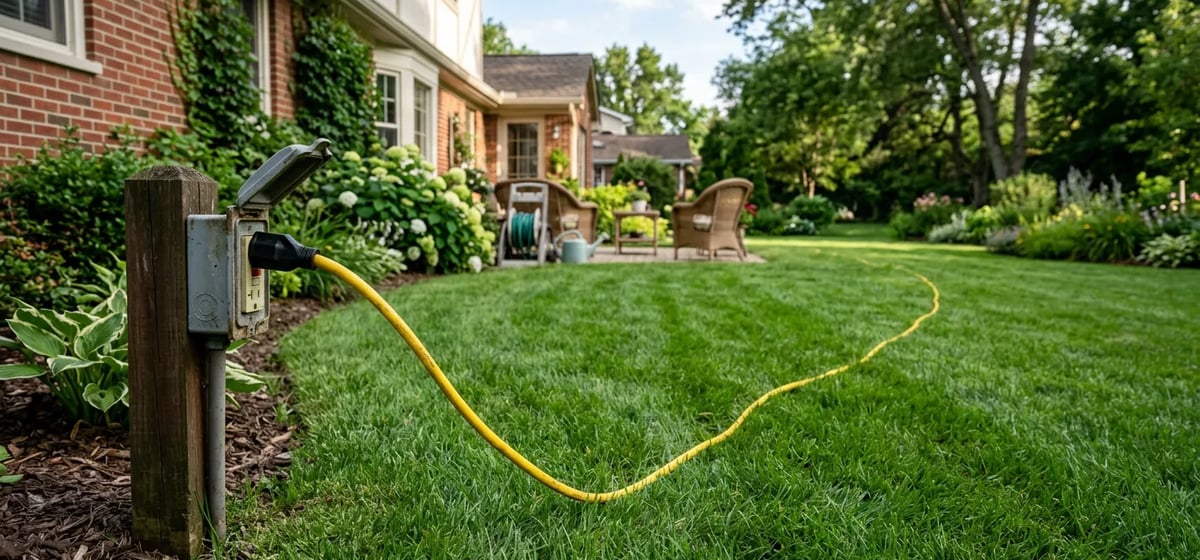
- Long extension cords used for heavy yard work or power tools.
- Landscape lighting runs where the last few bulbs look very dim.
- Detached garages or sheds that have flickering lights when a motor starts.
- Well pumps or pool equipment located far away from the main house.
Using a cheap, thin, 100 foot cord to run a heavy duty saw or a leaf blower is a guaranteed way to ruin the motor. You also see this issue with outdoor improvement projects. You can read more about planning outdoor projects in our Landscaping, Drainage & Outdoor guide. If the original builder used wire that was too thin for a long underground distance, your remote lights might dim every time you turn on a heavy tool or a space heater.
What To Watch For And How To Fix It
The easiest way to prevent this problem in your daily life is to use shorter extension cords. If you must use a long cord to reach the back corner of your yard, buy a heavy duty contractor cord with thicker copper wire. Thicker wire has much less resistance, so the power flows easily. For permanent wiring issues, a licensed electrician has to upgrade the underground electrical lines to a larger wire size. Running a thicker, upgraded wire to a backyard shed usually costs 800 to 2000 dollars, though prices vary based on your location and the exact trenching distance. If you're planning big upgrades like a new workshop, check our Electrical guide to understand your main panel capacity before you hire a pro.
How Electricians Measure It
Electricians use a special tool called a multimeter to check for this problem. They'll test the voltage at your main breaker panel first. Then, they'll walk out to the furthest outlet in your garage or shed and test the voltage there while a heavy tool is running. The National Electrical Code recommends that the total drop shouldn't be more than 5 percent. If your main panel sends out 120 volts, the furthest outlet should still provide at least 114 volts under a heavy load. If the number falls lower than that, the electrician will recommend replacing the old wire with a thicker gauge. Fixing this keeps your expensive appliances safe and ensures your home meets modern safety standards.