What Is a Water Inlet Valve?
A water inlet valve is a small mechanical part that controls the flow of water into your household machines. You will find them on the back of your washing machine and refrigerator. This valve acts as a gatekeeper between your home water pipes and the appliance itself. When your washing machine needs to fill the tub for a load of laundry, it sends an electrical signal to the valve. The valve opens, and water rushes in. Once the tub is full, the signal stops. The valve snaps shut to prevent flooding.
This part is essential for any machine that uses water automatically. Without a working valve, your appliances cannot do their jobs. You will end up with dry clothes in the washer or an empty ice bin in the freezer.
How the Valve Works
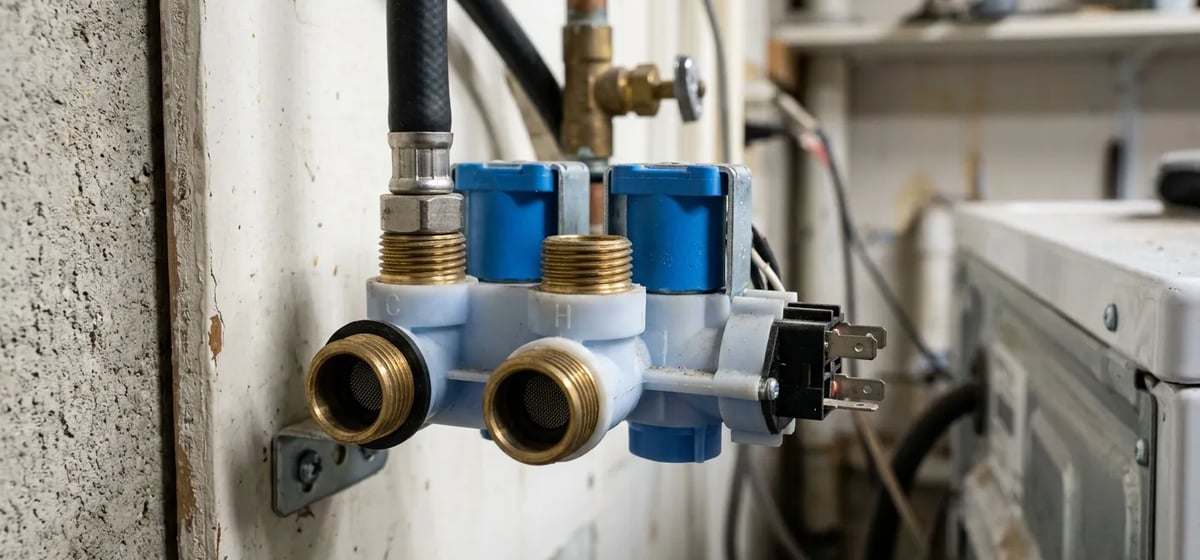
The valve has two main sides. One side connects to the hoses coming from your wall. The other side connects to the internal tubes of your appliance. Inside the valve, there are small electrical coils called solenoids. When you start a wash cycle, the control board sends power to these coils. The electricity creates a magnetic field that lifts a small plunger inside the valve. This opens the gate and lets water flow through.
Washing machines usually have a valve with two ports. One port is for hot water and the other is for cold water. Refrigerators usually have a single port valve that connects to a cold water line. Because these valves mix water and electricity, they bridge the gap between your home plumbing and your electrical system.
Signs of Trouble
Water inlet valves wear out over time. The electrical coils can burn out, or hard water minerals can clog the internal parts. When a valve starts to fail, you will notice a few clear warning signs.
- Your washing machine takes a very long time to fill or does not fill at all.
- Your refrigerator stops making ice or dispensing drinking water.
- Water slowly drips into your washing machine tub even when the machine is turned off.
- You see a puddle of water on the floor behind your appliance.
If you see a leak, you should act fast. A small drip can quickly turn into a major flood. This is why checking the space behind your appliances is a great habit during Your First Year as a Homeowner.
Maintenance and Repair Costs
Most inlet valves have small mesh screens on the side where the hoses connect. These screens catch dirt and rust from your pipes. Over time, these screens get clogged. You can often fix a slow filling washer by simply turning off the water, removing the hoses, and cleaning out those little screens with an old toothbrush.
If the valve is completely broken, you will need to replace it. You cannot repair the internal coils or plungers. Replacing the valve is a common repair. If you hire an appliance repair technician, expect to pay 150 to 300 dollars for the job. If you want to do it yourself, the replacement part usually costs 20 to 75 dollars. Keep in mind that these ranges vary based on your location and the brand of your machine.
Buying the Right Replacement
If you decide to replace the valve yourself, you must buy the exact match for your specific machine. Universal valves rarely work well. You need to find the model number on your appliance. On a washing machine, you will usually find the model number under the lid or near the door opening. On a refrigerator, look on the inside wall of the fresh food section.
Once you have the model number, you can search online for the correct water inlet valve. The new part will look exactly like the old one. The plastic mounting brackets and electrical plugs will line up perfectly. Taking a clear photo of the old valve before you disconnect any wires will help you plug the new one in correctly.