What is a water hammer arrestor?
When your washing machine fills up, water rushes through your pipes at high speed. Then, an electronic valve snaps shut in a fraction of a second. That fast stop sends a strong shockwave backward through the water. This shockwave slams into your pipes and creates a loud banging noise. Plumbers coined the term water hammer in the late 1800s to describe this exact pressure wave. The arrestor part simply means a device that stops or arrests the action.
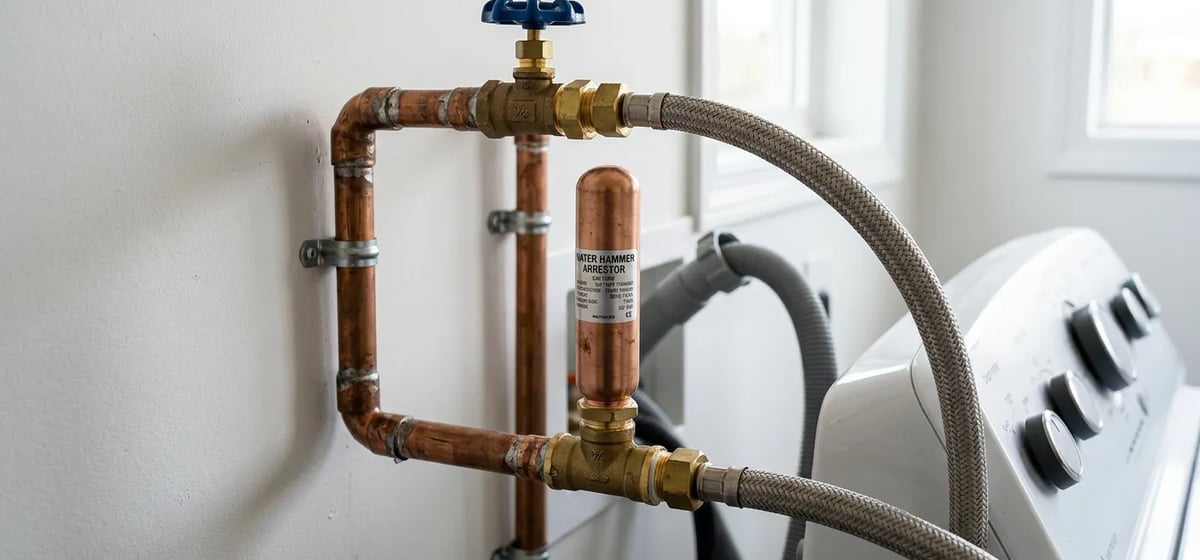
A water hammer arrestor acts like a tiny shock absorber for your plumbing. It is a small sealed cylinder attached directly to your water lines. Inside the cylinder is a small pocket of air and a watertight piston. When the water stops suddenly, the pressure spike pushes the piston up into the air pocket. The air compresses and cushions the blow. This absorbs the extra energy, stops the shockwave, and keeps your pipes completely quiet.
Why it matters to you
That loud banging sound is definitely annoying, but the real problem is the physical damage it does over time. The shockwave violently rattles your pipes inside the walls. This constant shaking can loosen the metal or plastic brackets holding your pipes in place. Eventually, the movement causes loose joints to fail and turns into hidden water leaks.
The intense pressure spikes can also damage the delicate plastic valves inside your washing machine or dishwasher. Installing these small devices protects your Plumbing system from long term stress. In fact, many modern building codes now require them anywhere you have a fast closing valve. It's a small investment that prevents major water damage down the road.
Where you run into it
You'll usually find water hammer arrestors right next to modern water hookups. They look like small copper or brass tubes sticking straight up from the water line. They're usually about the size of a roll of quarters. Here are the most common places to spot them in your home:
- Inside the recessed plastic wall box behind your washing machine.
- Under your kitchen sink on the hot water line feeding the dishwasher.
- Behind your refrigerator on the small water line that feeds your automatic ice maker.
- Near any smart sprinkler valves, utility sinks, or high flow toilets.
What to watch for and costs
If you suddenly start hearing a loud bang when your Appliances finish filling, you might have a problem. Older homes often used a simple vertical pipe filled with air to cushion the shock. Over time, that air dissolves into the water. When the pipe fills completely with water, the cushion is gone. You can sometimes fix this by turning off your main water and draining your entire house plumbing system. This lets air back into the pipes to recreate the cushion.
Modern arrestors with internal pistons are much better, but they can still wear out and fail. The rubber seals inside the piston can break down after years of heavy use. Luckily, replacing them is usually an easy fix. You can buy screw on arrestors for your washing machine hoses at any hardware store. The parts cost 15 to 30 dollars. If you hire a plumber to solder new arrestors into your copper pipes behind the wall, expect to pay 150 to 300 dollars. Keep in mind that local labor rates mean these ranges vary.