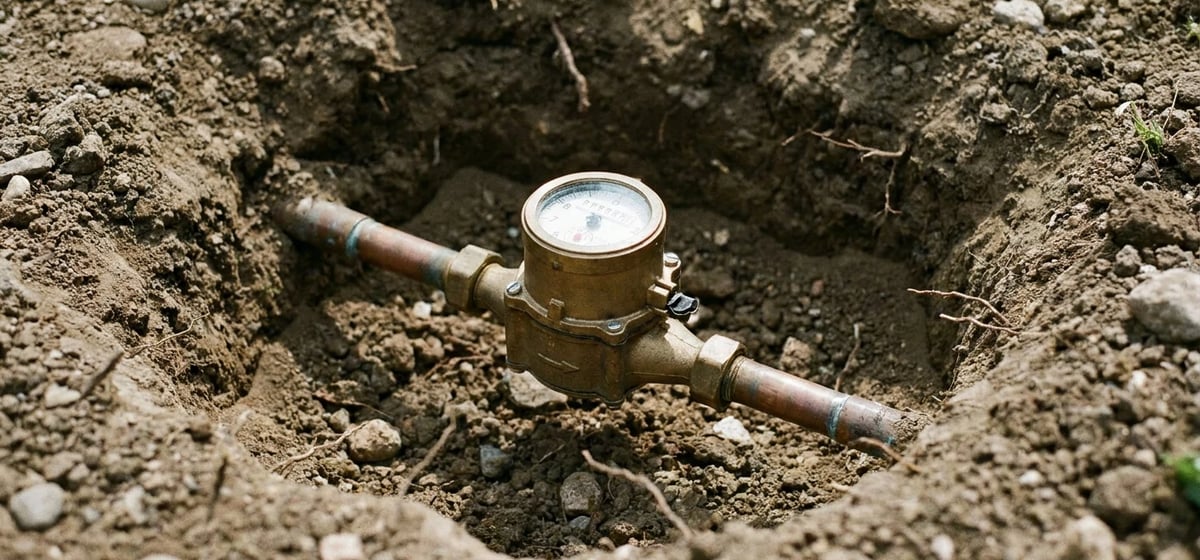
What is a water meter?
The first modern water meters were invented in the 1850s. Cities needed a fair way to charge residents based on actual usage rather than a flat fee. Today, a water meter is a mechanical or digital device that measures exactly how much water flows into your home from the city water main. Every drop of water you use for showers, washing dishes, and watering the lawn passes through this device. The city reads this meter once a month or once a quarter to calculate your utility bill.
Why your water meter matters
Your meter is essentially the cash register for your home water supply. If it spins, you pay. Understanding how it works helps you catch high bills before they happen. It is also your best tool for finding hidden leaks. If you turn off all the water inside and outside your house, but the meter is still moving, you have a leak. Finding these leaks early is a key part of basic Plumbing maintenance. A running toilet can waste hundreds of gallons a day, and the meter is the fastest way to prove it is happening.
Where to find your water meter
In warmer climates, you will usually find the water meter outside. Look for a concrete or plastic box set into the ground near the street, sidewalk, or curb. It usually has a heavy metal or plastic lid. You might need a flathead screwdriver or a special meter key to pry it open. Be careful when opening the lid, because spiders, frogs, and bugs love to hide inside these damp, dark boxes.
In colder climates where pipes can freeze in the winter, the meter is usually inside your house. Check your basement, crawlspace, or utility room. It will be attached to the main water pipe right where it comes through the foundation wall. Knowing exactly where this is located is a great task for Your First Week as a Homeowner. There is almost always a main water shutoff valve located right next to the meter. You need to know where this valve is so you can shut off the water during an emergency.
How to read the meter
Older water meters have an analog dial that looks a lot like a car odometer. They measure water in either gallons or cubic feet. These analog meters also have a small triangle or star-shaped wheel on the face. This is called a leak indicator. This little wheel is very sensitive and spins even when a tiny amount of water flows.
Many cities are now upgrading to smart meters with digital screens. These smart meters send your water usage directly to the city using radio waves. You might need to shine a flashlight on the digital screen to wake it up so you can read the numbers.
To test your home for leaks, follow these simple steps:
- Turn off every faucet, shower, toilet, and appliance that uses water.
- Go look at your water meter.
- Watch the leak indicator or the digital flow rate for a few minutes.
- If the indicator moves or the screen shows water flowing, water is escaping somewhere in your home.
Costs and maintenance
The good news is that you usually do not own the water meter itself. The local water utility owns and maintains the device. If the meter breaks, freezes, or stops reading correctly, the city will usually replace it for free.
However, you are absolutely responsible for the pipes leading from the meter into your house. If you have a leak in your main water line between the street and your home, you have to pay to fix it. Replacing a main water line costs anywhere from 1500 to 3000 dollars. Costs vary widely based on how deep the pipe is buried and how far it runs across your yard. If you suspect a leak underground, you should call a plumber immediately. You can learn more about hiring professional help in our guide to Hiring Contractors & What Things Cost.