What Is Wire Gauge?
Electrical wire comes in different thicknesses. We measure this thickness using a standard called wire gauge. In the United States, you will see this listed as American Wire Gauge or AWG. The word gauge comes from the Old French word jauge meaning a standard of measurement. The AWG system was created in 1857 to make electrical work standard and safe across the country.
The most important rule to remember is backward. A smaller number means the wire is thicker. A larger number means the wire is thinner. For example, a 10 gauge wire is much thicker than a 14 gauge wire. Thicker wires can carry more electricity without getting too hot.
Why The Right Size Matters
Every wire in your house connects to a circuit breaker in your electrical panel. The breaker protects the wire. If you try to pull too much power through a thin wire, the wire gets hot. If the breaker does not trip in time, the hot wire can melt its plastic coating and start a fire inside your walls. This is why you must match the wire thickness to the breaker size. You can learn more about your panel in our Electrical guide.
If you put a 20 amp breaker on a thin 14 gauge wire, you create a major fire hazard. The breaker will let 20 amps flow, but the wire can only safely handle 15 amps. The wire will overheat before the breaker ever shuts off the power. You must never mix and match these sizes.
Common Sizes In Your Home
You will find a few standard wire sizes hiding behind your drywall. Each one has a specific job based on how much power an appliance needs.
| Wire Gauge | Breaker Size | Common Uses |
|---|---|---|
| 14 AWG | 15 Amps | Basic light fixtures and standard bedroom outlets. |
| 12 AWG | 20 Amps | Kitchen outlets, bathroom outlets, and dining rooms. |
| 10 AWG | 30 Amps | Electric water heaters and electric clothes dryers. |
| 8 AWG | 40 Amps | Electric ovens and some central air conditioners. |
| 6 AWG | 50 Amps | Large electric ranges and hot tubs. |
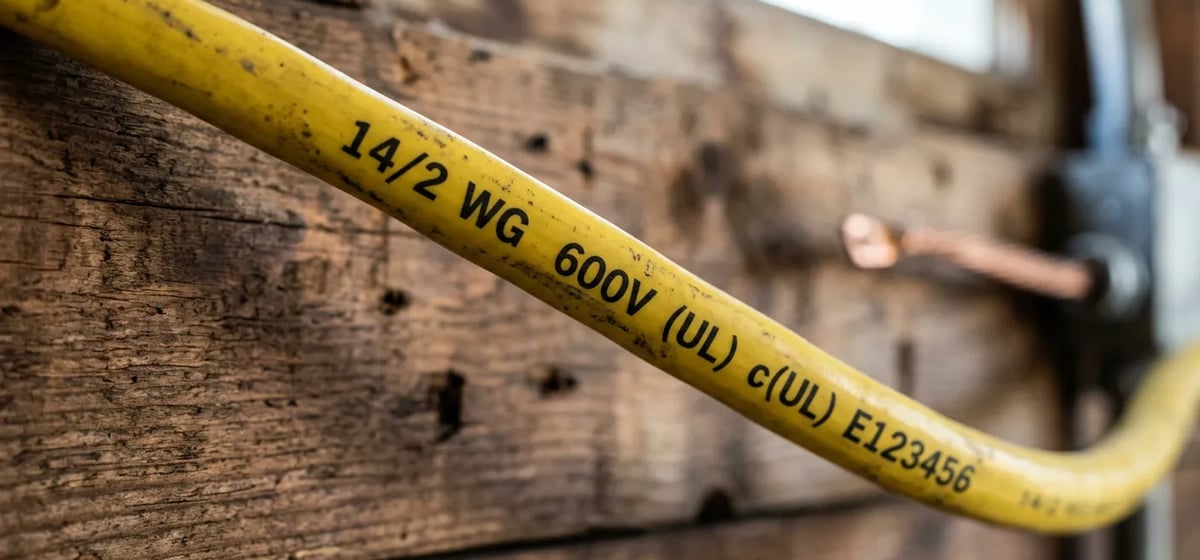
When you look at a wire cable in your basement or attic, the outer plastic jacket usually has the gauge printed right on it. The jacket color also helps you spot the size quickly:
- White jackets usually hold 14 gauge wire.
- Yellow jackets usually hold 12 gauge wire.
- Orange jackets usually hold 10 gauge wire.
- Black jackets are common for 8 gauge and 6 gauge wire.
What It Costs To Upgrade
Sometimes you need to run new wire. You might buy a new electric stove or decide to add a hot tub. These big items need thick wire and dedicated circuits. Replacing thin wire with thicker wire means opening up walls and running new lines all the way back to your main panel. You should always hire a licensed professional for this work. Check our guide on Hiring Contractors & What Things Cost before you start calling electricians.
Running a new 10 gauge or 8 gauge wire circuit usually costs 300 to 800 dollars. The price depends on how far the wire has to travel from the panel to the appliance. Thick copper wire is expensive. A 250 foot roll of 12 gauge wire might cost around 100 to 150 dollars. A roll of much thicker 6 gauge wire can easily cost 400 to 600 dollars. Keep in mind that material prices change often and local labor rates vary widely. If your electrical panel is full or too old, you might also need a panel upgrade to handle the new thicker wires. A full panel replacement can add 1500 to 3000 dollars to your project.