Bathroom Exhaust Fan Not Pulling Air? Stop Peeling Paint
Stop repainting your bathroom ceiling. Learn how to diagnose and fix a weak bathroom exhaust fan to eliminate the moisture causing your peeling paint.
Full guide HVAC & Climate Control How your home heats, cools, and moves air, and the decisions that matter.You just repainted your bathroom six months ago, and the ceiling is already flaking above the shower. Most homeowners assume they bought a bad batch of paint, skipped a primer coat, or applied it incorrectly. In my experience, the harsh reality is that your paint job is likely fine. The actual problem is a bathroom exhaust fan not pulling air out of the room fast enough.
Hot showers create heavy steam, which quickly turns into condensation on cold walls and ceilings. If your ventilation system fails to evacuate that humid air, moisture slowly seeps behind the paint layer. Over time, the drywall swells slightly, breaking the paint's bond and causing it to peel, bubble, and flake. Fixing the paint without fixing the fan guarantees you will be painting again next year.
Signs Your Bathroom Exhaust Fan Is Not Pulling Air
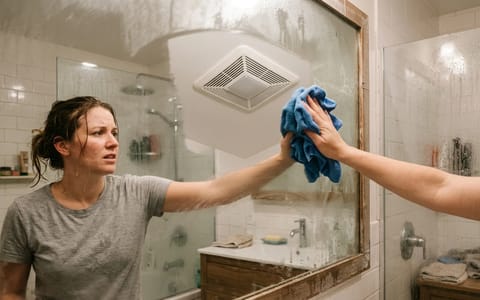
Many homeowners rely on sound to judge their ventilation. If the fan sounds like a jet engine when you flip the switch, you naturally assume it is doing its job. Noise does not equal suction. A loud fan is often a struggling fan. In reality, a truly effective fan will clear a steamy mirror in under 10 minutes.
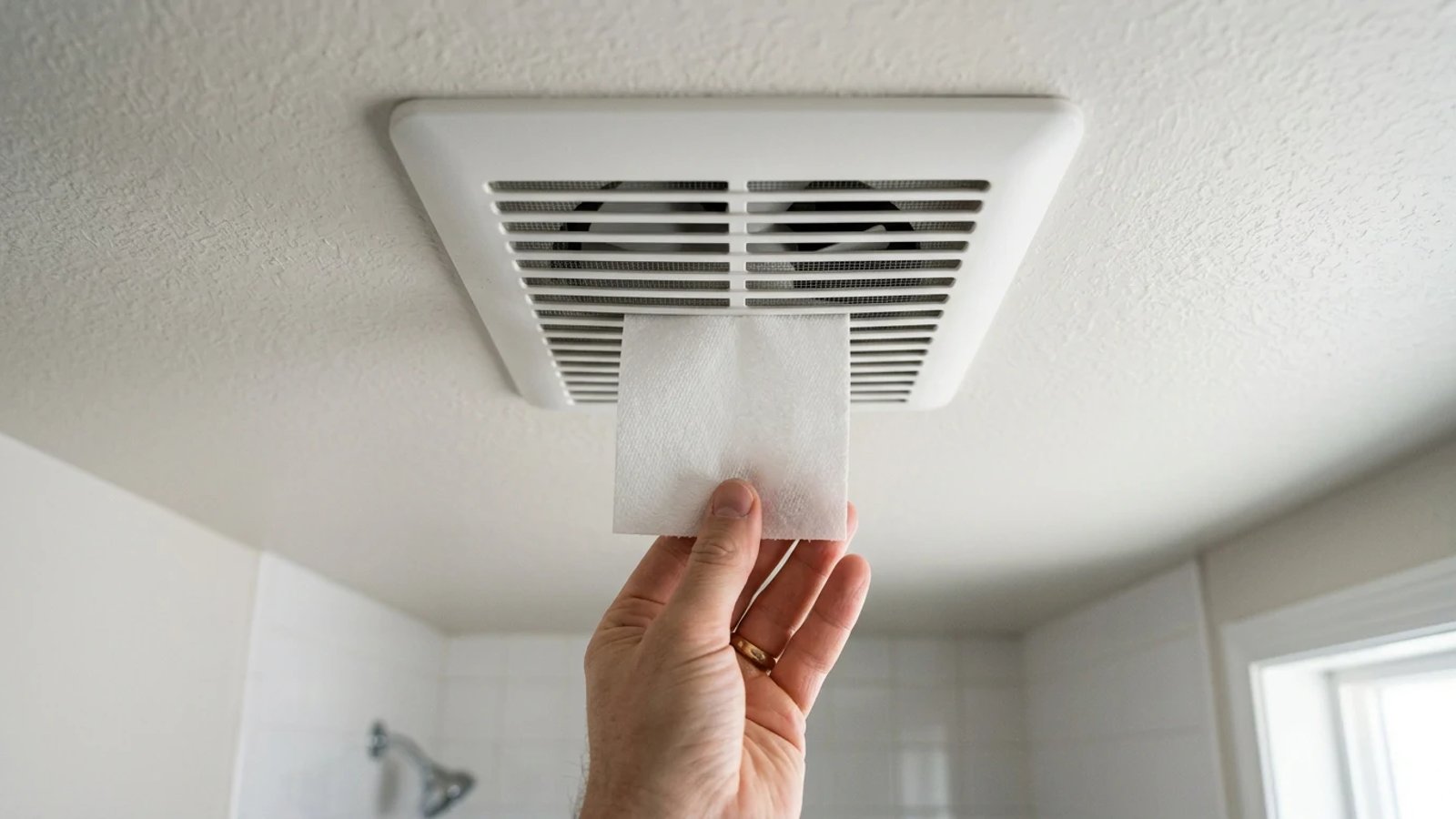
I tested this in my own guest bathroom last year after noticing some stubborn condensation lingering on the mirror long after showers. The motor hummed loudly, but I decided to check the actual airflow. I held a single square of toilet paper up to the plastic grille. Instead of sticking firmly to the vents, the paper fluttered right back down to the floor. The motor was spinning, but the air wasn't moving.
Beyond the Toilet Paper Test: Other Signs Your Bathroom Exhaust Fan Needs Attention
While the toilet paper test is a quick and effective way to gauge your exhaust fan's immediate suction, it's not the only indicator of a struggling ventilation system. Persistent moisture problems and related issues often point to an inadequate or failing fan, even if it passes the initial suction check. Being aware of these additional signs can help you catch problems early, before they escalate into significant damage like peeling paint or structural mold.
One of the most obvious signs is lingering condensation. If your mirror or windows remain fogged up for an extended period (more than 15-20 minutes) after a hot shower, your fan isn't doing its job efficiently. Similarly, water droplets on walls, ceilings, or even the bathroom door frame indicate that humid air isn't being removed quickly enough. This excess moisture creates a breeding ground for mold and mildew, often visible as black spots in grout lines, shower corners, or on the ceiling, especially in poorly ventilated areas.
Unpleasant or musty odors that persist long after the source has been removed are another tell-tale sign. A properly functioning exhaust fan should clear out smells relatively quickly. If bathroom odors, whether from cleaning products or other sources, seem to hang in the air, your ventilation might be compromised. This is particularly noticeable in bathrooms without windows or with windows that are rarely opened, making the exhaust fan the sole means of air exchange.
Finally, pay attention to the overall feeling of dampness in the bathroom. If the air consistently feels heavy, humid, or clammy, even outside of shower times, it's a strong indication that moisture is accumulating. This can lead to warped wooden cabinets, swollen door frames, and, as you've already experienced, damaged paint. Regularly checking for these subtle cues can help you determine if your bathroom exhaust fan is truly up to the task of keeping your bathroom dry and healthy.
3 Reasons Your Exhaust Fan Lost Its Suction
If your fan failed the toilet paper test, you need to find out where the airflow is bottlenecking. Exhaust fans are simple machines, and a lack of suction almost always comes down to one of three specific issues.
1. A Dust-Choked Grille and Housing
Exhaust fans pull static-charged dust, hairspray, and lint along with the bathroom moisture. This mixture creates a thick, felt-like mat over the grille vents and the internal blower wheel. When the fins on the blower wheel fill with grime, they lose their cup-like shape and can no longer grab the air. The motor spins, but the blades just slice through the air without moving it.
2. A Dying or Undersized Motor
Electric motors eventually burn out, especially in high-humidity environments. If the blade spins sluggishly, or if the unit just emits a low hum without spinning at all, the motor has reached the end of its life. Alternatively, the fan might be working perfectly but is simply too small for the room. Builders often install cheap, low-power builder-grade fans to save money, leaving larger bathrooms severely under-ventilated.
3. A Blocked or Improperly Routed Exhaust Duct
Even a powerful fan cannot push air through a blocked pipe. The ductwork running from your fan housing to the outside of your house might be crushed under attic insulation, blocked by an abandoned bird's nest at the exterior vent, or filled with water. Flexible plastic ducts are notorious for sagging between attic joists. Condensation pools in these low spots, eventually blocking the pipe entirely.
How to Clean and Restore Your Bathroom Fan
Before you run out to buy a brand new unit, try giving your current fan a deep clean. A heavy buildup of dust is the most common cause of poor suction, and clearing it out takes less than 15 minutes.
- Turn off the power. Flip the breaker that controls the bathroom fan to ensure you are working safely.
- Remove the cover. Pull the plastic grille straight down gently; squeeze the metal mounting springs together to unhook it from the housing.
- Vacuum the interior. Use the brush attachment on a shop vacuum to clear the loose dust from the metal housing and the motor casing.
- Scrub the blower wheel. Take an old, dry toothbrush and scrape the caked-on dust out of the individual curved fins on the plastic blower wheel.
- Wash the grille. Take the plastic cover to the sink and wash it with warm water and dish soap, then dry it completely.
- Reassemble and test. Snap the cover back into place, turn the breaker back on, and perform the toilet paper test again.
Should I Upgrade to a Higher-CFM Fan?
If you cleaned the housing, verified the ductwork is clear, and the fan still won't hold up a square of toilet paper, it is time for an upgrade. When shopping for a new fan, the most important metric is CFM (Cubic Feet per Minute), which measures the volume of air the fan can move.
The standard rule of thumb is that you need 1 CFM for every square foot of bathroom space. If your bathroom is 8 feet by 10 feet, you have 80 square feet of space and need a fan rated for at least 80 CFM. If you have a jetted tub or a steam shower, you should size up to a 100 or 110 CFM unit to handle the extra moisture load.
Pay attention to the sone rating when buying a new fan. A fan rated at 1.0 sone or less is whisper-quiet, meaning you are much more likely to actually use it.
You can often replace just the motor and blower assembly without touching the drywall. Look for a sticker inside the metal housing with the manufacturer's name and model number. Many hardware stores sell exact-fit replacement motor kits for $15 to $30 that simply plug into the existing receptacle inside the ceiling box.
Once your fan is pulling air properly again, make sure you give it time to work. The fan needs to run for 20 to 30 minutes after you turn off the shower to fully dry the room. Pair a strong, clean fan with a simple timer switch, and your bathroom paint will stay perfectly intact for years to come.
- Test your fan's suction today by holding a square of toilet paper against the grille while it runs.
- Vacuum the fan housing and scrub the blower wheel with a toothbrush every six months to maintain airflow.
- Ensure your fan vents completely to the outside, not just into the attic space.
- Run your exhaust fan for 20 to 30 minutes after every shower to fully clear the humidity.