Garage Door Maintenance: The Simple Guide to Prevent Repairs
Stop ignoring that squeaky, grinding garage door. Learn how to clean tracks, lubricate hinges, and perform critical safety tests in under 30 minutes.
Full guide Windows & Doors Learn how to spot energy leaks, fix drafts, and decide when to replace your windows and doors.Most homeowners ignore the largest moving part of their house—their garage door—until it traps their car inside. Regular garage door maintenance can prevent such headaches. A residential garage door weighs anywhere from 130 to 400 pounds. When it operates smoothly, it feels practically weightless. When it fails, it fails loudly and expensively.
A few years ago, I ignored a slight squeak in my own garage door for months. I figured it was just an aging house settling in. That squeak eventually turned into a grinding halt when a $15 roller snapped, twisting the metal track and costing me $400 in emergency repairs. I learned the hard way that a little preventative care saves a lot of cash.
Performing basic garage door maintenance takes about 30 minutes, requires only a rag and a $10 can of spray lubricant, and keeps your system running quietly for years. Here is exactly how to do it.
Diagnosing the Problem: Look and Listen
Before you spray anything or turn a single wrench, you need to know what condition your door is in. The best diagnostic tool you have is your own eyes and ears.
Close the garage door and stand inside. Hit the button to open it, and watch the entire sequence. Does the door jerk as it travels up the tracks? Does it make a high-pitched squeal, a heavy grinding sound, or a rhythmic clunk? A smooth door should emit a low, steady hum from the motor and the soft sound of rollers moving along the metal.
Next, do a visual sweep. Look at the hinges connecting the panels. Are any of the screws loose or missing? Check the rollers inside the tracks; most standard garage doors have between 10 to 12 rollers. If you have nylon rollers, look for cracks or chips in the plastic. If you have steel rollers, check if they are tilted or scraping aggressively against the track walls. Finally, inspect the lifting cables running down the sides of the door. If you see any frayed wires, stop right there. Frayed cables are a snap hazard and require immediate professional replacement.
Step-by-Step Garage Door Maintenance: Lubrication and Cleaning
The number one mistake homeowners make during garage door maintenance is reaching for a standard can of WD-40. Standard WD-40 is a water-displacement formula and a degreaser. It will temporarily stop a squeak, but it strips away existing grease and leaves the metal dry a few days later, attracting dirt and accelerating wear.
Here is the exact process for cleaning and lubricating your system:
- Disconnect the power. Unplug the garage door opener from the ceiling outlet so nobody accidentally opens the door while your fingers are near the hinges.
- Wipe out the tracks. Take a damp microfiber cloth and wipe the inside of the vertical and horizontal metal tracks. Remove cobwebs, dead bugs, and dirt buildup.
- Leave the tracks dry. Never spray lubricant inside the tracks. Lubricant in the tracks creates a sticky paste with dirt, which causes the rollers to slide instead of roll.
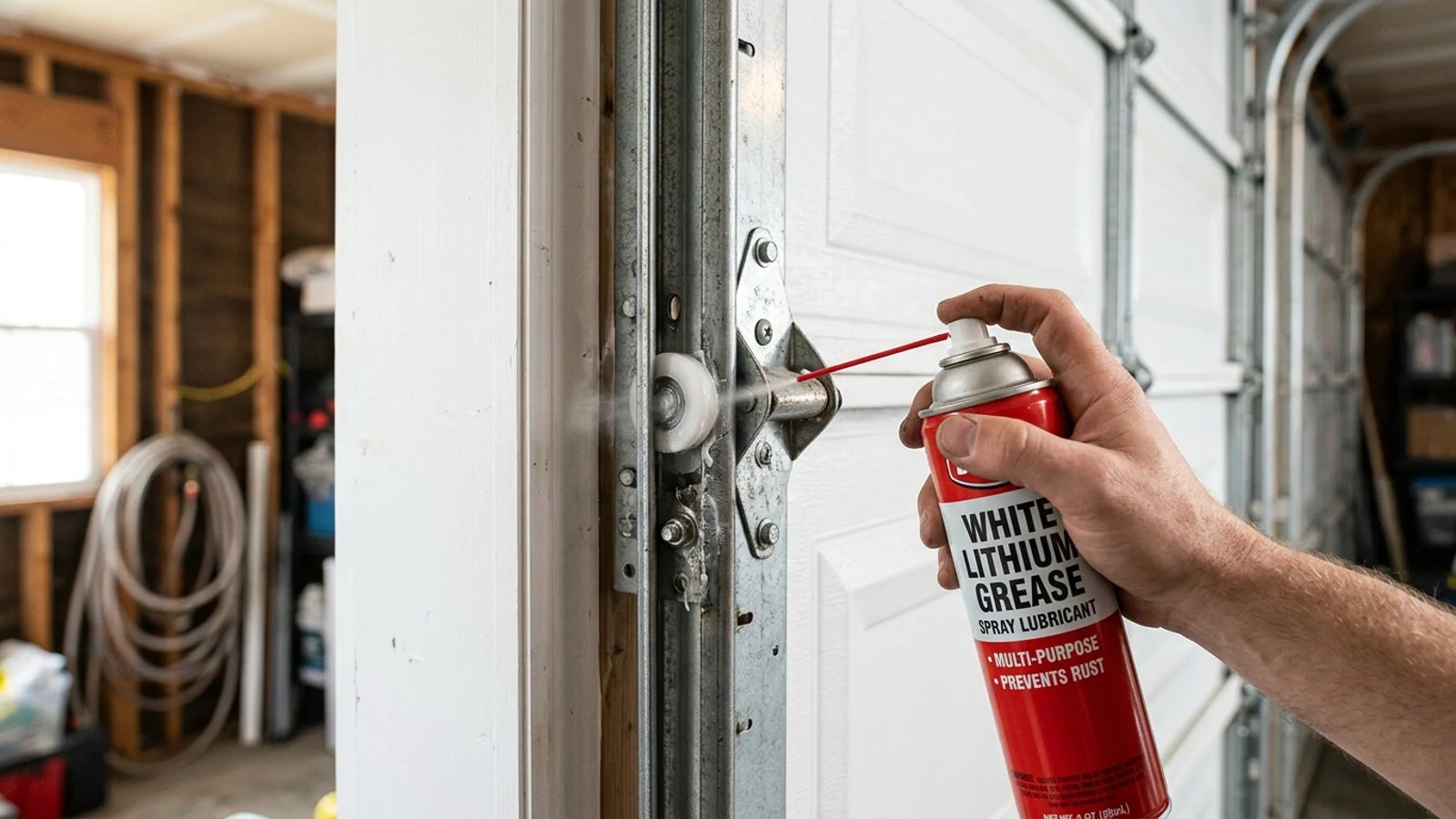
- Lubricate the hinges. Spray a quick burst of white lithium grease or silicone spray on every metal hinge where the panels fold.
- Lubricate the rollers. Spray the tiny ball bearings inside the rollers. If your rollers have nylon wheels, wipe off any excess spray so the plastic doesn't degrade.
- Lubricate the springs and bearing plates. Spray a light coat of lubricant across the top torsion spring to prevent rust and reduce friction. Spray the bearing plates at both ends of the spring bar.
Lubricant in the tracks creates a sticky paste with dirt, which causes the rollers to slide instead of roll.
Once you finish lubricating, plug the motor back in and run the door up and down a few times. You should immediately notice a significant reduction in noise. If you still hear a loud squeal, you might have missed a hinge, or a roller bearing might be completely shot and ready for replacement.
How Do I Test the Auto-Reverse Safety Features?
Your garage door is a heavy piece of machinery, and it relies on two distinct safety systems to prevent it from crushing objects, pets, or people. The U.S. Consumer Product Safety Commission (CPSC) recommends testing these features every month.
First, test the photoelectric sensors (the "photo eyes"). These are the two small cameras mounted near the floor on either side of the door opening. Hit the button to close the door. While it is traveling downward, wave a broom handle in front of one of the sensors to break the invisible beam. The door should stop immediately and reverse direction. If it doesn't, wipe the camera lenses clean with a dry cloth and check that the indicator lights are solid, not blinking. If they are blinking, they are misaligned and need to be gently nudged back into position.
Second, test the mechanical auto-reverse. This system measures resistance. If the door hits something before reaching the floor, the motor should sense the pressure and reverse.
Place a standard 2x4 block of wood flat on the garage floor in the center of the door's path. Push the button to close the door. When the bottom weatherstripping hits the wood, the door should push against it for roughly one second, then automatically reverse and go back up. If the door stops and stays resting on the wood, or if it keeps trying to push downward, you need to adjust the downward force setting on your motor housing. Consult your specific opener's manual for the location of the force adjustment dials.
Weatherstripping and Draft Prevention
While you are inspecting the mechanical parts, take a moment to look at the rubber weatherstripping along the bottom of the door. This seal keeps out rain, snow, drafts, and mice.
If the rubber is cracked, brittle, or missing chunks, it is time to replace it. Most bottom seals slide right out of a metal track on the bottom panel. You can buy a replacement roll at any hardware store for about $20. Threading the new seal into the track takes a little patience, but rubbing a drop of dish soap along the edges of the rubber makes it slide in much easier.
What NOT to Touch: The High-Tension Springs
There is a hard line between DIY maintenance and extreme danger in your garage. That line is drawn at the springs.
Most modern doors use a torsion spring system—a large, tightly coiled black spring mounted on a metal bar directly above the closed door. This spring holds the entire stored kinetic energy required to lift 300 pounds of metal. If you attempt to loosen the bolts on the torsion spring without the proper winding bars and training, the spring can violently unwind. The tension is enough to shatter hands, break jaws, or cause fatal injuries.
Similarly, the lifting cables attached to the bottom corners of the door are under extreme tension. Never unbolt the bottom brackets while the door is closed or the spring is wound.
Keeping Things Rolling
Garage door maintenance does not require a weekend of hard labor. A quick visual inspection, a wipe down of the tracks, and a few sprays of the right lubricant will keep your door running quietly and safely. Make it a habit to check the hinges and run the safety tests twice a year, and you will add years of life to your system while avoiding those frustrating, expensive emergency repairs.
- Standard WD-40 is a degreaser, not a lubricant. Always use silicone spray or white lithium grease on your garage door parts.
- Garage door tracks should be wiped clean, never lubricated, to prevent sticky dirt buildup.
- High-tension torsion springs are extremely dangerous. Never attempt to adjust or replace them yourself.
- A simple 30-minute maintenance routine twice a year can prevent hundreds of dollars in emergency repairs.