Foundation Problems? How to Spot the Signs and What to Do
Noticed a crack in your drywall or a sticking door? Don't panic. Learn how to tell normal house settling from serious foundation trouble, and what to do next.
Full guide Foundation & Structure Learn how to spot dangerous foundation cracks and protect your home from costly structural damage.You just noticed a jagged crack in your drywall, a front door that refuses to latch, or a slight slope in the living room floor. In a mild panic, you type "foundation problems" into Google. Take a breath. Finding a flaw in your home's structural base feels terrifying, but it rarely means financial ruin. Most houses shift over time. The trick is knowing when that movement is normal settling and when it requires immediate intervention.
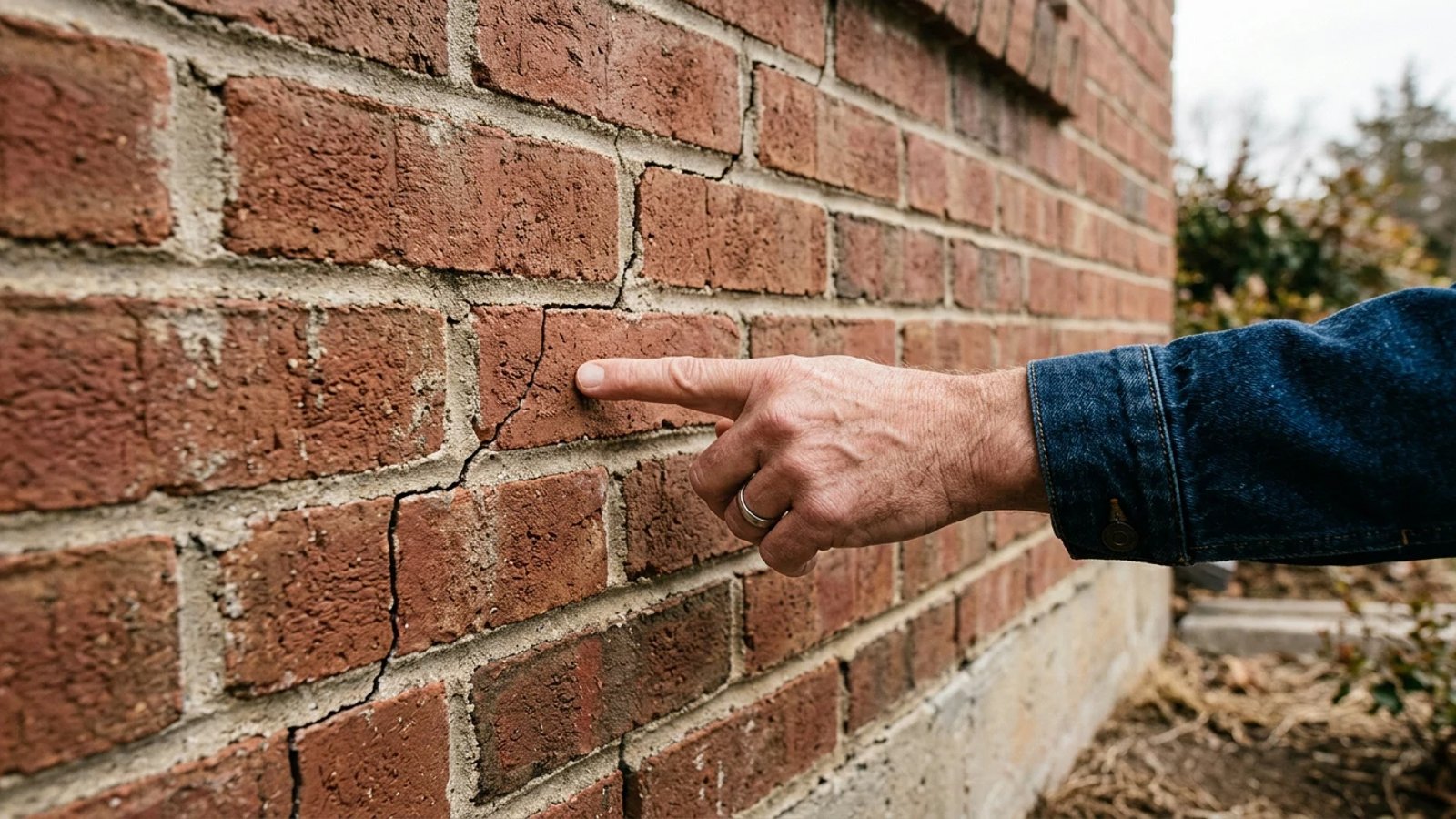
When we bought our 1960s ranch, I noticed a jagged stair-step crack in the exterior brick near the garage. I immediately pictured our life savings draining away into a massive excavation project. It turned out to be a minor settlement issue caused by a clogged gutter. A $15 tube of masonry caulk and a $20 downspout extension solved the problem entirely. Houses are incredibly heavy, and the soil beneath them compresses. Understanding how to read the symptoms will save you a lot of unnecessary stress.
What Are the Common Signs of Foundation Problems?
Your house communicates its structural health through visual cues. Because the foundation supports everything above it, a shift at the base will manifest in the framing, drywall, and masonry above. Here is exactly what to look for when you inspect your home, paying close attention to at least three key areas: exterior, interior walls, and floors.
First, check the exterior. Look for stair-step cracks in brick or masonry mortar joints. These are incredibly common, but their size matters. You should also inspect the exposed concrete base of the home for vertical or horizontal fractures. Inside the house, pay attention to the doors and windows. A door that used to swing freely but now drags on the carpet or fails to latch is a classic sign of framing that has shifted out of square.
Look at your drywall, specifically around the top corners of window and door frames. Diagonal cracks extending outward from these corners indicate that the wall is being pulled in different directions. Finally, take a walk across your floors. Bouncy, sagging, or noticeably sloping floors—especially over a crawl space or basement—warrant a closer look at the supports underneath.
Settling vs. Real Trouble: How to Tell the Difference
Almost all homes experience some degree of settlement in their first few years, and seasonal changes in soil moisture can cause minor expansion and contraction indefinitely. The difference between harmless settling and a failing foundation usually comes down to the size and direction of the cracks.
Grab a standard tape measure. Hairline cracks—those measuring less than 1/16 of an inch wide—are typically the result of concrete shrinking as it cures or minor seasonal movement. Vertical cracks in poured concrete walls are also generally low-risk. They run straight up and down and rarely threaten the structural integrity of the home, though they should be sealed to prevent water intrusion.
The warning signs of a serious problem are cracks that are 1/4 inch wide or larger, or cracks that are actively growing. Horizontal cracks are the most dangerous. A horizontal crack running along a concrete block basement wall means the soil outside is expanding and pushing the wall inward. This is a structural failure in progress.
Fixing the Root Cause: Drainage and Grading
Before you ever think about steel piers or mudjacking, you have to look at the water around your house. If you do not fix the water issue, any expensive structural repair will eventually fail.
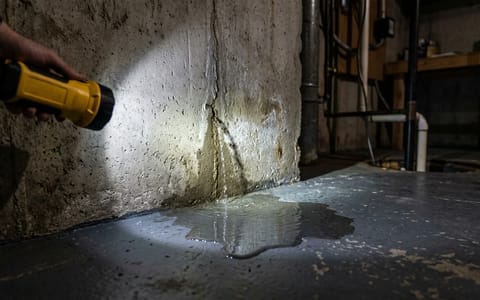
Water is the silent enemy of your home's foundation, causing soil to expand, contract, and eventually crack your concrete.
When soil absorbs water, it expands. Clay soils, which are common in many parts of the country, expand violently when wet and shrink drastically when dry. This constant movement exerts massive hydrostatic pressure against your foundation walls. Proper water management is your first line of defense, and it is governed by basic physics and established building science. The EPA guidelines for moisture control consistently highlight exterior grading as the primary preventative measure for structural water damage.
- Clean your gutters. Overflowing gutters dump hundreds of gallons of water directly against your foundation during a rainstorm.
- Extend your downspouts. Attach black corrugated extensions or PVC pipe to carry roof runoff at least 5 to 10 feet away from the base of the house.
- Check the soil grading. The ground should slope away from your exterior walls. Aim for a drop of 6 inches over the first 10 feet.
- Look for pooling water. Wait for a heavy rainstorm, put on a raincoat, and walk around your property to identify low spots where water sits against the siding.
- Add topsoil where necessary. Fill in depressions near the foundation with dense topsoil, tamping it down to restore a positive slope away from the house.
Next Steps: Who to Call First When You Suspect Trouble
If you have verified that your drainage is perfect, but the cracks are wider than 1/4 inch, expanding, or running horizontally, it is time to call for backup. But who you call first is critical to protecting your wallet.
Do not call a foundation repair company first. Foundation repair companies are businesses that sell foundation repair products—like steel piers, wall anchors, and epoxy injections. While many are honest, their job is to sell you a solution. Instead, your first call should be to an independent structural engineer.
A residential structural engineer charges a flat fee—usually between $300 and $800 depending on your location and the size of the home. They will inspect the property, measure the floor elevations, assess the cracks, and write a detailed, unbiased report. Because they do not sell repair services, they have no financial incentive to find a problem that does not exist. If they determine the house is just settling normally, you just bought valuable reassurance for a few hundred dollars. If they do find a structural failure, you can hand their engineering report to three different repair contractors to ensure you get apples-to-apples bids on the exact work required.
Dealing with potential foundation problems requires a cool head and a methodical approach. Start by measuring the cracks, fixing your exterior drainage, and monitoring the situation. If the signs point to a deeper structural issue, protect yourself by getting an independent engineering assessment before signing any repair contracts. Taking these steps ensures your home stays solid without draining your bank account unnecessarily.
- Check the width of cracks: hairline is usually fine, while 1/4-inch or wider needs a professional look.
- Extend your gutter downspouts at least 5 feet away from your home to prevent water pooling.
- Ensure the soil around your house drops 6 inches over the first 10 feet to direct water away from the base.
- Pay an independent structural engineer $300 to $800 for an unbiased assessment before accepting any expensive repair bids.