Wildfire Home Hardening: Steps to a Fireproof House
Protect your home from the biggest wildfire threat—wind-blown embers. Learn how to create a 0-5 foot defensible space and upgrade your exterior.
As early-fall brings dry winds and peak fire weather to many regions, protecting your property becomes an immediate priority. The biggest threat during a wildfire isn't a towering wall of flames rolling over the hill. It is the blizzard of wind-blown embers that can travel miles ahead of the actual fire line, land in a pile of dry leaves, and ignite a house from the outside in.
Wildfire home hardening is the process of modifying your home's exterior and immediate surroundings to resist those flying embers. Think of it as putting armor on your house. By combining smart landscaping choices with a few targeted structural upgrades, you can dramatically increase your property's chances of surviving a fire.
Wildfire Home Hardening: Comprehensive Protection Strategies
What is the 0-5 Foot Defensible Space Zone?
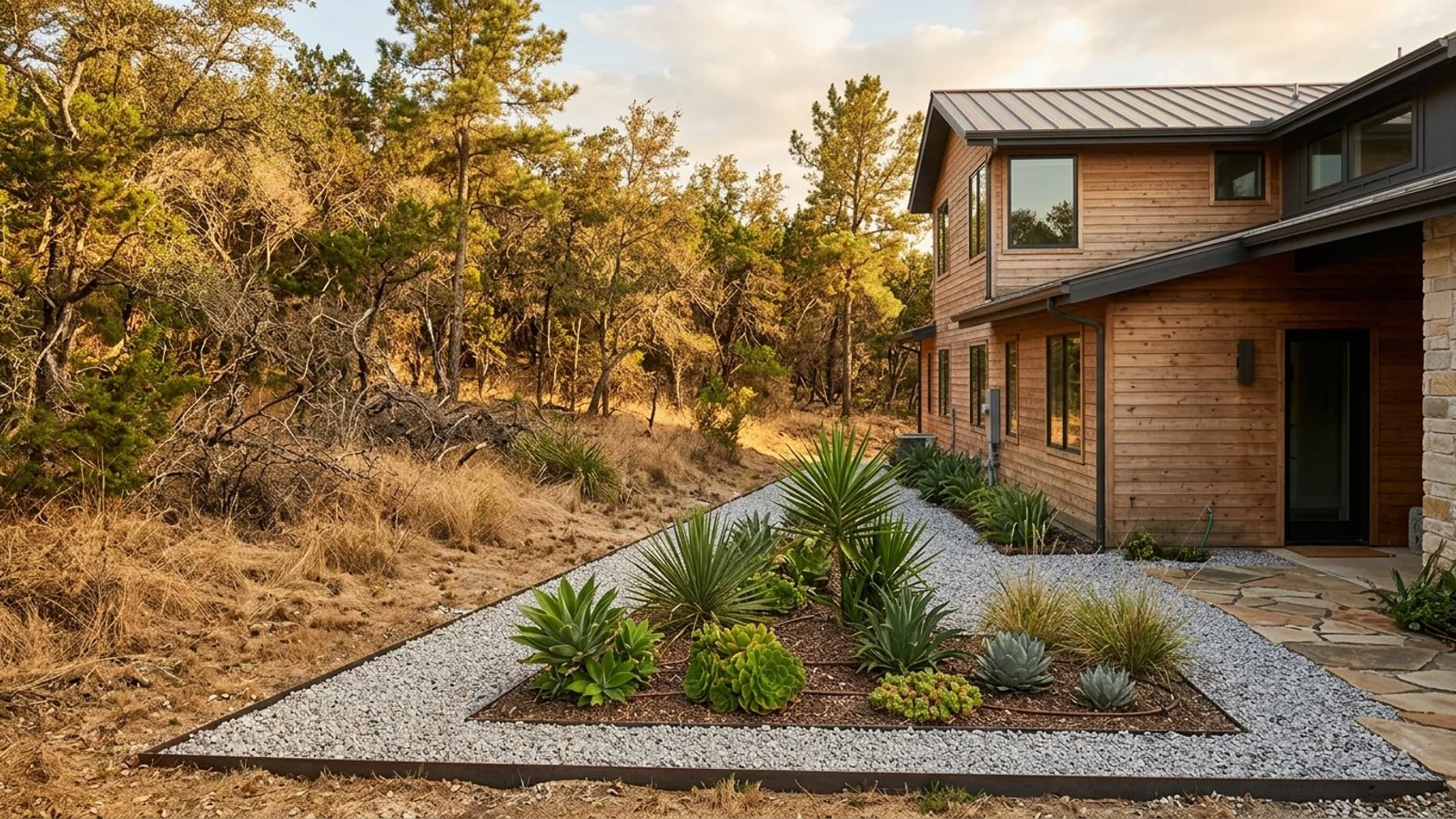
Fire experts divide the area around your home into specific zones, but the most critical is Zone 0—the immediate 5 feet around your foundation, attached decks, and stairs. This area acts as a moat. If an ember lands here, it should safely burn out without finding fuel. This immediate zone is your home's last line of defense against ember intrusion and direct flame contact.
Replace combustible mulch in this zone with crushed stone, gravel, or concrete pavers. Remove any dead vegetation, dry leaves, and pine needles. If you have plants in this zone, choose high-moisture, low-resin varieties like succulents, and keep them well-watered and spaced apart. Never store firewood against your siding or under your deck, as these are significant fuel sources that can quickly ignite your home.
Zone 1: The Intermediate Zone (5-30 Feet)
This critical zone extends from 5 to 30 feet out from your home's foundation. The primary goal here is to create a landscape that significantly reduces the intensity of any fire that reaches this area, acting as a crucial buffer. If embers land here, they should find minimal continuous fuel to ignite a sustained flame.
Maintain irrigated lawns and regularly prune trees and shrubs to remove all dead or dying vegetation. Ensure that plants are spaced apart, preventing flames from easily jumping from one to another. Keep tree canopies at least 10 feet from structures and other trees, especially if they are highly flammable species. Avoid planting highly flammable species such as junipers or dense ornamental grasses in this zone.
Zone 2: The Extended Zone (30-100 Feet)
This outermost zone focuses on reducing the potential for large, high-intensity fires that could pose a threat to your property. While less rigorously maintained than the inner zones, it is still crucial for slowing a wildfire's advance and providing firefighters a safer area to work.
Thin out dense stands of trees and shrubs to reduce overall fuel load. Remove smaller, "ladder" fuels that allow fire to climb from the ground into tree canopies. Also, clear away dead or dying trees, fallen branches, and heavy accumulations of leaf litter and pine needles. Maintain any driveways or access roads within this zone, ensuring they are clear of overgrown vegetation.
How Do I Protect My Roof and Gutters?
Your roof is the largest horizontal surface on your property, making it a massive target for falling embers. Even a Class A fire-rated roof is vulnerable if it is covered in dry debris. Embers can accumulate in valleys, gutters, or on rough surfaces, smoldering for hours before igniting the roof material or underlying structure.
- Clear the roof valleys. Sweep or blow away accumulated leaves and pine needles where roof lines meet.
- Clean the gutters. Remove all dry matter from your gutters so an ember doesn't ignite a ring of fire around your eaves.
- Inspect your shingles. Look for missing, loose, or curled shingles where embers could lodge and burn through the underlayment.
- Trim overhanging branches. Cut back any tree limbs that hang within 10 feet of your roofline.
If you have an older wood-shake roof, consider replacing it. Wood roofs are exceptionally dangerous in fire zones, and many insurance companies now require them to be replaced with asphalt, metal, or composite materials that offer superior fire resistance.
Upgrading to 1/8-inch Mesh Ember-Resistant Vents
Vents are the lungs of your home, allowing air to circulate through the attic and crawlspace. Unfortunately, they also provide a direct path for embers to enter and ignite the dry wood inside your walls, attic insulation, or stored items in the crawlspace. This makes them a critical point of vulnerability during a wildfire.
Many older homes were built with 1/4-inch mesh screens. This size is too large. The National Fire Protection Association (NFPA) recommends covering all exterior vents with 1/8-inch metal mesh to block smaller sparks. This simple upgrade can significantly reduce the risk of internal ignition.
When we replaced the old quarter-inch mesh vents on our attic last year, I was surprised by how cheap and easy the upgrade was. I bought a roll of 1/8-inch stainless steel hardware cloth for about $35 at the hardware store. Using tin snips and a heavy-duty staple gun, I covered every gable and soffit vent in a single afternoon.
Wildfire Home Hardening: Fortifying Exterior Walls
Siding and Exterior Wall Protection
Beyond the roof, your home's exterior walls are highly vulnerable to radiant heat and direct flame contact during a wildfire. The materials your home is sided with play a crucial role in its ability to resist ignition. Choosing fire-resistant materials can be the difference between a home that survives and one that doesn't.
Many modern homes are built with materials that offer inherent fire resistance. Stucco, fiber cement siding (like HardiePlank), and masonry (brick or stone) are excellent choices as they are non-combustible and can withstand high temperatures. If you have older, untreated wood siding, consider replacing it or applying certified fire-retardant coatings. Always check local building codes and product specifications for certified fire ratings.
Garage Doors and Other Entry Points
The garage door is often one of the largest and most vulnerable openings on a home. Standard garage doors are typically not fire-rated and can be easily compromised by embers or radiant heat. Upgrading to a fire-rated garage door, especially one made of steel or other non-combustible materials, is a smart investment in wildfire-prone areas.
Ensure that the perimeter of your garage door is tightly sealed with weatherstripping to prevent embers from blowing into the garage. Keep your garage clear of flammable materials like gasoline cans, propane tanks, and excessive stacks of newspapers or cardboard. Similarly, inspect any pet doors, mail slots, or other small openings for vulnerabilities and seal them.
Windows, Eaves, and Decks
Radiant heat can shatter standard single-pane windows, allowing fire to enter the house. Upgrading to dual-pane windows with tempered glass on the exterior provides a strong barrier against extreme heat. Consider installing metal screens for added protection against embers, as they can help deflect sparks and reduce the risk of glass breakage.
Open eaves (where you can see the exposed rafter tails under your roof) trap heat and embers. Enclosing them with fire-resistant soffits creates a flat surface that deflects wind and sparks, significantly reducing the risk of ignition in this area. Similarly, the area under wooden decks should be kept completely clear of storage, yard waste, and dry weeds. If a fire starts under a deck, the flames will quickly travel up the exterior wall and threaten your home.
The goal isn't to build a bunker, but to starve the fire of the small, easy fuels it needs to grow. It's about making your home less appealing to a wildfire.
Taking a weekend to clear debris and check your vents requires minimal budget but offers massive returns in safety. Start at your foundation and work your way outward to give your home a fighting chance this fire season. Proactive wildfire home hardening is the most effective defense.
- Clear all dead leaves, mulch, and woodpiles from the 0-5 foot zone around your foundation.
- Install 1/8-inch metal mesh over all attic and crawlspace vents to block sparks.
- Clean your roof and gutters regularly during early-fall fire season.
- Replace highly combustible landscaping plants near the house with fire-resistant alternatives.