GFCI Outlet Not Working? How to Reset and Fix It Fast
A dead GFCI outlet is frustrating, but it usually means the safety mechanism is doing its job. Learn how to troubleshoot, reset, and fix a tripped GFCI outlet fast.
Full guide Electrical Learn how your home electrical system works and what parts are safe for you to handle.You are standing in your bathroom or kitchen, ready to start the day, but your hairdryer or coffee maker simply refuses to turn on. You look at the wall and realize you have a GFCI outlet not working. It is a frustrating interruption, but before you assume the worst about your home's wiring, take a breath. A dead Ground Fault Circuit Interrupter (GFCI) is usually a sign that your electrical system is doing exactly what it was designed to do: keeping you safe from electric shock.
These specialized outlets are required in areas where water and electricity might mix, such as kitchens, bathrooms, garages, and outdoor spaces. When they detect even a tiny discrepancy in electrical current, they cut the power instantly. Fixing the issue is often as simple as pushing a button, but sometimes it requires a bit of basic troubleshooting to find the root cause.
Troubleshooting a Tripped GFCI Outlet
To fix the problem, it helps to know what you are looking at. A GFCI outlet constantly monitors the electrical current flowing through the hot wire and returning through the neutral wire. Most residential GFCI outlets operate on standard 120-volt circuits. If it senses an imbalance as small as 4 or 5 milliamps—meaning some electricity is escaping the intended path and potentially traveling through water or a person—it trips the internal contacts and shuts off the power in a fraction of a second.
The National Electrical Code (NEC) has mandated these life-saving devices in wet locations for decades. When your GFCI trips, it is responding to one of three main triggers: a ground fault (like moisture getting into the outlet), a short circuit (a failing appliance), or an overloaded circuit. Occasionally, the receptacle itself has simply reached the end of its lifespan.
How to Properly Reset a Tripped GFCI Outlet
Most homeowners have pressed the little rectangular buttons on their outlets before, but doing it in the wrong order can cause the outlet to instantly trip again, leaving you back at square one. Here is the correct, safe way to bring your dead outlet back to life.
- Unplug everything from the outlet. Remove any appliances, chargers, or cords connected to the dead GFCI. If you leave a faulty appliance plugged in, the outlet will immediately trip the second you try to reset it.
- Check nearby downstream outlets. Electricians often wire multiple standard outlets to run through a single GFCI. Unplug devices from any other dead outlets in the immediate vicinity.
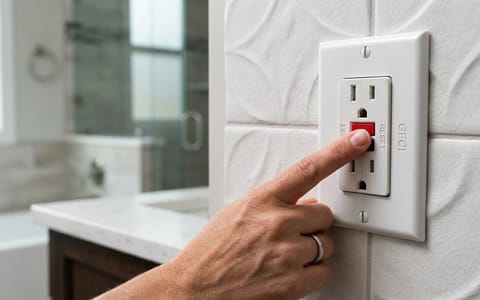
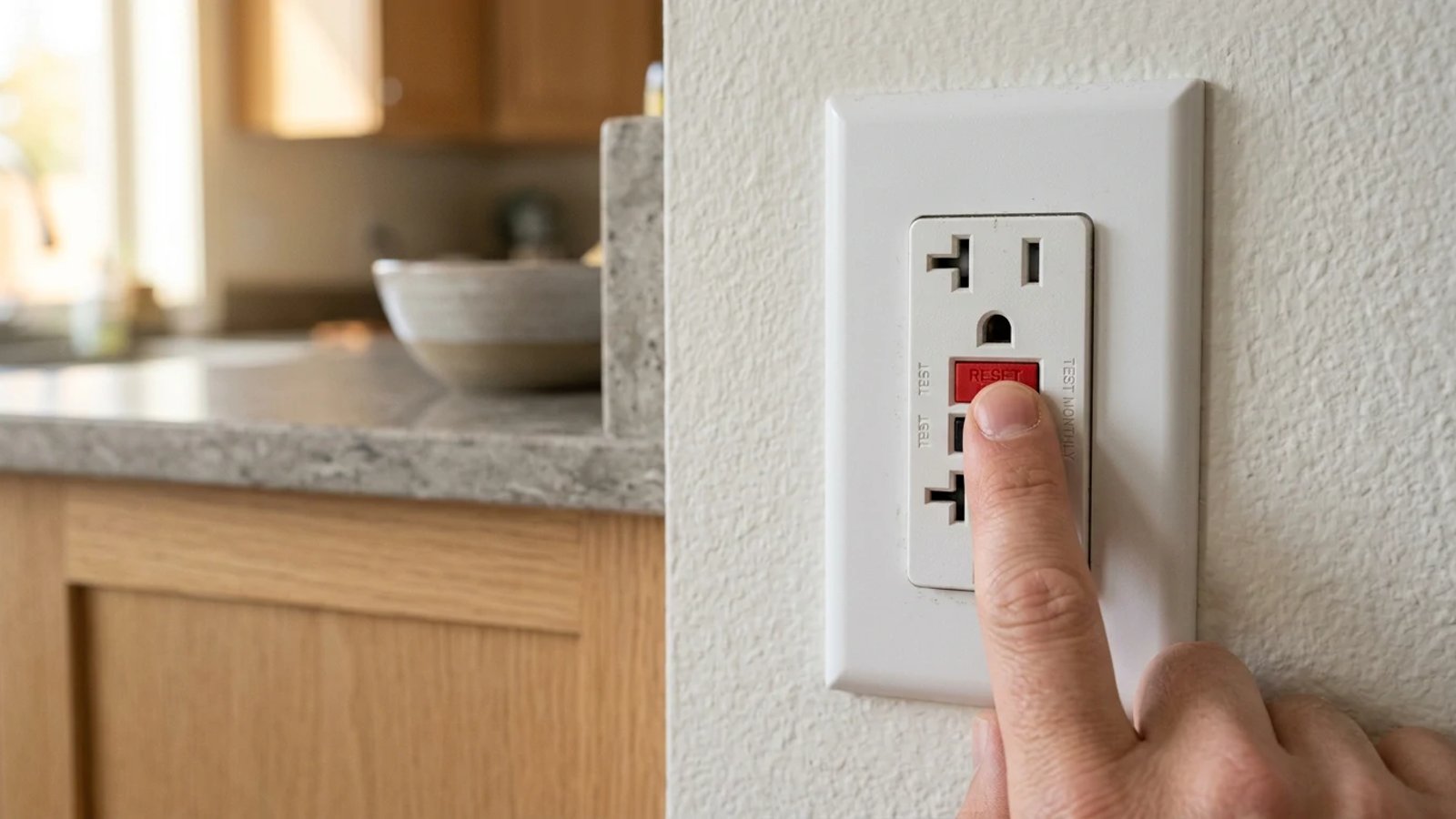
- Locate the reset button. Look at the face of the GFCI receptacle. You will see two buttons, usually labeled "Test" and "Reset." The Reset button is often red, though modern outlets may use buttons that match the outlet color.
- Press the Reset button firmly. Push it straight in until you feel and hear a definitive mechanical click. Sometimes your finger isn't quite enough to push it deep enough; if you struggle, use the flat end of a wooden popsicle stick or a small screwdriver to press it squarely.
- Test the power. Plug a simple device, like a small lamp or a nightlight, into the outlet and turn it on to verify power has been restored.
What to Do When the GFCI Reset Button Won't Click In?
A common hurdle is pushing the Reset button only to find it feels stiff, spongy, or simply won't stay pushed in. If the button refuses to click and hold, it almost always means the outlet is not receiving any electricity from the main electrical panel. A GFCI mechanism requires active line power to physically lock the reset contacts into place.
When this happens, your next stop is the main circuit breaker box. Usually located in a basement, garage, or utility room, this panel houses the switches that control power to different zones of your house.
Checking the Main Breaker Panel
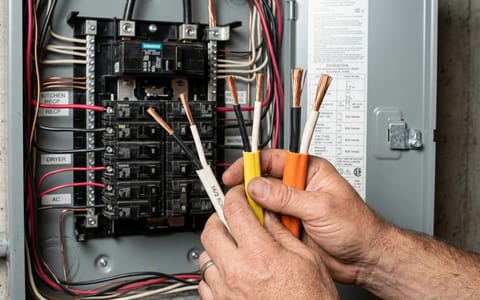
Open the metal door of your electrical panel and scan the rows of black switches. You are looking for a breaker that is not perfectly aligned with the others. When a circuit breaker trips, the handle doesn't always flip completely to the "Off" side. Instead, it rests in a spongy middle position.
If you spot a tripped breaker, you cannot simply push it toward the "On" position. You must firmly push the switch all the way to the "Off" position until it clicks, and then push it firmly back to the "On" position. Once the breaker is reset, walk back to your dead GFCI outlet and try pressing the Reset button again. In most cases, it will now click securely into place.
Why Does My GFCI Outlet Keep Tripping?
If you successfully reset the outlet but it trips again five minutes later, you have an active fault. Do not tape the button down or force it to stay in—this is a severe fire and shock hazard. Instead, you need to diagnose what is causing the continuous fault.
Moisture Infiltration: Water is the most common culprit. If the outlet is near a kitchen sink, check for splashes. In a bathroom, heavy steam from a long, hot shower can condense inside the receptacle and cause a trip. Outdoor GFCI outlets are especially vulnerable after heavy rain or pressure washing. If you suspect moisture, leave the outlet tripped and give it 24 hours to completely dry out before trying to reset it again.
Faulty Appliances: Sometimes the outlet is perfectly fine, but the item you are plugging into it has a frayed cord or internal damage. To test this, plug a different, known-working device (like a lamp) into the outlet. If the lamp works fine, but your coffee maker trips the outlet immediately, the coffee maker is the problem and should be repaired or discarded.
Worn Out Receptacle: GFCI outlets do not last forever. The sensitive internal circuitry degrades over time due to power surges and general use. A typical GFCI outlet has a lifespan of roughly 10 to 15 years.
If your outlet is more than a decade old and trips when nothing is plugged in, the internal sensors have likely failed.
Last year, I replaced a stubborn GFCI outlet in my master bathroom that kept tripping every time we turned on the overhead exhaust fan. After checking the wiring and the fan motor, it turned out the internal contacts of the 15-year-old receptacle were just completely worn out. A trip to the hardware store for a $20 replacement outlet solved the problem in less than twenty minutes.
Testing Your GFCI Receptacles for Safety
Because these outlets are your primary defense against electrical shock near water, you shouldn't wait for them to fail to find out if they work. You should proactively test them once a month.
To do this, plug a lamp into the outlet and turn it on. Press the "Test" button on the face of the receptacle. The "Reset" button should immediately pop out with a click, and the lamp should turn off. If the lamp stays on, or the button doesn't pop out, the outlet is defective and must be replaced immediately. Press the Reset button to restore power.
For a more thorough check, you can purchase a plug-in GFCI tester at any home improvement store for about $10 to $15. This small tool features three indicator lights that confirm if the outlet is wired correctly (checking for open grounds or reversed polarity) and includes its own test button to trigger the outlet externally.
Electrical issues can feel intimidating, but a tripped GFCI is usually a quick, straightforward fix. By systematically checking your appliances, resetting the buttons firmly, and checking your main panel, you can safely restore power to your kitchen or bathroom. Keep an eye on the age of your outlets, test them monthly, and don't hesitate to swap out old, tired receptacles to keep your home safe.
- Unplug appliances from the dead outlet and any nearby outlets before attempting a reset to prevent immediate re-tripping.
- Push the 'Reset' button until you feel a definitive mechanical click. If it won't push in, the outlet might not be receiving power from the main panel.
- Test your GFCI outlets monthly using the built-in 'Test' button to ensure the internal sensors are still capable of cutting power.
- Replace older GFCI outlets if they refuse to reset despite a healthy circuit; a new standard receptacle costs roughly $15 to $25.