Lights Flicker When Walking? How to Find the Loose Wire
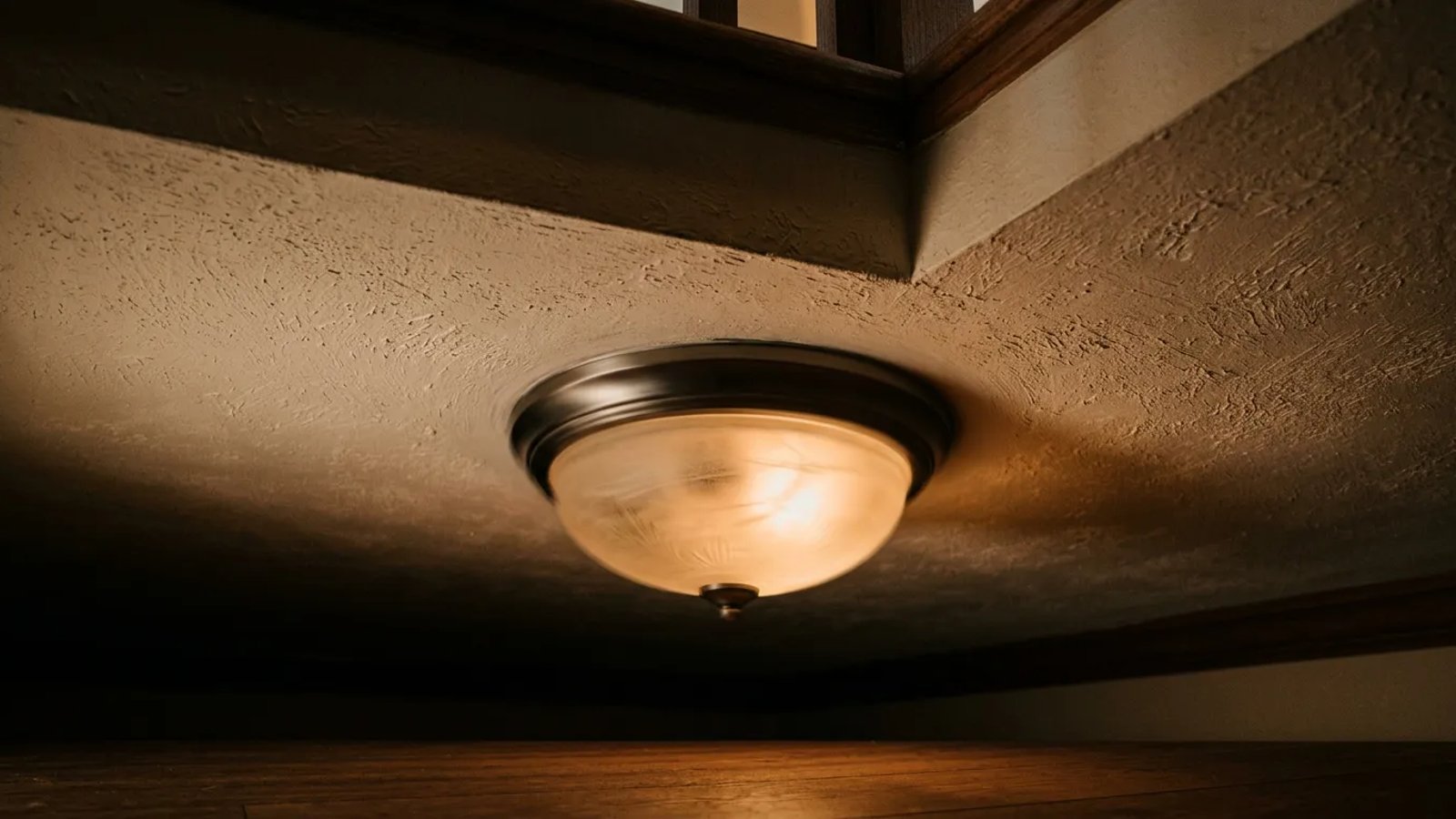
If your lights flicker when someone walks across the floor, you likely have a vibration-induced loose electrical connection. Learn how to find and fix this hidden fire hazard safely.
Full guide Electrical Learn how your home electrical system works and what parts are safe for you to handle.In my experience, it happens in older houses and surprisingly often in newer builds. You walk heavily across the upstairs hallway, and the dining room chandelier downstairs winks at you. Or you step into your bedroom, and the overhead light stutters for a second before returning to normal. If your lights flicker when walking, you are not dealing with a harmless quirk of an aging house. You are looking at a classic, vibration-induced loose electrical connection.
Wood framing flexes. Floor joists act like the skin of a drum, transferring the kinetic energy of your footsteps directly into the electrical boxes nailed to them. When everything is tight and secure, this vibration means nothing. But when a wire is barely hanging on, that slight jolt is enough to break the electrical circuit for a fraction of a second.
Why Do My Lights Flicker When Walking?
To understand the flicker, you have to look at how electricity travels. Standard household current, typically 120 volts in the U.S., requires an uninterrupted path of conductive metal—usually copper—to keep a light bulb glowing. This path runs from your breaker panel, through thick cables in your walls, into junction boxes, and finally to your switches and fixtures.
Inside those junction boxes, individual wires are spliced together using plastic wire nuts, or they are attached to the screw terminals of switches and outlets. If a wire nut is poorly twisted, or a screw terminal is left a quarter-turn too loose, the copper wires can rattle against each other. When you walk across the floor, the resulting vibration physically separates the wires by a millimeter. The power drops out, the light goes dark, the wires settle back into place, and the light comes back on. To your eye, it looks like a quick flicker.
The Hidden Danger: Why You Cannot Ignore the Flicker
A flickering light is your house trying to warn you about a fire hazard before it happens. When wires separate slightly under vibration, the electricity doesn't just stop flowing—it tries to jump the gap. This is called an electrical arc.
Arcing produces intense, localized heat. A loose connection carrying a standard 120-volt household current can easily reach temperatures high enough to melt plastic wire nuts, scorch wire insulation, and ignite nearby wood dust or building materials. According to the National Fire Protection Association (NFPA), electrical failures or malfunctions are the second leading cause of U.S. home fires, and loose connections are a primary driver of those failures.
I tested a flickering hallway sconce in a 1990s build last year. The homeowner thought the bulb was just dying. When I pulled the fixture down, the plastic wire nut had completely melted from months of invisible arcing. A few more weeks, and it could have been a wall fire.
Do not wait for the light to stop working entirely. By the time a loose connection fails completely, the heat damage inside the wall is usually severe.
Common Culprits Behind the Loose Connection
Before you start tearing open walls, it helps to know where these loose connections usually hide. The problem is almost always located in one of three places.
1. Back-Stabbed Wall Outlets
Many electricians use the push-in holes on the back of outlets (known as "back-stabbing") to speed up installation. Instead of wrapping the wire securely around the side screw, the wire is simply shoved into a hole where a small metal spring grips it. Over years of temperature changes and floor vibrations, these springs lose their tension. The wire wiggles loose, and because outlets are often wired in a series, a loose outlet can cause the ceiling light further down the line to flicker.
2. Poorly Twisted Wire Nuts
Wire nuts are the plastic caps used to join two or more wires together. If the wires weren't pre-twisted securely, or if the wrong size nut was used for the gauge of the wire, the bundle can loosen. The vibration from footsteps directly above a ceiling box will easily shake a loose wire nut apart.
3. Worn Out Light Switches
Light switches have internal moving parts that simply wear out after 10 to 15 years of daily use. The internal contacts can become pitted and loose. When you walk past the wall, the vibration shakes the worn switch contacts, causing the flicker.
How to Find and Fix the Loose Wire
If you are comfortable doing basic home maintenance and own a few simple hand tools, you can track down and secure the loose connection yourself. You will need a non-contact voltage tester, a Phillips screwdriver, a flathead screwdriver, and some fresh wire nuts.
- Replicate the flicker. Turn on the light and walk heavily around the room, then in the room directly above it. Note exactly where you step when the light blinks. This helps pinpoint whether the loose connection is in the ceiling fixture itself, the wall switch, or a nearby floor outlet.
- Turn off the power at the breaker. Locate your electrical panel and flip the breaker for that specific room. Never attempt electrical work with the power on.
- Verify the power is off. Use a non-contact voltage tester (which costs about $15-$20 at any hardware store) to check the switch, the fixture, and nearby outlets. The tester will beep and flash red if it detects live voltage.
- Inspect the light switch. Remove the cover plate and unscrew the switch from the wall. Gently pull it forward. Check the screw terminals on the side. If the wires are loose, tighten the screws firmly. If the wires are pushed into the back of the switch, pull them out and wrap them clockwise around the side screws instead.
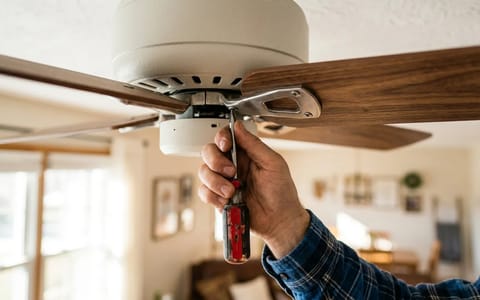
- Check the ceiling fixture. If the switch is tight, unscrew the canopy of the flickering light fixture. Lower it gently. Inspect the wire nuts connecting the fixture to the house wiring. Give each nut a gentle tug. If a wire slides out, that was your fire hazard. Remove the nut, twist the bare copper wires tightly together with pliers, and twist on a new wire nut.
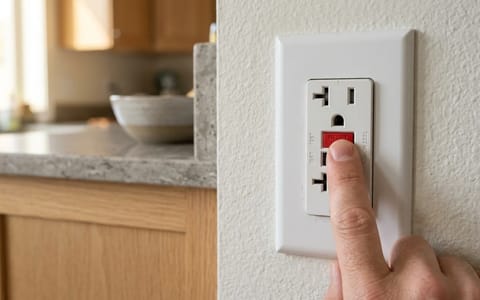
- Check nearby outlets. If the fixture and switch are fine, check the wall outlets in the same room. A loose back-stabbed wire in an outlet can break the circuit for the light. Move any back-stabbed wires to the secure side screw terminals.
When to Stop DIYing and Call a Pro
While tightening a few screws or replacing a wire nut is a straightforward Saturday morning task, some electrical issues require professional intervention. Knowing your limits keeps your home safe.
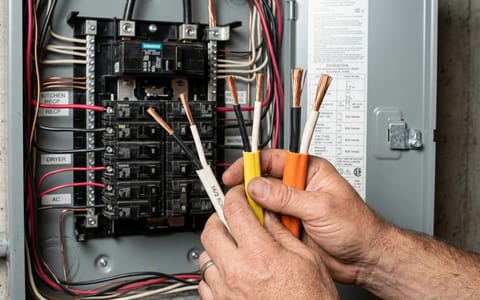
You should also hire a professional if you tighten all the connections in the room and the lights still flicker, or if lights in multiple rooms are flickering simultaneously. This indicates a loose neutral wire at your main breaker panel or at the utility meter—a highly dangerous situation that requires specialized gear to fix.
Ignoring a light that flickers when you walk is a gamble you don't want to take. The fix usually takes less than an hour and costs only a few dollars in parts. Grab a voltage tester, shut off the breaker, and secure those connections. Your house will stop acting haunted, and you will eliminate a major fire hazard hidden right behind your drywall.
- Never ignore movement-induced flickering; it is a physical warning of an electrical arc.
- Always turn off the breaker and verify the power is off with a non-contact voltage tester before opening any fixture.
- Move wires from the push-in holes on the back of outlets to the side screw terminals for a more secure, vibration-proof connection.
- If your home has aluminum wiring or the problem affects multiple rooms, skip the DIY and hire a licensed electrician.