What Is Polarity?
Electricity needs a complete circle to work. It flows into your home through one wire and goes back out through another. Polarity refers to making sure these wires connect to the right spots. The term actually comes from the Latin word polaris, which means pertaining to a pole. Electricians started using it in the 1800s to describe the positive and negative poles of a circuit.
In a standard US home, you have a hot wire and a neutral wire. The hot wire carries the live electricity from your breaker panel to your outlet. This wire is usually black or red. The neutral wire brings the electricity back to the panel to complete the circle. This wire is usually white. Correct polarity means the hot wire connects to the hot side of an outlet or switch, and the neutral wire connects to the neutral side.
The Dangers of Reverse Polarity
Sometimes a builder or a previous owner connects the wires backward. They put the hot wire on the neutral screw and the neutral wire on the hot screw. This mistake is called reverse polarity.
Reverse polarity is dangerous because it messes with how your devices turn off. Most lamps and appliances have a power switch that cuts off the hot wire. If the wires are backward, the switch cuts off the neutral wire instead. The device will stop working, so it looks like it's off. But the hot wire is still pumping live electricity into the device. If you reach in to change a lightbulb or touch a metal part inside a toaster, that live electricity can shock you.
How to Check Your Outlets
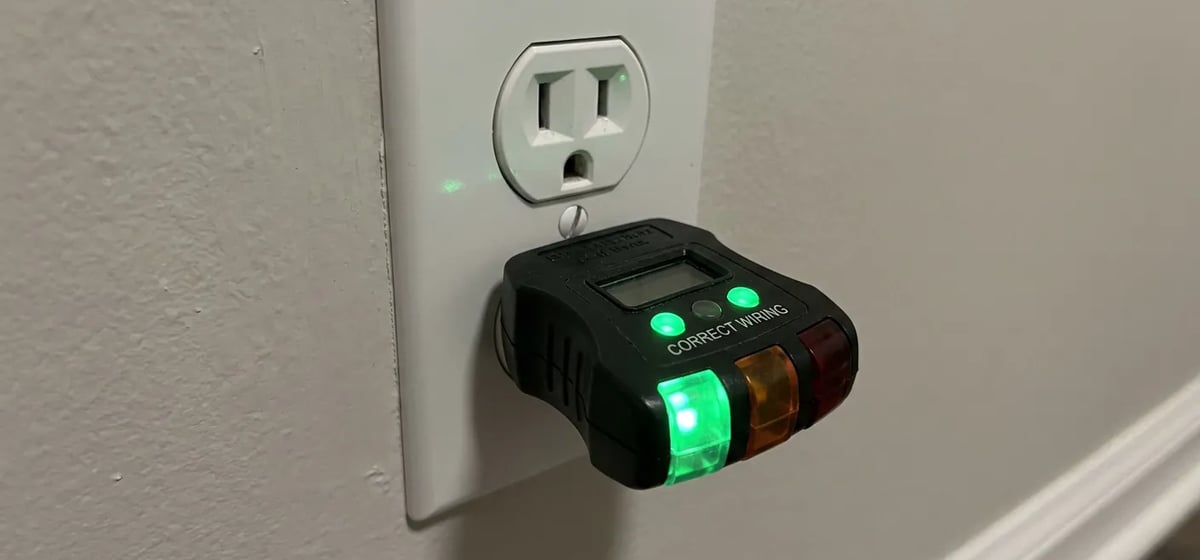
You don't need to take your walls apart to check your polarity. You can buy a simple plug-in tester at any hardware store. These little tools cost between 10 to 20 dollars. You just plug the tester into an outlet and look at the lights on the front.
- Two yellow lights mean your polarity is correct and the outlet is grounded.
- One red light and one green light usually mean you have reverse polarity.
- No lights mean the outlet has no power at all.
It's a good idea to walk through your house and test every outlet. This is a common step during a home inspection when you buy a house. If you find one outlet with reverse polarity, check the others in the same room. People often wire a whole room backward if they make a mistake on the first outlet.
Why Older Homes Have More Issues
If your house was built before the 1970s, you might run into polarity problems more often. Older homes originally had two-prong outlets. These older plugs didn't force you to plug things in a certain way. You could flip a plug upside down, and the lamp would still work. Modern three-prong outlets force you to plug devices in correctly. The wide slot on the left is for the neutral side, and the narrow slot on the right is for the hot side.
When people update old two-prong outlets to modern three-prong versions, they often mix up the wires. Since the wire colors in older homes can fade over time, it becomes hard to tell the black wire from the white wire. This makes reverse polarity a very common finding on inspection reports for older houses. If you buy an older home, testing your outlets should be one of your first tasks.
Fixing the Problem
Fixing reverse polarity is usually a quick job. It just involves taking the outlet out of the wall and swapping the black and white wires to the correct screws. The hot black wire goes to the brass or gold screw. The neutral white wire goes to the silver screw.
If you feel comfortable doing this yourself, it only costs the price of a new outlet. But working on your Electrical system carries real risks. If you aren't sure what you're doing, read up on DIY vs. Hiring a Pro to help you decide. Hiring a licensed electrician to fix a few backward outlets usually costs between 150 to 300 dollars, though ranges vary based on where you live and how many outlets need work. They'll also check the wiring to make sure there are no deeper problems hidden in your walls.