How to Find a Stud in the Wall (Even Without a Tool)
Hanging a heavy TV or floating shelf? Learn how to locate wall studs reliably, even if you don't own an electronic stud finder or have tricky plaster walls.
Full guide Interior: Paint, Drywall & Trim Learn how to patch drywall, choose the right paint, and update your interior trim.Hanging a heavy television, a large mirror, or floating shelves requires anchoring your hardware directly into solid wood. Missing the framing leaves you drilling into hollow drywall, which usually results in a sagging shelf and an ugly hole to patch. If you are staring at a blank stretch of paint and wondering where to drive that first screw, you are not alone.
Hitting solid wood is a simple matter of understanding how houses are put together. Here is exactly how to find a stud in the wall reliably, whether you have a high-tech scanner, a simple magnet, or nothing but your bare hands.
Framing 101: How Far Apart Are Wall Studs?
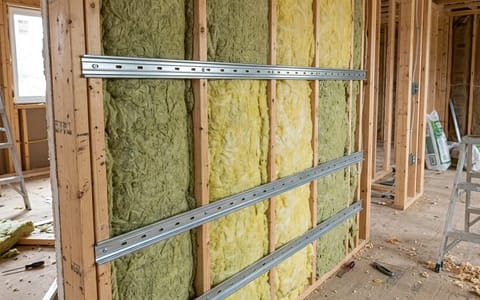
Before you start tapping on the drywall or sliding tools around, it helps to know what is actually behind the paint. In North America, residential framing follows strict building codes. According to the International Residential Code (IRC), vertical wall studs are typically placed 16 inches "on center."
This means if you measure from the dead center of one stud to the dead center of the next, you will get exactly 16 inches. In some newer homes utilizing advanced framing techniques, or on non-load-bearing interior walls, builders might use 24-inch spacing to save on lumber.
If you pull out a standard Stanley or Milwaukee tape measure, you will notice small red boxes or arrows every 16 inches (16, 32, 48, 64). Tape measure manufacturers highlight these numbers specifically to help you map out wall framing. Once you locate a single stud, you can usually pull your tape measure out and mark every 16 inches to find the rest of them.
How Do You Find a Stud in the Wall Without a Tool?
You do not need an electronic gadget to map out your framing. Builders leave behind plenty of clues if you know where to look. Here are three highly reliable methods for locating solid wood using household items or basic logic.
The Magnet Trick
Drywall is heavy. To keep it attached to the wooden studs, installers drive metal drywall screws into the wood every 12 to 16 inches vertically. If you can find those hidden metal screws, you have found your stud.
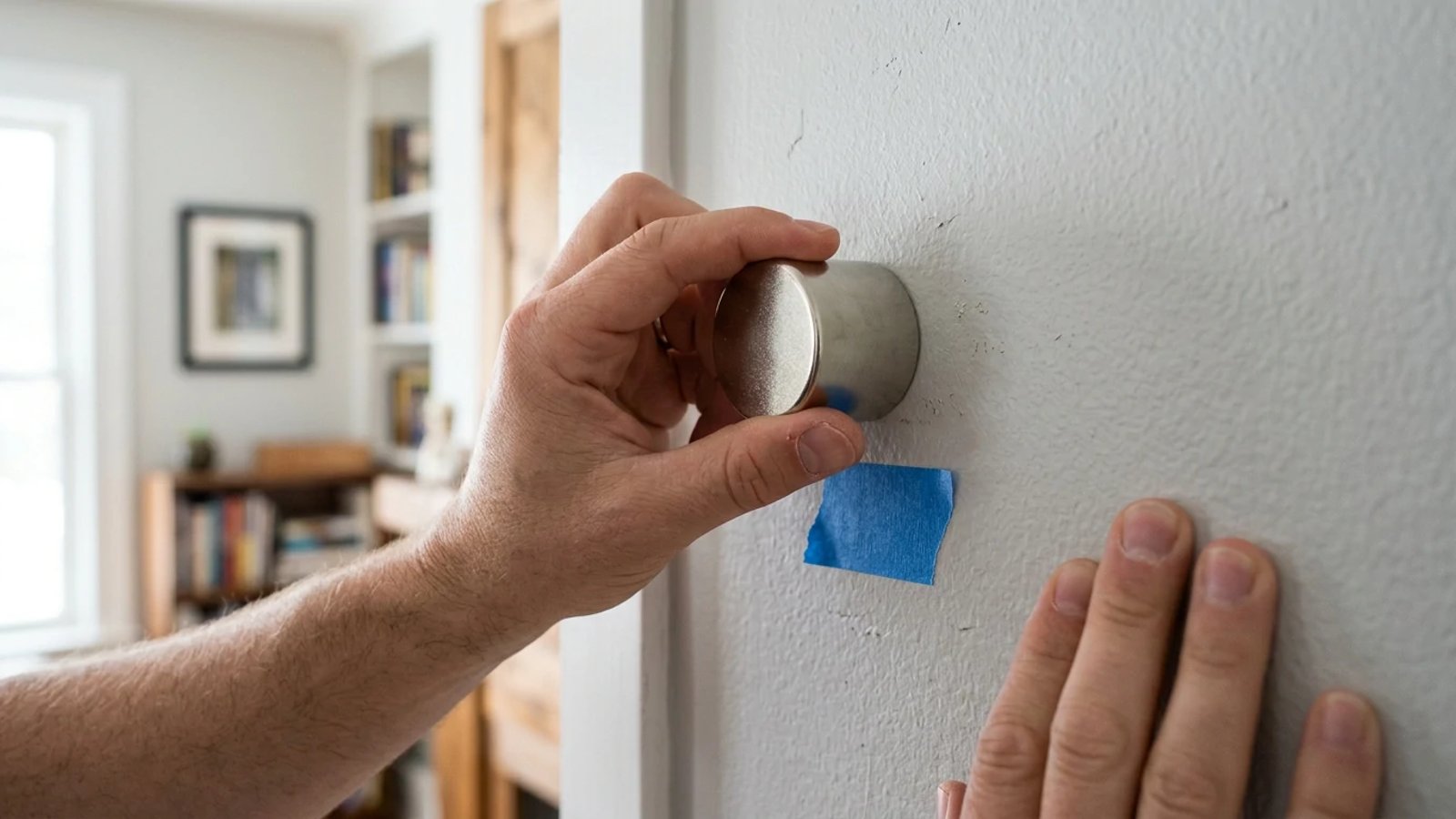
Grab a strong rare-earth (neodymium) magnet. You can buy a pack for about $5 to $10 at any hardware store. Sweep the magnet lightly over the wall in a wide "S" pattern. When the magnet passes over a drywall screw, it will pull firmly against the wall and stick in place. Mark that spot with a piece of painter's tape, then sweep straight up or down to find the next screw on that same piece of wood. Connect the dots, and you have a perfectly mapped stud.
The Outlet Anchor Strategy
Outlets and light switches are almost always mounted directly to the side of a stud.
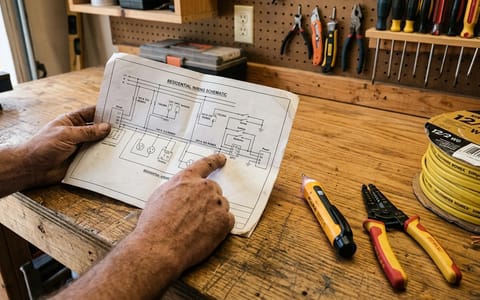
When an electrician wires a room before the drywall goes up, they nail the plastic electrical boxes directly to the side of the wooden framing. This makes every electrical outlet and light switch in your house a built-in map marker.
Take off the plastic faceplate (just one or two small flathead screws) and look inside the box with a flashlight. You can usually see which side of the plastic box is screwed or nailed into the wood. Once you know which side the wood is on, measure 16 inches left or right from that point to find the next one in the sequence.
The Knock Test
This is the oldest trick in the book, but it requires a bit of practice. Tap firmly on the drywall with your knuckles, moving horizontally across the surface.
When you knock on the empty space between framing, the wall will produce a lower-pitched, hollow, echoing thud. As your knuckles move over the solid wood, the pitch gets higher, and the sound becomes a tight, solid "smack." It feels harder against your hand, too. Use this to narrow down the general area, then confirm the exact center with a small pilot hole or a magnet.
How to Calibrate and Sweep a Digital Stud Finder
If you hang heavy items frequently, a digital stud finder is worth keeping in your toolbox. Most basic models (like those from Zircon or Franklin Sensors), which typically cost between $20 and $50, work by measuring the density of the wall. When the sensor passes over the dense wood instead of the hollow drywall cavity, it lights up.
However, density scanners are notoriously prone to false positives if you use them incorrectly. When I hung a 65-inch television in my living room last year, I kept getting wildly inaccurate, flashing readings. I finally realized I was starting my calibration scan directly over a stud, which confused the tool's baseline density reading.
Here is the correct way to sweep a wall:
- Place the tool flat against the wall. Do not press the power button yet.
- Hold the power button to calibrate. Keep the tool perfectly still for two seconds while it reads the baseline density of the hollow wall.
- Slide horizontally. Move the unit slowly and smoothly to the left or right without lifting it off the paint.
- Mark the edge. When the tool beeps or lights up, mark the spot with a pencil. This is the edge of the wood, not the center.
- Scan from the opposite direction. Slide the tool from the other side until it beeps again, mark the second edge, and drill your anchor exactly between the two marks.
Why Plaster Walls Confuse Electronic Finders (And What to Do)
If you live in a home built before the 1950s, you likely have lath and plaster walls instead of modern drywall. Plaster walls are constructed by nailing hundreds of thin horizontal strips of wood (the lath) across the vertical studs, and then slathering wet plaster over the whole thing.
Because the wall is packed with horizontal wood strips, random globs of dense plaster, and inconsistent thicknesses, a standard electronic density scanner will beep constantly. It reads the entire wall as a solid mass.
To locate framing behind plaster, you have to bypass the density scanner entirely:
- Check the baseboards: Look closely at the top edge of your wooden baseboards. Carpenters secure heavy baseboards by driving finish nails directly into the studs. Find a nail hole (often filled with wood putty), and use a level to trace a straight vertical line up the wall.
- Use a strong magnet: The magnet trick mentioned earlier works exceptionally well on plaster. While the plaster itself is thick, the lath strips are secured to the vertical studs using hundreds of tiny metal tacks. Sweep a strong rare-earth magnet vertically; when you find a line of magnetic pulls spaced closely together, you have found the tacks, which means you have found the stud.
- Look for the lath keys: If you have access to the backside of the wall (like from an unfinished attic looking down, or from a basement looking up into the wall cavity), you can measure the distance between the vertical framing directly and transfer those measurements to the room above.
Securing heavy items to your walls does not have to be a guessing game. Take your time, use an outlet or a magnet to establish a reliable baseline, and always measure out your 16-inch gaps to double-check your work. Finding that solid piece of wood takes an extra five minutes, but it ensures your heavy decor stays exactly where you put it for years to come.
- Use an electrical outlet as a starting baseline; the plastic boxes are almost always nailed directly to the side of a stud.
- Sweep a strong rare-earth magnet over the wall in an S-pattern to locate the hidden metal drywall screws.
- Always calibrate your electronic stud finder by placing it flat against the wall before holding the power button.
- Look for the small red boxes or arrows on your tape measure—they are placed every 16 inches specifically to help you map out wall framing.