What is plaster?
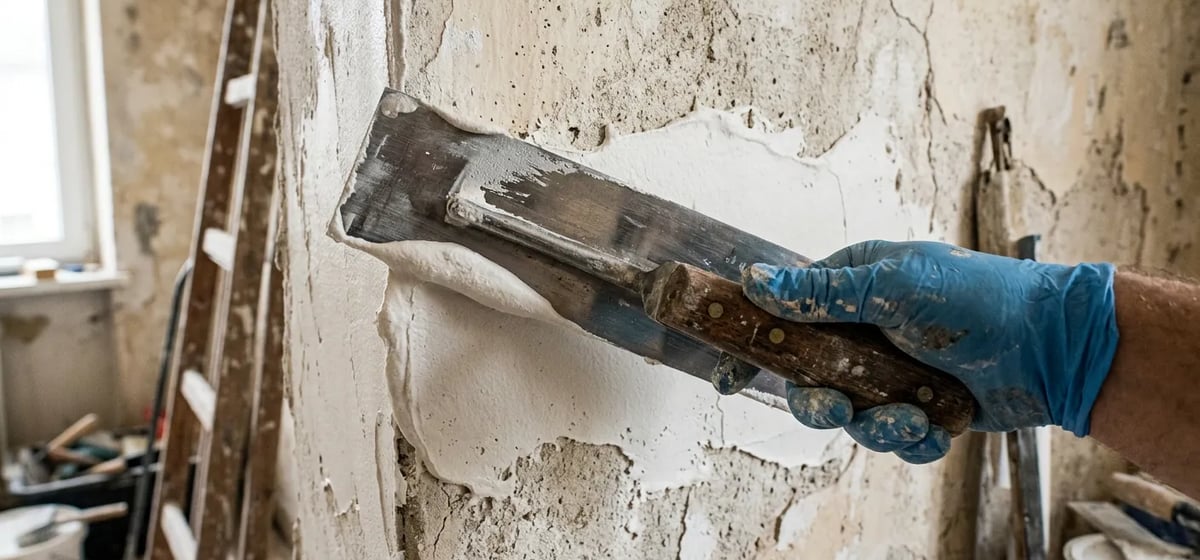
Plaster is a traditional wall finishing material made of gypsum, sand, and water. When mixed, these ingredients form a thick paste. Builders spread this paste over wooden slats called lath. As the paste dries, it hardens into a very tough surface. The word comes from a Greek term meaning to mold or daub. Builders have used variations of this mixture since ancient times to coat and protect walls.
If your house was built before the 1950s, you likely have plaster walls. After that time, builders switched to modern drywall because it's faster and cheaper to install. Plaster requires a lot of skill to apply smoothly. A worker has to trowel on multiple wet coats by hand and wait for each layer to dry completely.
Why it matters to your home
Plaster is incredibly durable. It feels solid when you knock on it and creates a hard, dense barrier. This density makes it great at blocking sound between rooms. It also provides a slight boost to your home insulation. When you hang pictures or shelves, you need to know if you have plaster walls. Standard drywall anchors will just crumble the material. You need special screws and anchors designed for hard, thick walls.
Because plaster is so thick, it can block Wi-Fi signals in older homes. You might need extra routers or signal boosters to get good internet coverage. If you plan to renovate, tearing out old walls is very messy and creates a lot of heavy dust. You can learn more about managing wall projects in our guide to Interior: Paint, Drywall & Trim.
Common problems to watch for
Even though plaster is tough, it's very rigid. As your house ages, the wooden framing shifts. This normal movement causes the rigid walls to crack. Tiny hairline cracks are usually harmless and easy to patch. However, large cracks or bulging spots mean the plaster is pulling away from the wooden lath behind it. This happens when the plaster keys break off. Keys are the little blobs of paste that squeeze between the wooden slats to hold the wall up.
Water damage is another big enemy. If a roof leaks or a pipe bursts, water will soak into the walls. The material gets soft, crumbles, and eventually falls off the ceiling. If you see deep cracks above doors or windows, you might want to check your Foundation & Structure to make sure the house is not settling too fast.
What it costs to fix
Fixing plaster is an art form. Not every drywall contractor knows how to do it. You have to find a specialist, which means repairs cost more than standard drywall work. If you just need to patch a few small cracks, a pro might charge 150 to 300 dollars. If you have a large hole or a sagging ceiling, the repair will take more time and material.
Replacing a whole wall or ceiling section usually costs between 500 and 1500 dollars. Prices depend heavily on your location and the contractor you choose. Because these ranges vary so much, it's smart to read up on Hiring Contractors & What Things Cost before you start a big project. Sometimes contractors will suggest covering a severely damaged wall with a thin layer of new drywall instead of fixing it, which can save you money.