The Essential Moving Home Checklist for a Smooth Move-In
A practical, step-by-step guide to securing your new house, locating critical shutoffs, and tackling immediate maintenance tasks on day one.
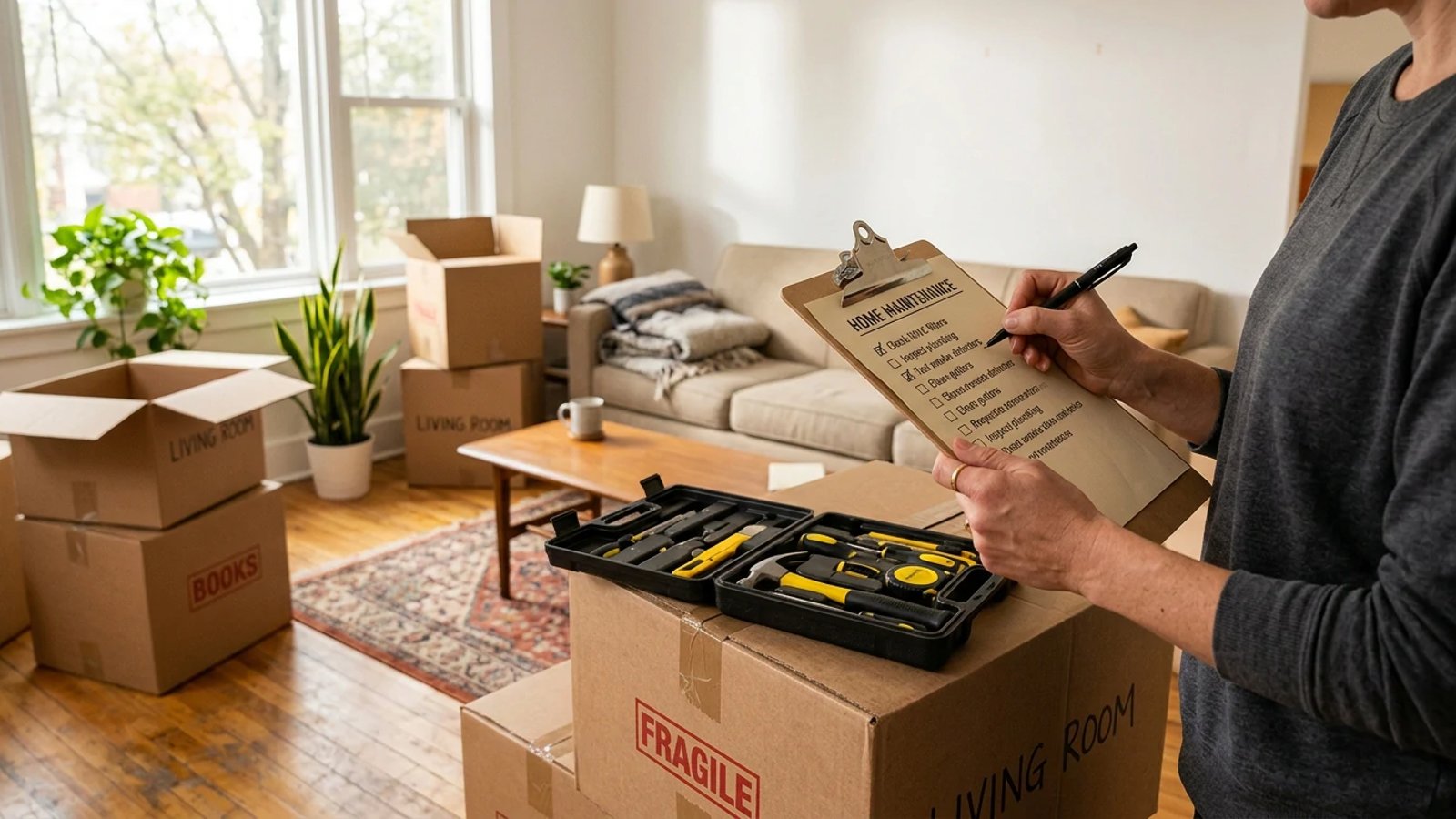
Full guide New Homeowner Guide Learn how to take control of your new house in the first year without getting overwhelmed.Moving into a new house is chaotic. You are juggling a mountain of cardboard boxes, coordinating delivery trucks, and trying to figure out where the couch goes. In the middle of all that heavy lifting, it is incredibly easy to overlook the physical systems of the house itself. A solid moving home checklist keeps you grounded, ensuring your new place is safe, secure, and functional from the moment you turn the key.
Instead of just focusing on furniture placement and paint colors, smart homeowners prioritize critical operations and safety checks. Knowing how your home breathes, where the water flows, and how the power is distributed will save you massive headaches down the road. Here is exactly what to tackle during those critical first few weeks.
What Should You Do Before Moving In: Your New Home Checklist
The easiest time to work on a house is when it is completely empty. Before the moving truck backs into the driveway, take a day or two to handle the fundamentals.
First, confirm that all utilities are transferred into your name. Water, electricity, gas, and internet should be active before you arrive. Trying to clean a new house without running water or electricity is a miserable experience.
Next, do a deep clean. Even if the previous owners left the place looking tidy, you want a fresh slate. Wipe down the insides of all kitchen and bathroom cabinets. If the kitchen cabinets feel sticky from cooking grease, mix a little TSP (trisodium phosphate, about $10 at any hardware store) with warm water to cut through the grime. Scrub the baseboards, vacuum the carpets, and mop the hard floors.
Finally, change the locks. You have no idea who holds a spare key to your new front door—contractors, neighbors, dog walkers, or extended family of the previous owners.
Finding a random spare key tucked under a patio paver quickly cured me of waiting to change the locks.
When my family moved into our current place, I made the mistake of waiting until day three to change the locks. Finding a random spare key tucked under a patio paver out back quickly cured me of that habit—we replaced all exterior deadbolts that same afternoon.
Day One Essentials: Securing the Perimeter and Systems
Your first day in the house is about safety and establishing a functional home base. Before you start unpacking dishes or hanging clothes, locate your main water shutoff valve. If a pipe bursts or a washing machine hose splits, you need to know exactly how to stop the water flow in seconds, not minutes.
In colder regions, this valve is usually inside the basement or utility closet, close to where the main pipe comes through the foundation wall. It will typically have a red or yellow lever handle, or a round wheel. In warmer climates, the shutoff is often outside near the street meter or attached to an exterior wall.
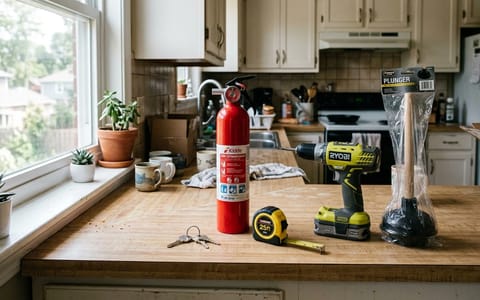
Once you find the water shutoff, test your life-safety devices. According to the National Fire Protection Association (NFPA), smoke alarms should be installed inside every bedroom, outside each sleeping area, and on every level of the home. Push the test button on every smoke and carbon monoxide detector; in my experience, a quick test often reveals a dead battery you didn't know about. If they don't beep loudly, replace the 9-volt batteries immediately. If the detectors are yellowed with age or older than 10 years, replace the entire unit.
Finally, open your "first-night" box. This should be a clearly labeled plastic bin that travels in your car, not the moving truck. It should contain:
- Toilet paper and hand soap
- A basic toolkit (utility knife, multi-bit screwdriver, pliers)
- Flashlights or headlamps
- Phone chargers
- Basic medications and a first-aid kit
- A few garbage bags
First Week Tasks: Air Quality and Hidden Leaks
Once you have a place to sleep and the boxes are mostly in the right rooms, turn your attention to the home's mechanical systems. Start with the HVAC system, a critical component that should be checked within the first 7 days. You don't know the last time the previous owner changed the furnace or AC filter. A clogged filter restricts airflow, driving up your energy bills and putting stress on the blower motor.
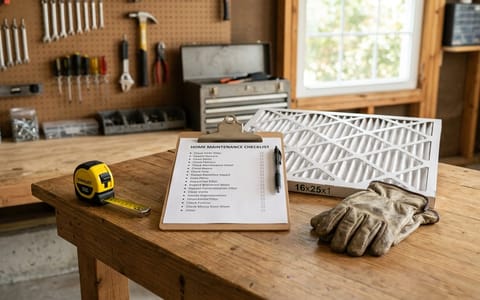
Pull out the old filter, check the size printed on the cardboard frame, and buy a replacement. A MERV 8 to MERV 11 pleated filter (usually $15 to $20) offers a great balance of capturing dust and allergens while allowing proper airflow. Write the current date on the edge of the new filter with a marker so you know exactly when you installed it.
Next, go on a leak hunt. Water is a house's worst enemy, and small drips often go unnoticed during a home inspection. Run the water in every sink, then open the cabinet doors below. Run your dry hand along the bottom of the P-trap (the curved pipe under the drain) and check the shutoff valves at the wall for moisture. Flush every toilet and listen carefully. If a toilet continues to run long after the tank fills, the flapper valve is likely leaking.
This is also the week to set up your home security. If the house came with an existing alarm system, contact the provider to transfer the service or reset the master codes. Install any smart doorbells, exterior cameras, or motion-sensor floodlights you brought with you.
How Do You Map an Electrical Breaker Box?
Sometime during your first month, grab a helper and map your electrical panel. Builders and previous owners are notoriously bad at labeling breakers. You might see a switch labeled "Plugs" or "Upstairs," which is entirely unhelpful when you need to safely turn off the power to replace a specific bathroom light fixture.
Mapping the panel takes about 30 to 60 minutes and requires two people.
- Turn on all the lights. Walk through the house and flip on every ceiling light and lamp.
- Plug in a loud radio. Have your helper plug a radio or a vacuum cleaner into a specific wall outlet.
- Flip a breaker. Go to the panel and turn off one breaker.
- Communicate the changes. Ask your helper to shout out which lights turned off, or if the radio stopped playing.
- Write it down. Use a fine-tip Sharpie to write the specific rooms and appliances on the panel's paper index card (e.g., "Kitchen Island Outlets" or "Master Bath Lights").
- Repeat the process. Turn that breaker back on, move the radio to a new room, and test the next switch.
Building a Long-Term Maintenance Routine
Once the immediate move-in tasks are handled, you transition from reacting to the house to actively maintaining it. Houses require seasonal upkeep to stay healthy. In the spring and fall, you will need to clean the gutters to prevent water from backing up under the roof. In the summer, you'll monitor the AC unit and keep landscaping trimmed away from the exterior walls. In the winter, you'll need to disconnect exterior hoses to prevent frozen pipes.
Start keeping a physical folder or a digital document for your home. Drop in the receipts for the new locks, the manuals for your appliances, and notes on what size air filter you need.
Taking control of your home's maintenance right from the start reduces the anxiety of homeownership. By knocking out these essential tasks early, you protect your investment, prevent costly emergency repairs, and can finally relax and enjoy your new space.
- Never assume the previous owners handed over every key; replace all exterior deadbolts immediately.
- Knowing exactly where your main water shutoff is located can save you thousands in water damage if a pipe bursts.
- Pack a 'first-night' box with critical tools, toiletries, and flashlights so you aren't digging through taped boxes in the dark.
- Mapping your breaker box early prevents the frustration of guessing which switch controls which room during an outage.