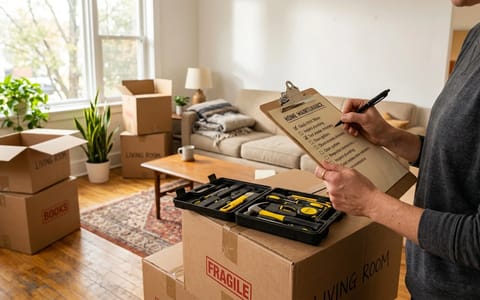
The Only Practical List of New Home Necessities You Need
Just got the keys to your first house? Skip the decorative pillows for now. Here is the practical, non-decorative list of safety gear and tools you actually need on day one.
Full guide New Homeowner Guide Learn how to take control of your new house in the first year without getting overwhelmed.You just got the keys. The excitement is real. You walk through the empty rooms, planning where the sofa will go and debating paint colors. Then, a toilet clogs or a door hinge squeaks, and a hard truth sets in: there is no landlord to call anymore. The immediate panic of homeownership usually hits during that first, frantic hardware store run. You are staring at aisles of tools, wondering what actual new home necessities you need to survive the first month without draining your bank account.
We are going to skip the decorative items, the throw pillows, and the aesthetic upgrades. This guide focuses purely on the functional, life-saving, and money-saving gear required for homeownership. When I bought my first house in 2018, I spent $300 on a massive 200-piece mechanic's tool set because I thought that is what homeowners did. I have used maybe five pieces from it. What I actually needed was a $15 flange plunger at 2 AM on a Tuesday.
This comprehensive checklist will serve as your ultimate guide to the new home necessities you must buy immediately upon moving in, helping you build confidence without overspending on tools you aren't ready to use yet.
New Home Necessities: What Are the Absolute First Things Needed?
Before you build furniture or hang a single picture frame, you have to secure the perimeter and protect the interior. The very first items on your shopping list fall under the category of life safety and security. These are non-negotiable purchases for your first 48 hours in the house.
New Exterior Locks: Change the locks immediately. You have no idea how many spare keys the previous owners handed out to dog walkers, babysitters, contractors, or neighbors over the years. A standard Kwikset or Schlage deadbolt costs about $35 to $50. You do not need to hire a locksmith for this; changing a standard deadbolt takes about 15 minutes and requires only a Phillips head screwdriver.
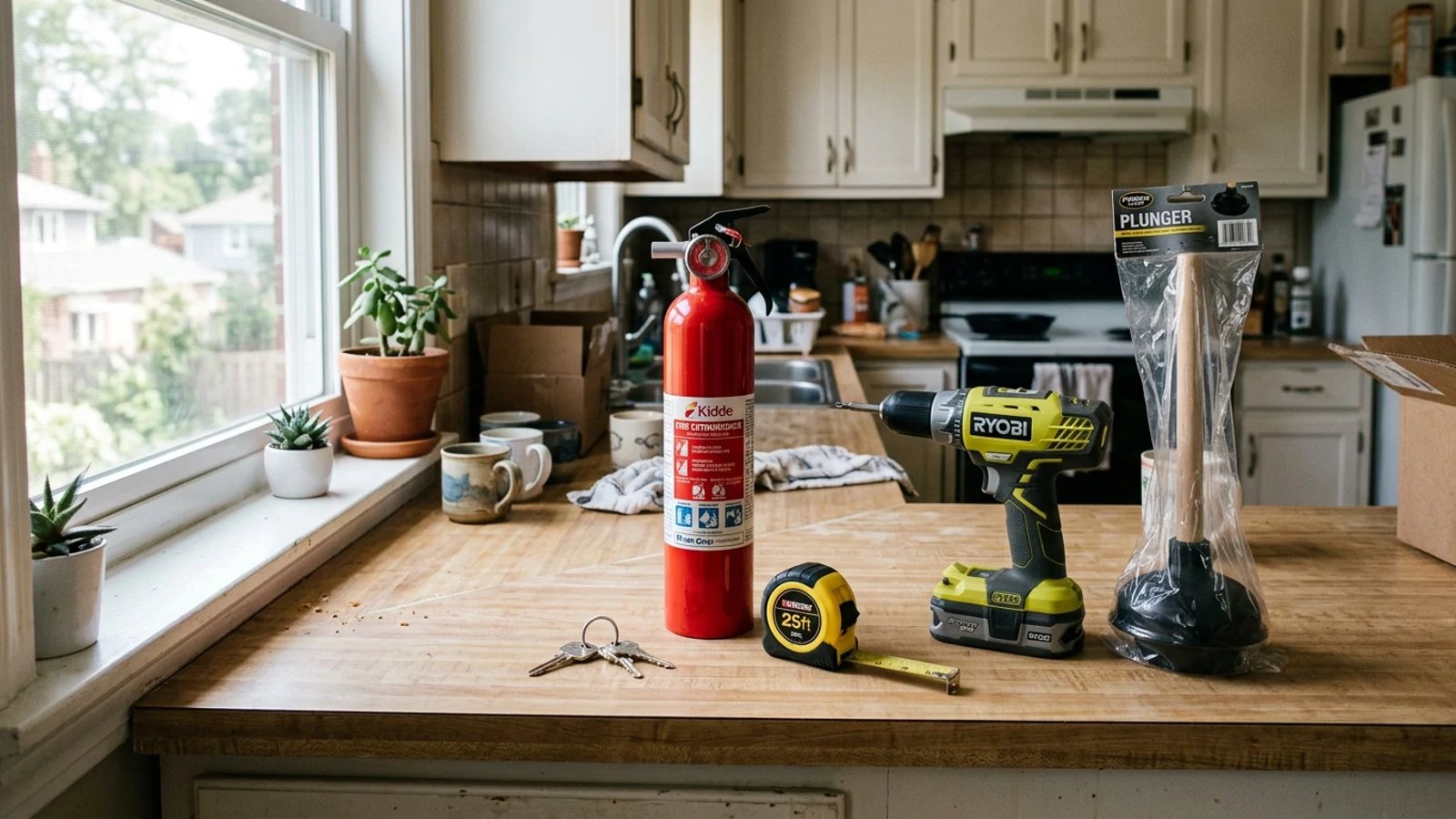
Fire Extinguishers: You need more than one. According to the National Fire Protection Association (NFPA), you should have at least one fire extinguisher on every level of your home. You specifically need an ABC-rated extinguisher for general spaces (living room, basement) and a kitchen-specific extinguisher rated for grease fires. Store the kitchen extinguisher near the exit of the kitchen, not right next to the stove where a fire might block your access to it.
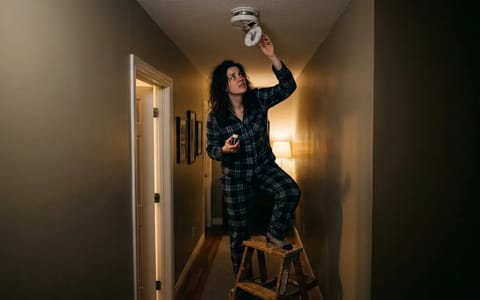
Smoke and Carbon Monoxide Detectors: Do not trust the yellowed plastic detectors left behind by the previous owner. Smoke detectors have a maximum lifespan of 10 years, and carbon monoxide detectors expire after 5 to 7 years. If you cannot verify the exact date they were installed (usually printed on the back), replace them all. Buy combination smoke/CO units for hallways outside sleeping areas, and ensure you have at least one on every level.
The Day-One Toolkit: Skip the Massive Sets
Hardware stores heavily market giant, hard-plastic cases filled with hundreds of shiny tools to new homeowners. Ignore them. They are mostly filled with obscure socket sizes designed for automotive work, not home maintenance. You are better off buying a few high-quality, specific tools—like the five to seven essential items we'll discuss—that will handle 90% of your indoor tasks.
The Flange Plunger: This is the most common mistake new homeowners make. The classic plunger with a flat rubber cup is only for sinks and bathtubs. For a toilet, you must buy a flange plunger. It has an extra rubber sleeve that pulls out from the bottom cup to form a tight seal inside the toilet drain. Buy one for every bathroom in the house before you actually need it.
A 20V Cordless Drill: A reliable cordless drill is the workhorse of a new home. You will use it to mount TVs, assemble furniture, hang heavy mirrors, and fix loose cabinet hinges. You do not need a professional-grade contractor drill. A basic 12V or 20V model from consumer brands like Ryobi, Craftsman, or standard DeWalt will cost around $80 to $120 and will last for years. Make sure to buy a small box of assorted drill bits and driver bits to go with it.
A 25-Foot Tape Measure: You will measure rooms for rugs, windows for blinds, and walls for art. A flimsy 10-foot tape measure will buckle and frustrate you. Spend $15 to $25 on a sturdy 25-foot tape measure with a wide blade (at least 1 inch thick) so it can extend several feet out without snapping and bending.
A Reliable Stud Finder: Drywall cannot support heavy weight. If you are hanging a large mirror, a television, or floating shelves, you must anchor the screws into the wooden studs behind the drywall. A basic magnetic or electronic stud finder costs about $20 and prevents you from destroying your walls.
Multi-Bit Screwdriver and Utility Knife: Instead of buying 15 different screwdrivers, buy one high-quality ratcheting multi-bit screwdriver. It stores the different heads (Phillips, flathead, square) in the handle. Pair this with a heavy-duty utility knife (box cutter) with extra blades. You will use the knife constantly to break down moving boxes, open packages, and score old caulk.
The best homeowner toolkit is built piece by piece as actual projects arise, not bought all at once in a plastic clamshell.
Utility and Emergency Prep Gear
Once your safety items are installed and your basic toolkit is assembled, you need to prepare for the messy realities of homeownership. Things will break, leak, and require cleanup. Having the right utility gear on hand turns a potential disaster into a minor inconvenience.
High-Lumen LED Flashlights: When the power goes out during a storm, or a breaker trips while you are in the basement, your phone flashlight is not going to cut it. Buy two or three dedicated, high-lumen LED flashlights. Keep one in the kitchen, one in the master bedroom, and one near the electrical panel. Check the batteries every six months.
Contractor Trash Bags: Moving into a new house generates a shocking volume of garbage. Cardboard, packing tape, old fixtures you are tearing out, and random debris will quickly overwhelm standard 13-gallon kitchen bags. Standard bags will tear the second you drop a piece of broken drywall into them. Spend $25 on a box of 3-mil thick, 42-gallon contractor bags. They are nearly puncture-proof.
A Step Stool and an Extension Cord: Do not stand on your nice dining chairs to change a lightbulb or test a smoke detector. A sturdy two-step folding stool is a daily necessity. Similarly, a heavy-duty 50-foot extension cord (12-gauge or 14-gauge) is vital for running power tools outdoors or plugging in a shop vacuum in a room without active outlets.
How to Map Your Home's Critical Shutoffs
This costs absolutely nothing, but it is the single most important maintenance task you will perform on day one. If a pipe bursts under the kitchen sink, you do not have time to Google where your main water valve is. You need to know exactly how to kill the power, water, and gas to your home.
- Locate the main water shutoff valve. This is usually found in the basement, crawlspace, or utility closet on the wall facing the street. Turn it clockwise to ensure it actually works, then turn it back on.
- Find the water meter and curb key. If the inside valve fails, you must shut the water off at the street level. Buy a water meter key (a long metal T-handle tool, about $15) and make sure you can open the metal cover in your yard.
- Locate the main electrical panel. Open the metal door and verify that the main breaker at the top (usually 100 or 200 amps) is clearly marked. This switch kills all power to the entire house instantly.
- Identify individual breaker labels. Check if the previous owner accurately labeled the switches (e.g., "Kitchen Outlets", "Furnace"). If they are blank or illegible, make a plan to map and label them during your first month.
- Find the main gas shutoff. If your home uses natural gas, locate the meter outside. The shutoff valve is located on the pipe running into the meter. You will need an adjustable wrench to turn the rectangular tang a quarter-turn so it sits perpendicular to the pipe.
Items You Can Wait to Buy
It is easy to get carried away at the hardware store. The adrenaline of owning a home makes you feel like you need a circular saw and a massive landscaping kit on day two. Resist the urge. Tools are expensive and take up valuable storage space.
Hold off on buying specialized power tools like reciprocating saws, random orbital sanders, or tile wet saws until you have a specific weekend project that actively requires them. The same goes for heavy yard equipment. Unless you are moving in during the peak of spring growth, you can usually wait a few weeks to research and purchase the right lawn mower or string trimmer for your specific yard size.
Moving into a new home is overwhelming, but being prepared drastically reduces the stress. By focusing your initial budget on safety upgrades, shutoff access, and a tight collection of versatile hand tools, you establish a solid foundation for homeownership. You will have plenty of time to tackle the decorative paint jobs and the landscaping later. For now, secure the house, map your utilities, and enjoy the confidence that comes from knowing you are ready for whatever the house throws at you.
- Safety hardware is non-negotiable; prioritize locks, fire extinguishers, and detectors before unpacking boxes.
- A 20V cordless drill and a 25-foot tape measure will handle 90% of your first-week mounting and measuring tasks.
- Mapping your utility shutoffs on day one prevents minor leaks from becoming catastrophic floods.
- Contractor trash bags are a cheap, tear-proof necessity for the massive amount of waste generated during a move.