Attic Insulation Cost: A Simple Homeowner Price Guide
Wondering what it costs to insulate your attic? We break down the 2026 going rates for blown-in and spray foam, plus how to find local rebates now that federal tax credits have expired.
Homeowners often dread opening their heating bills as late fall turns into winter. Drafty rooms, cold ceilings, and a furnace that never stops running are clear signs your house is losing heat straight through the roof. You know you need better insulation, but calling contractors can feel like walking into a trap when you have no idea what the going rates are.
This guide breaks down the true attic insulation cost by material type, using current national averages. We will look at standard blown-in materials, premium spray foam, and how to navigate the messy landscape of rebates and expired tax credits so you can hire a professional with confidence.
What Drives the Attic Insulation Cost?
The final price on your contractor's estimate comes down to four main factors: the square footage of your attic, the type of material you choose, your target R-value, and the current condition of your space. R-value measures how well the material resists heat flow. The higher the number, the better the insulation.
If your attic is completely empty, the job is straightforward. But if you have old, moldy, or pest-infested insulation that needs to be vacuumed out first, expect to pay an extra $1.00 to $2.00 per square foot for removal and disposal.
Affordable Upgrades: Blown In Insulation Cost
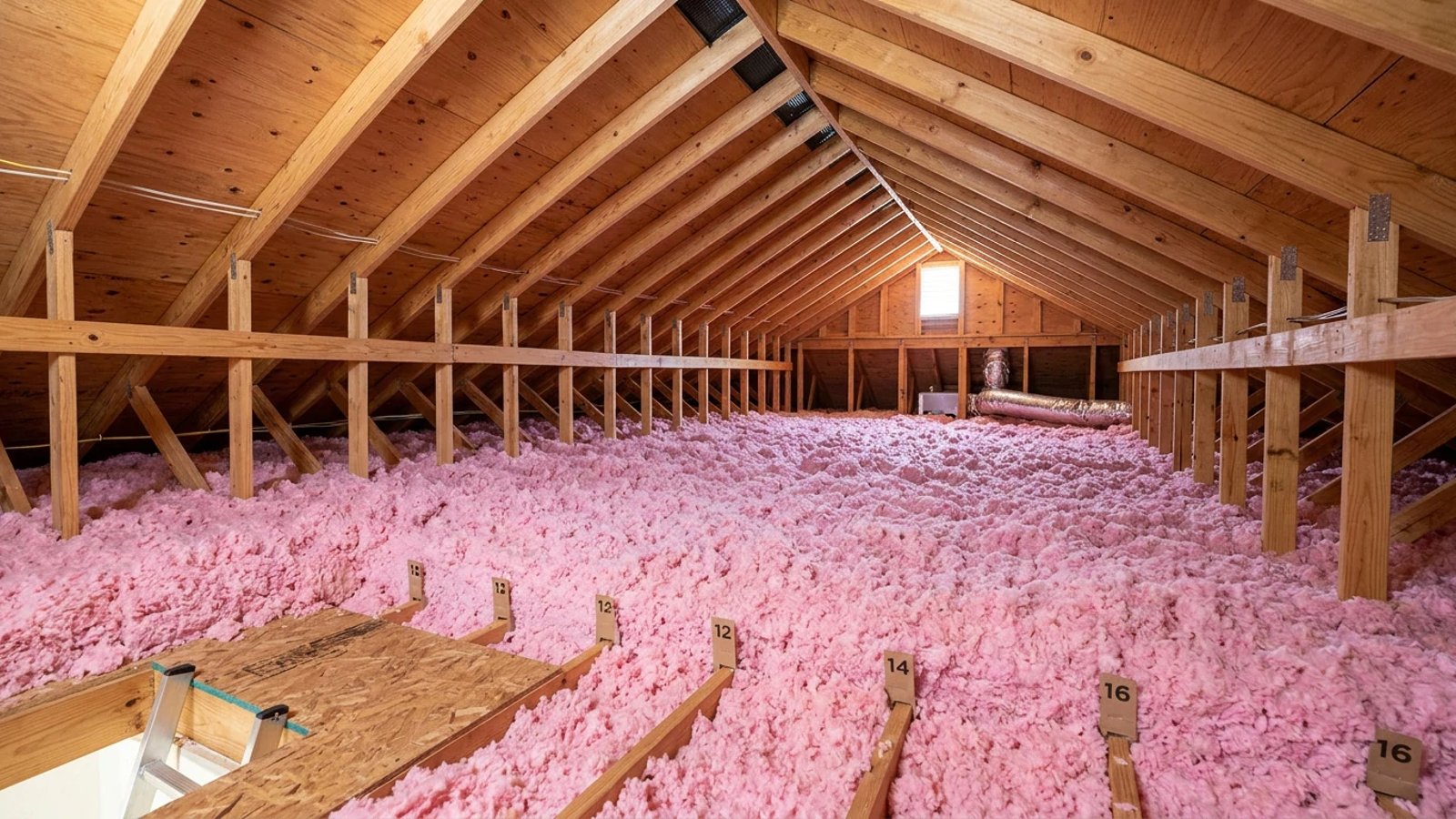
For the vast majority of homes with standard vented attics, blown-in insulation is the most cost-effective choice. Contractors use a large machine to shoot loose material through a hose, creating a thick, fluffy blanket over your attic floor. You generally choose between two materials: fiberglass and cellulose.
Fiberglass is made from spun glass fibers. It is lightweight, naturally fire-resistant, and won't absorb moisture. The blown in insulation cost for fiberglass usually lands between $1.50 and $2.50 per square foot. However, it has a slightly lower R-value per inch compared to cellulose, meaning you need a deeper layer to hit your target rating.
Cellulose is made from recycled paper products treated with borate for fire and pest resistance. It is denser than fiberglass, which gives it a higher R-value per inch and makes it slightly better at blocking air drafts. Cellulose costs between $1.50 and $3.00 per square foot installed.
When we topped up the insulation in my 1940s colonial last fall, we measured the existing fiberglass at barely three inches deep. Bringing it up to 16 inches of blown-in cellulose cost about $2,100 for the whole footprint, but it cut my January heating bill by nearly a third. It is one of the few home improvements that actually pays for itself in just a few years.
Before any loose fill goes down, a good contractor will perform air sealing. This means taking expanding foam cans and sealing all the gaps around light fixtures, plumbing stacks, and wire holes. According to Energy Star guidelines, air sealing combined with proper insulation can save you up to 15% on heating and cooling costs.
The Premium Upgrade: Spray Foam Attic Cost
If you want to seal your attic completely, spray foam is the heavy hitter. Instead of sitting on the attic floor, spray foam is usually applied directly to the underside of the roof deck. This transforms your attic into a conditioned space, which is incredibly beneficial if your HVAC unit and ductwork live up there.
The spray foam attic cost is significantly higher than blown-in options. Open-cell foam expands massively to fill gaps and costs $3.50 to $5.50 per square foot, typically applied at 8-12 inches for R-30 to R-40. Closed-cell foam is denser, acts as a total vapor barrier, and provides the highest R-value per inch on the market. It costs between $5.00 and $7.00 per square foot and can achieve R-38 with just 5-6 inches.
Spray foam is a massive initial investment, but moving your HVAC system inside the conditioned envelope of the house can pay off fast.
Keep in mind that spray foam changes the airflow of your entire house. You are creating an unvented attic assembly. If your contractor does not fully understand building science, improper spray foam application can trap moisture and rot your roof deck. Always check their specific credentials for foam application.
Did the Federal Insulation Tax Credit Expire?
This is where many homeowners get tripped up right now. If you are researching insulation costs, you have probably seen articles mentioning a 30% federal tax credit for energy-efficient upgrades under Section 25C.
That specific federal Energy Efficient Home Improvement Credit expired on December 31, 2025. There is currently no active federal tax credit for standard attic insulation installed in 2026.
However, you are not entirely out of luck. While the federal credit is gone, many state energy offices and local utility providers have stepped up with their own rebate programs. Depending on your zip code, your local power company might offer anywhere from $200 to $1,000 in instant rebates for upgrading your attic insulation to a specific R-value. Always call your utility provider directly before signing a contract to see what paperwork they require.
How to Compare Contractor Quotes
Getting a fair price means getting at least three written estimates. When you line those quotes up side by side, do not just look at the bottom-line dollar amount. You need to compare the specific details of the work they plan to do.
- Check the target R-value. Quotes should specify the final R-value (like R-49 or R-60), not just the number of inches they plan to blow in.
- Look for air sealing. A cheaper quote might skip sealing the gaps around your recessed lights and plumbing vents. This is a massive mistake that allows warm air to escape.
- Verify the ventilation plan. If you have soffit vents, the contractor must install baffles (plastic chutes) to keep the new insulation from blocking fresh airflow.
- Confirm removal costs. Make sure the quote clearly states whether old, damaged insulation is being removed, or if they are simply blowing new material over the top of the old stuff.
- Ask about the attic hatch. The access door is a huge source of heat loss. The quote should include building an insulated cover or weatherstripping the hatch.
Upgrading your attic insulation is one of the smartest financial moves you can make for your house. Don't let the fear of getting overcharged keep you freezing this winter. Measure your square footage, check the current depth with a ruler, and use these average costs to negotiate a fair price with a reputable local pro.
- Calculate your attic square footage before calling contractors so you can quickly spot inflated estimates.
- Choose blown-in insulation for the best return on investment in standard vented attics.
- Check with your state energy office or local utility company for active 2026 insulation rebates to offset costs.
- Always get at least three quotes and ensure they specify the target R-value, not just the material depth.