What an Acre Looks Like
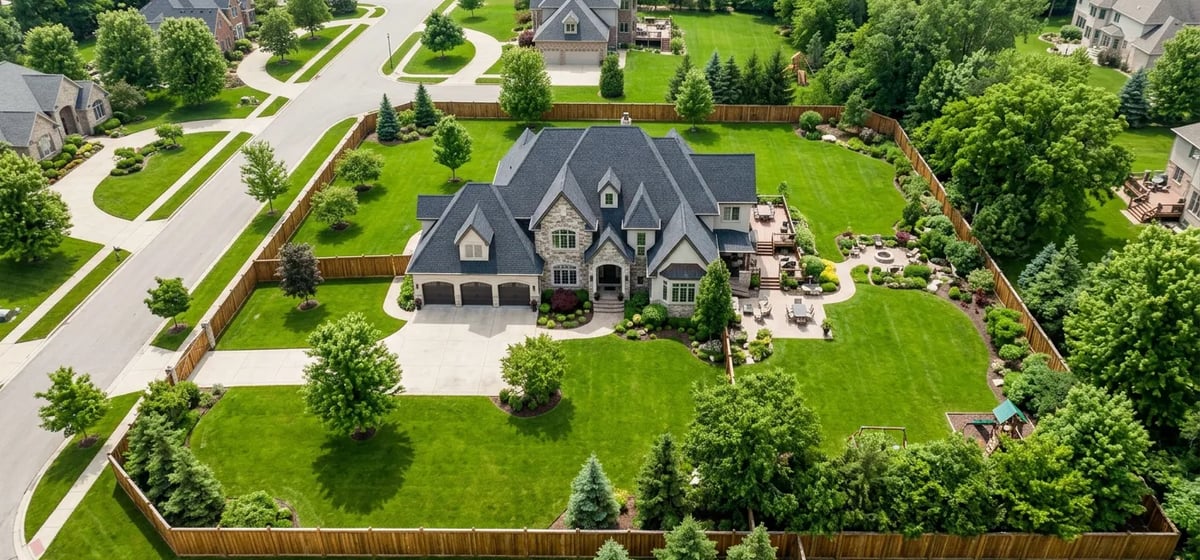
An acre is the standard way we measure land in the United States. One acre equals exactly 43,560 square feet. If you have trouble picturing that number, think about a standard American football field. One acre covers about three quarters of that field.
The word acre comes from the Old English word aecer. This word meant an open field. Hundreds of years ago, an acre described the exact amount of land a single team of oxen could plow in one day. Today, it tells you exactly how much earth you own.
Most suburban home lots are much smaller than a full acre. A typical new construction home sits on about one fifth of an acre. If you live in a rural area or an older neighborhood, you might have one or more full acres. The shape of your acre doesn't matter. It can be a long rectangle, a perfect square, or a strange pie shape. As long as the total area is 43,560 square feet, it's exactly one acre.
Why Your Acreage Matters
Knowing the exact size of your lot helps you make smart decisions about your property. Your local government uses your total acreage to calculate your property tax bill. A larger lot usually means higher taxes. You can learn more about how this works in our guide to Property Taxes & Home Finances.
Your acreage also dictates what you can build. Every city and county has zoning rules. These rules state how close you can build to your property line. If you want to add a detached garage, a large shed, or a swimming pool, you need to know your exact acreage. Your lot size also limits how many trees you can plant or how much hardscape you can install. When you plan a big outdoor project, check our Landscaping, Drainage & Outdoor guide to understand how your land handles water runoff.
Where to Find Your Lot Size
You don't need to go outside with a tape measure to find your acreage. You can find this number in a few official places.
- Your property deed lists the exact legal description and size of your lot.
- Your county tax assessor website shows your acreage on your public property record.
- A professional land survey shows the precise boundaries and total area of your property.
If you are Buying a Home, you'll see the acreage listed on the real estate listing. However, you should always verify this number with the official county records or a recent survey. Real estate listings sometimes round up the number to make the property look better.
Costs Tied to Your Acres
Owning more land means spending more money on upkeep. You'll pay more for fencing, landscaping, and general maintenance. It helps to know some basic ballpark costs, though prices ranges vary based on where you live.
If you want to put a basic chain link fence around one full acre, expect to pay 3,000 to 5,000 dollars. A wooden privacy fence around that same acre will cost much more. You might spend 10,000 to 15,000 dollars for wood.
Lawn care also scales with your acreage. Hiring a professional service to mow one full acre usually costs 50 to 100 dollars per visit. If you buy your own riding lawn mower to handle a lot this size, you'll spend 1,500 to 3,000 dollars upfront.