What is an ampere?
An ampere is the unit we use to measure the volume of electrical current flowing through a wire. Most people just call it an amp. Think of the wires in your house like water pipes. Voltage is the water pressure pushing the water. The amps measure how much water actually flows through the pipe. When you turn on more devices, more electricity flows, and the number of amps goes up. Your home needs enough capacity to handle all the electricity your family uses at the exact same time.
If you ever want to know how many amps an appliance uses, you can do some simple math. Most devices list their power in watts on a sticker on the back. You just divide the watts by the voltage. For example, a 1200 watt microwave plugged into a standard 120 volt outlet uses exactly 10 amps. This helps you figure out what you can safely plug in without causing a power outage in your kitchen.
Where you see amps in your home
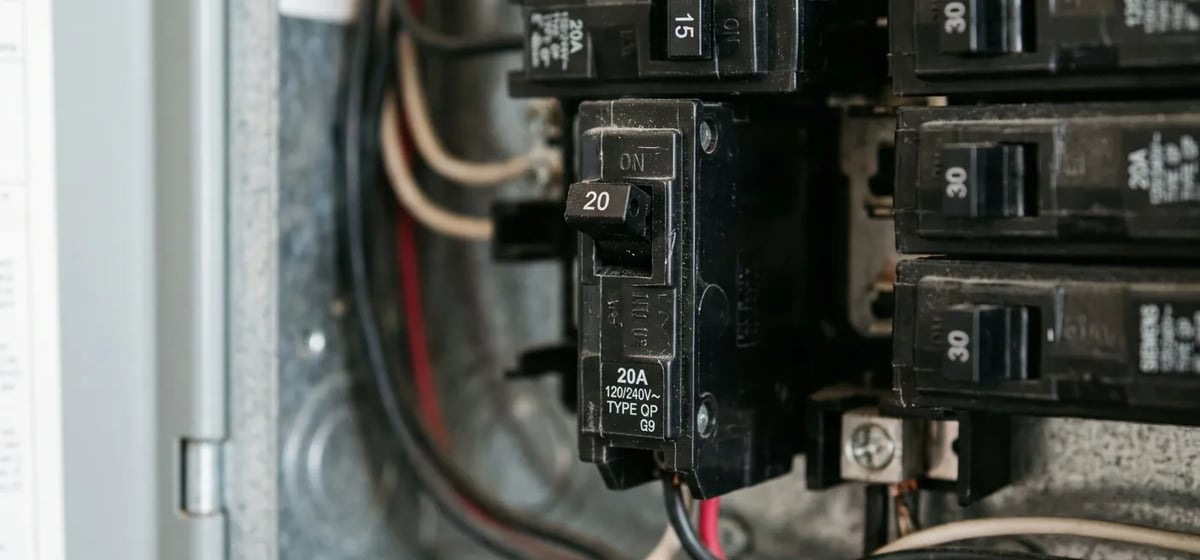
You'll mostly run into amps when you look at your main electrical panel. The big main breaker at the top tells you the total capacity for your whole house. Older homes might have a 60 amp or 100 amp main breaker. Most modern homes have a 200 amp service. Large luxury homes might even have 400 amps.
Below the main breaker, you'll see rows of smaller switches. These are your individual branch circuits. Every switch has a number printed on it.
- Standard lighting and bedroom outlets usually sit on 15 amp breakers.
- Kitchen and bathroom outlets typically use 20 amp breakers because hair dryers and toasters need more power.
- Large items like water heaters and electric dryers need dedicated 30 amp breakers.
- Big systems like your heating and cooling equipment might need 40 to 60 amps. You can learn more about these heavy users in our HVAC & Climate Control guide.
You can sometimes tell a 20 amp outlet just by looking at it on the wall. It has a small horizontal T-shaped slot on one of the vertical prongs. This lets you plug in heavy duty equipment that needs more juice.
Why amps matter to you
Amps matter because wires can only handle a certain amount of current before they get too hot. Your circuit breakers are safety devices. If you plug a heavy duty space heater and a vacuum cleaner into the same 15 amp bedroom circuit, the total draw might hit 20 amps. The breaker will trip and shut off the power to stop the wires from melting inside your walls.
You also need to care about amps when you buy new equipment. If you want to add an electric vehicle charger, a hot tub, or a new electric range, you must check your total panel capacity. A new electric car charger alone can pull 40 to 60 amps. If your house only has a 100 amp main panel, you'll likely need an upgrade before you can install the charger. You can read more about dealing with home power systems in our Electrical guide.
What it costs to upgrade your amps
If you live in an older house and want to add modern smart appliances, you might need a heavy up. This is what electricians call upgrading your main electrical panel to handle more amps. Upgrading from a 100 amp panel to a 200 amp panel usually involves replacing the metal box, adding new breakers, and having the utility company run a thicker wire from the street to your house.
Prices for panel upgrades depend on where you live and how hard it is to run the new wires. Real US ballpark costs usually fall between 1,500 and 3,500 dollars. Keep in mind that ranges vary widely based on local labor rates and permit fees. If your home has a very old wiring system, the electrician might find other problems that need fixing at the same time. Always get a few quotes before you start a big project. You can find tips on hiring the right pro in our Hiring Contractors & What Things Cost guide.