What is an anchor bolt?
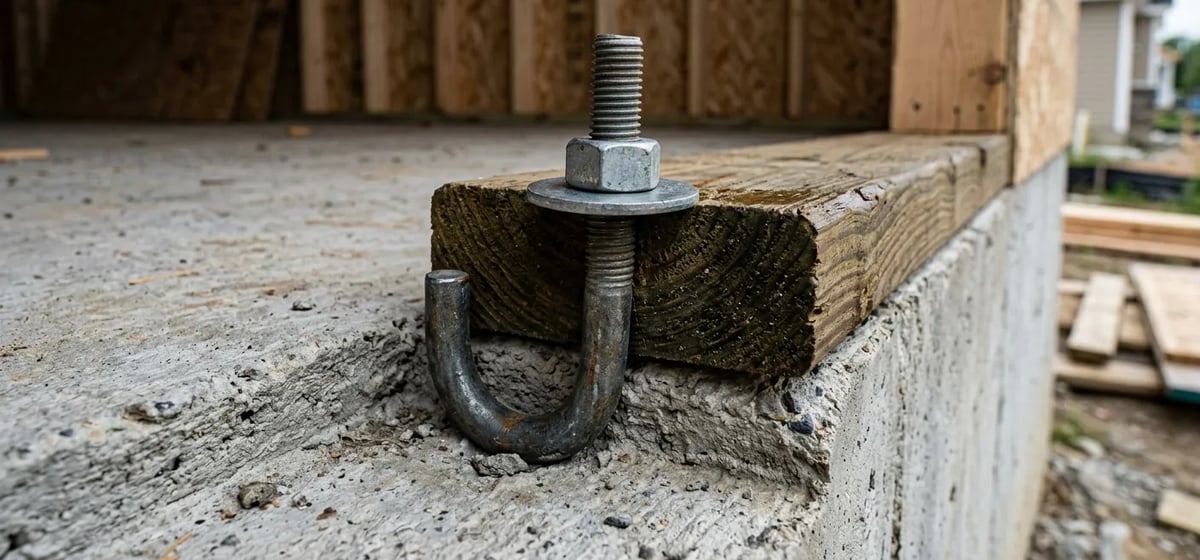
An anchor bolt is a heavy metal fastener set right into your concrete foundation. It holds the wooden base plates of your house firmly to the concrete. The term combines the word anchor, from the Greek word agkura meaning hook, and the word bolt. Builders adopted this name to describe fasteners that literally anchor a structure to the earth. Without them, your house is just resting its weight on top of the concrete.
When builders pour a new foundation, they push the bottom of the bolt down into the wet concrete. The top of the bolt stays above the surface. Once the concrete dries, the bolt is stuck there permanently. Builders then drill holes in the bottom piece of wood framing, slide the wood over the bolts, and tighten it down with nuts and washers.
Why they matter to you
These bolts keep your house from sliding or lifting off the foundation. This is incredibly important during high winds, hurricanes, or earthquakes. If the ground shakes or a massive storm hits, the wood frame of your house naturally wants to shift or fly up. The anchor bolts hold the entire frame down.
This protects your family and prevents catastrophic structural damage. If a house shifts off its foundation, the repairs can cost tens of thousands of dollars. Sometimes the house is completely ruined. You can read more about how your home stands strong in the Foundation & Structure guide.
Where you run into them
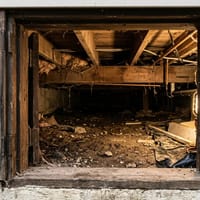
You will never see these bolts in your finished living areas. They live hidden at the very bottom of your walls. If you have an unfinished basement or a crawlspace, look closely at the top of the concrete wall. You will see a thick piece of wood sitting flat on the concrete. This wood is called the sill plate.
Sticking up through that wood every 4 to 6 feet is a threaded metal rod with a thick metal nut and washer on top. That rod is the top of the anchor bolt. You might also spot them in your garage where the exposed wood framing meets the concrete floor.
What to watch for
Over time, things can go wrong with your foundation connections. Moisture is the biggest enemy for these fasteners. If your basement gets wet frequently, the metal bolts can rust and lose their strength.
- Look for heavy rust flaking off the metal threads.
- Check for loose nuts or completely missing washers.
- Watch for cracked or crumbling concrete right around the bolt.
- Notice if the wood sill plate feels soft or looks rotten near the metal.
Costs to repair or retrofit
If you buy an older home, a home inspector might tell you to add anchor bolts. This process is called a foundation retrofit. A contractor drills into the existing dry concrete and installs new wedge bolts or special metal plates. This retrofit job usually costs 3,000 to 7,000 dollars for an average house.
Prices depend heavily on how easy it is to reach the foundation in your crawlspace. If you only need to replace a few heavily rusted bolts, a foundation pro might charge 150 to 400 dollars per bolt. Remember that exact ranges vary based on your city and the contractor you choose. It is always smart to get multiple quotes when Hiring Contractors & What Things Cost. Taking care of this project is a great way to protect your investment during Your First Year as a Homeowner.