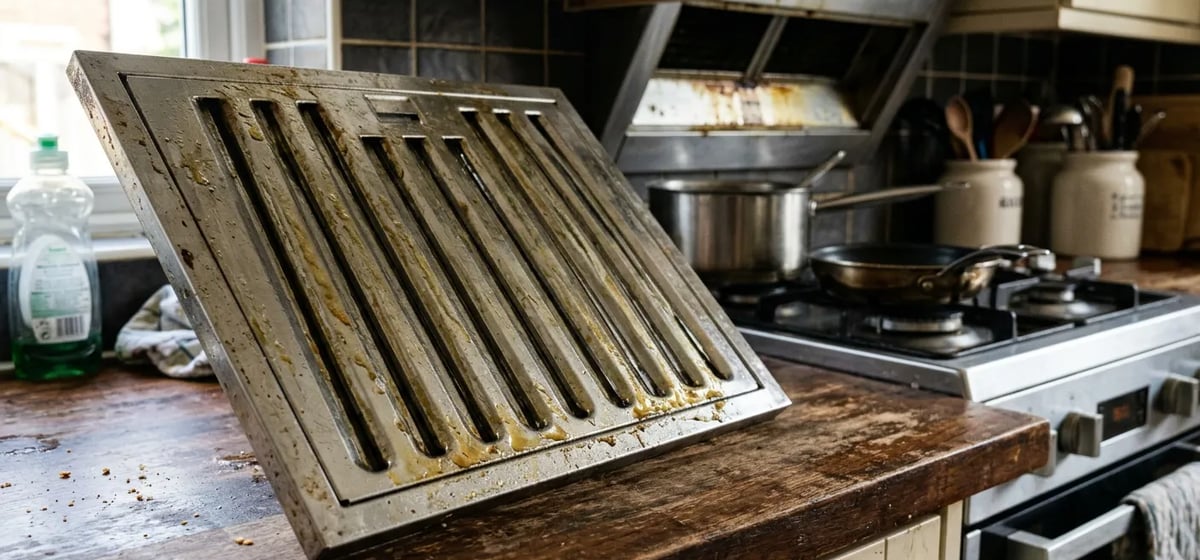
Look up at your kitchen range hood. If you see a metal grate with a series of interlocking, U-shaped grooves, you are looking at a baffle filter. The word baffle likely comes from the 16th century Scottish word bauchle. That word meant to disgrace or confound. Over time, engineers adopted the word baffle to describe a device that restricts or alters the flow of a fluid or gas. In your kitchen, this filter confounds the greasy air rising from your stove.
Baffle filters are standard on most high-end and commercial gas stoves. They are also becoming very common in modern residential kitchens. You will find them grouped under Appliances in most home guides. Unlike cheap aluminum mesh filters that look like a screen door, baffle filters are solid metal. They are usually made of stainless steel or aluminum. This solid construction makes them incredibly durable and easy to handle.
How Baffle Filters Work
When you fry bacon or sear a steak, grease travels upward in the hot air. Your range hood fan pulls this smoky, greasy air into the vent. The baffle filter stands in the way. Because of its specific U-shaped design, the air can't just travel straight up. The air is forced to change direction quickly multiple times as it passes through the filter.
Air is a gas, so it changes direction easily. Grease is a liquid and is much heavier. When the air makes a sharp turn inside the baffle, the heavy grease can't make the turn. The grease crashes into the solid metal wall of the filter. It sticks to the metal while the clean air continues up and out of your house. The trapped grease then slides down the metal grooves and collects in a small grease tray at the back or bottom of the hood.
Cleaning and Maintenance
A clean baffle filter keeps your kitchen smelling fresh. It also stops grease from building up inside your ductwork. A greasy duct is a major fire hazard. You can read more about preventing household disasters in our guide to Home Emergencies.
You need to clean your baffle filters regularly. For most homes, washing them once a month is perfect. If you fry food every day, you might need to wash them every two weeks. You can easily tell it is time for a wash if you notice a few common signs.
- Smoke fills the kitchen quickly when you cook.
- Grease drips from the bottom of the hood.
- The exhaust fan motor sounds much louder than usual.
If your filters are extremely greasy, you can soak them in your sink first. Fill the sink with hot water, a squirt of dish soap, and a half cup of baking soda. Let the filters sit for 30 to 45 minutes. After soaking, scrub them lightly with a soft brush and rinse them clean.
When to Replace and What It Costs
Baffle filters don't have an expiration date. Because they are made of solid metal, they can easily last the entire lifespan of your range hood. However, you will need to replace them if they get bent, dropped, or severely rusted. A bent filter won't sit flush in the hood. This leaves a gap where greasy air can sneak past and enter your vents.
If you notice lingering cooking smells long after dinner, a damaged filter might be the cause. You can learn more about tracking down bad scents in our Smells & Odors guide.
Replacing a baffle filter is very simple. You just order the correct size for your range hood model and slide the new one into place. Costs for replacement filters usually range from 40 to 150 dollars per panel. Custom sizes or high-end commercial brands can cost 200 to 300 dollars. Keep in mind that prices and ranges vary based on your specific hood brand and the metal used. Stainless steel costs more than aluminum but won't discolor in the dishwasher.