What Is a Battery Bank?
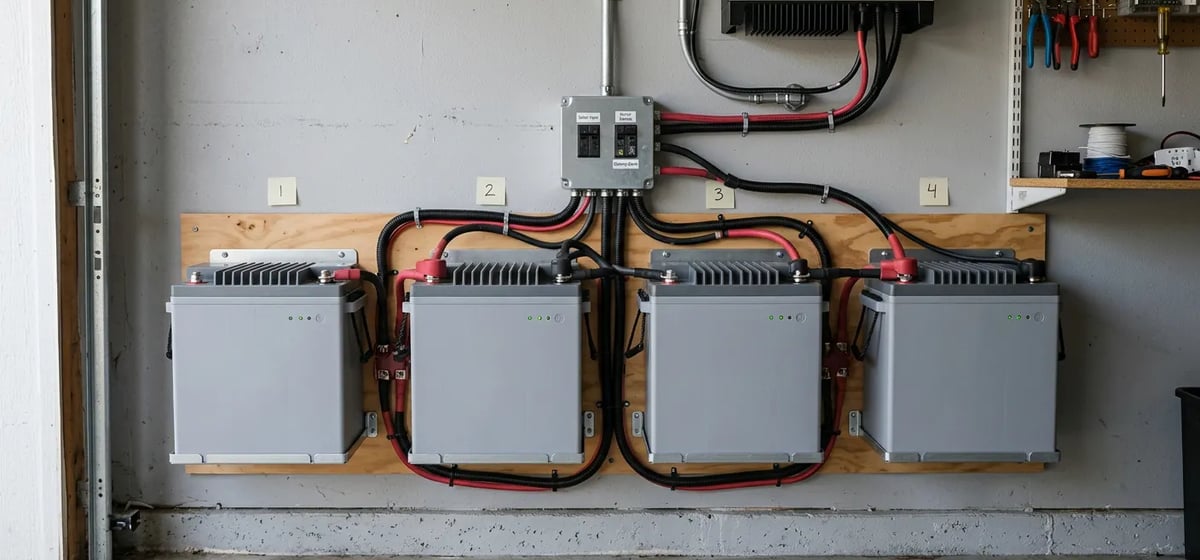
A battery bank is a group of individual batteries wired together to act as one large power source. They store electrical energy so you can use it later. Think of it like a giant rechargeable battery for your entire house. You'll usually see them tied to Solar Panels. During the day, the sun makes extra power. The battery bank holds that power for you. Then, you can turn on your lights and run your television at night without pulling juice from the main city grid. They also act as a backup when storms knock out your local power lines. The word bank originally meant a row or series of objects. Electricians started using it to describe multiple battery cells linked together in the late 1800s.
Why You Might Want One
Many homeowners buy a battery bank to keep their home running smoothly during bad weather. If you live in an area with frequent blackouts, this setup is a lifesaver. It keeps your refrigerator cold and your internet router turned on. You can avoid ruined food and stay connected during Home Emergencies. You don't have to deal with the noise and gas fumes of a traditional portable generator.
Another big reason to install a battery bank is saving money on your monthly utility bill. Many power companies charge you more for electricity during busy evening hours. This is called peak pricing. If you have a battery bank, you can run your house on your stored power during those expensive times. Over the years, this daily routine can lower your monthly expenses. Some utility companies will even pay you to send your extra stored power back to the grid during heat waves.
How Much Does It Cost?
Adding a battery bank to your home is a major financial investment. Prices depend heavily on how much power you want to store and the type of batteries you choose to install. Most modern home systems use lithium ion batteries. They last a long time, charge quickly, and take up less space than older lead acid types.
A standard home battery bank costs between 10,000 to 20,000 dollars. This price includes the battery units, the necessary wiring, and professional installation. Your final cost might be much lower if you qualify for federal or state tax credits. Keep in mind that prices vary based on your location, the brand you pick, and the size of your home. You'll always need a licensed professional to connect it safely to your main Electrical panel.
What to Watch Out For
A battery bank needs a cool, dry place to live. Most solar installers mount them on a wall in a garage or basement. Extreme heat or freezing cold will shorten the life of the batteries. You should also make sure the spot is easy to reach for future maintenance.
Here are a few important things to keep in mind if you plan to get a battery bank:
- Check the warranty. Most reputable home batteries come with a 10 year warranty that guarantees a certain level of performance.
- Watch the capacity. Just like a cell phone, your battery bank will slowly lose its ability to hold a 100 percent charge over many years.
- Know your power limits. A standard single battery bank won't run your central air conditioner or electric heater for very long. It's meant for essential items like lights, refrigerators, and standard wall plugs.
- Get the right permits. Your city or county will require a building permit and a safety inspection before you can turn the system on.