What is blocking?
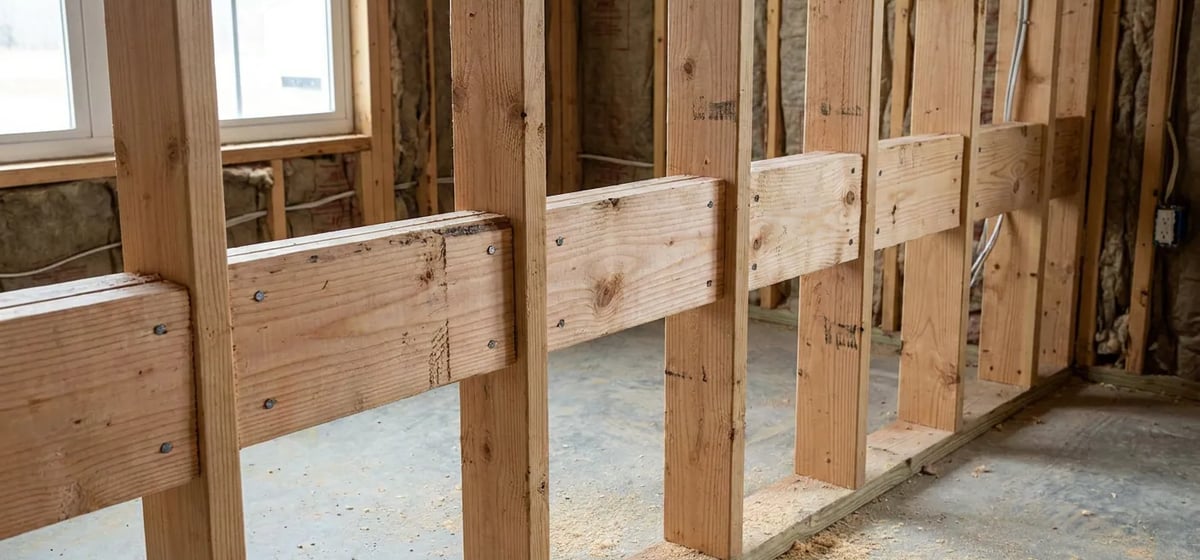
Blocking is a basic building method used inside your walls and floors. Builders take short pieces of lumber and fit them horizontally between your vertical wall studs or floor joists. They secure these blocks with nails or screws. This creates a solid web of wood hidden behind your drywall. You cannot see it when the house is finished. However, it plays a huge role in keeping your home strong. The word comes from the Old French word bloc, which means a large solid piece of wood. Carpenters have used this trick for hundreds of years to add rigidity to hollow wooden structures.
Why blocking matters to you
Blocking does three main jobs in your home. First, it adds strength to the frame. Long pieces of wood like tall wall studs can warp or twist over time. Solid blocks lock them in place so your walls stay straight. You can learn more about how your home frame works in our guide to Foundation & Structure.
Second, blocking stops fires from spreading quickly. Hollow walls act like chimneys when a fire breaks out. The flames shoot straight up the empty space. Fire blocking seals off those empty vertical gaps inside your walls. This cuts off the draft, limits the oxygen, and slows down the flames. This gives you more time to get out safely.
Third, blocking gives you a sturdy place to mount heavy items. Drywall is weak and crumbles easily. If you want to hang a heavy mirror or a new kitchen cabinet, you need solid wood behind the wall to hold the screws. Relying on plastic drywall anchors for very heavy objects is risky. The anchors can pull out and ruin your wall. Solid wood blocking solves this problem completely.
Where you will find it in your home
You will run into blocking in a few common areas around the house. It is a smart idea to think about blocking before you finish any major renovation.
- Bathrooms: Builders add blocking behind the shower walls. This gives you a safe spot to install heavy metal grab bars or thick glass shower doors. You never want a safety grab bar attached only to drywall.
- Kitchens: Upper cabinets hold a lot of weight from dishes and glasses. Contractors install a horizontal row of blocking so the cabinet screws have something solid to bite into.
- Living rooms: If you want to mount a large television on the wall, you need blocking. It lets you put the TV mount exactly where you want it in the center of the room. You do not have to worry if the vertical studs do not line up perfectly with your TV bracket.
- Floors and ceilings: Floor joists can bounce or squeak when you walk on them. Blocking between the joists stiffens the floor and stops the noise. You will often hear carpenters call this cross bracing.
Adding blocking during a project
If you are planning a remodel, always ask your contractor to add blocking before they put up the new drywall. This is your only chance to reinforce the walls easily. Think about where you might want curtain rods, towel bars, or floating shelves. A few extra pieces of scrap wood will save you a lot of headaches later. If you want to hang a heavy piece of art in the hallway, put blocking there. Read more about wall finishes in our guide to Interior: Paint, Drywall & Trim.
What it costs to add blocking
The cost to add blocking depends entirely on whether your walls are open or closed. If you are building a new house or remodeling a bare room, blocking is very cheap. The carpenter just uses leftover scrap wood from the framing process. You might pay 50 to 150 dollars for the extra labor to cut and nail the pieces.
Adding blocking to a finished wall is much more expensive. A contractor has to cut open the drywall, install the wood, patch the hole, sand it smooth, and repaint the wall. You can expect to pay 300 to 600 dollars for this job. Prices and ranges vary based on your location and the size of the repair. If you plan to hire someone, check out our guide on Hiring Contractors & What Things Cost to help you prepare for the project.