What Is An Air Handler?
The air handler is the indoor workhorse of your heating and cooling system. It does exactly what its name says. It handles the air. The HVAC industry started using this term in the 1950s. They needed a way to describe the unit that blows air through the house, separate from the parts that actually make the air hot or cold. Inside this large metal box, you will find a powerful blower fan, heating or cooling coils, and the track that holds your air filter. Its only job is to move air around your home efficiently.
How It Works With Your House
An air handler usually pairs with a heat pump or an outdoor air conditioner. The outdoor unit cools or heats a special fluid called refrigerant. That refrigerant travels inside through copper pipes to the air handler. The blower fan turns on and pulls stale air from your house through the return vents. It pushes that air over the cold or hot coils inside the metal cabinet. Finally, the fan forces the newly conditioned air into your ductwork so it can reach every room.
If you have a traditional gas furnace, the furnace itself usually acts as the air handler. The blower fan sits at the bottom of the furnace. But if you have a heat pump or a fully electric system, you have a standalone air handler. To learn more about how all these parts work together, check out our guide on HVAC & Climate Control.
Where You Will Find It
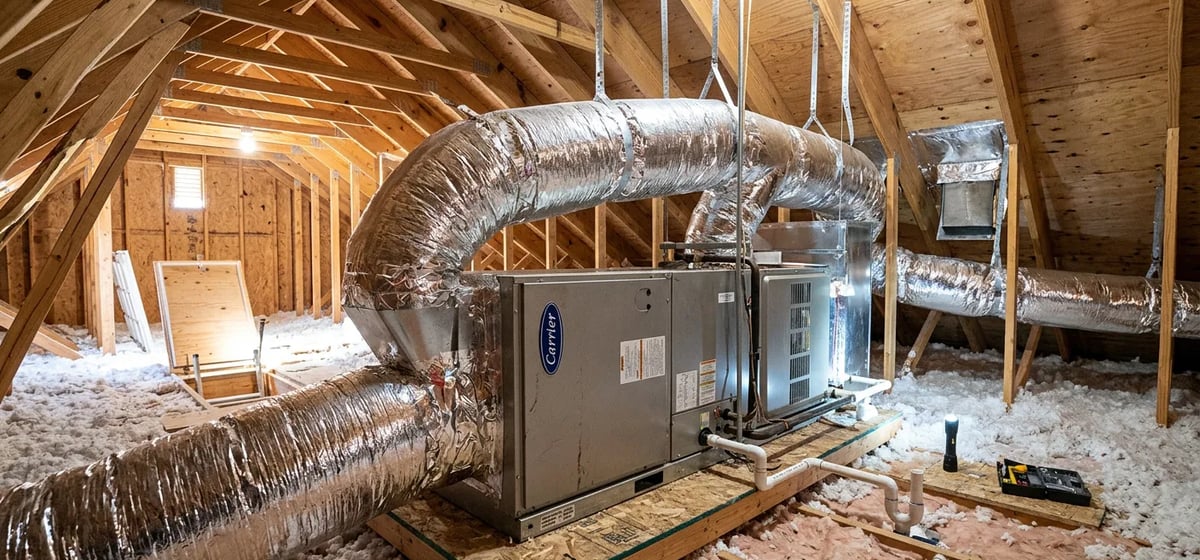
You will usually find your air handler hidden away. Builders put them out of sight because they are loud and bulky. Common spots include the attic, the basement, a crawlspace, or a dedicated utility closet in a hallway. Because it connects to your main ductwork, it needs a lot of physical space.
You will know the air handler by its size and shape. It looks like a tall, plain metal cabinet. It will have thick pipes running through the wall to the outside. You will also see large metal or flexible plastic ducts coming out of the top, bottom, or sides. If it sits in your attic, it will usually rest horizontally in a metal drain pan.
Signs Of Trouble
Air handlers do a lot of hard work, so parts wear out over time. You should pay attention to how your system sounds and smells. If you turn on the air conditioning and hear a loud squealing noise, the blower motor belt might be loose or dying. A rattling sound often means a loose part inside the metal cabinet. If the air coming out of your vents smells like dirty socks or mildew, you might have mold growing on the wet coils inside the unit. You can learn more about tracking down bad scents in our guide to Smells & Odors.
Maintenance And Costs
Your air handler needs regular attention to keep your home comfortable. The most important job you have is changing the air filter. A dirty filter makes the blower motor work far too hard to pull air through the dust. This strain can cause the motor to burn out entirely. You should check the filter every 30 days and replace it at least every 90 days.
- Blower motor replacement: If the fan motor fails, a repair usually costs 400 to 700 dollars.
- Evaporator coil replacement: If the indoor coils leak refrigerant, expect to pay 800 to 1,500 dollars.
- Full replacement: If you need a brand new air handler, expect to pay 1,500 to 3,500 dollars for the unit and the labor to install it.
Keep in mind that these prices vary based on your location, the brand you choose, and the size of your home. A larger house needs a stronger blower fan, which costs more money.