What It Is and How It Works
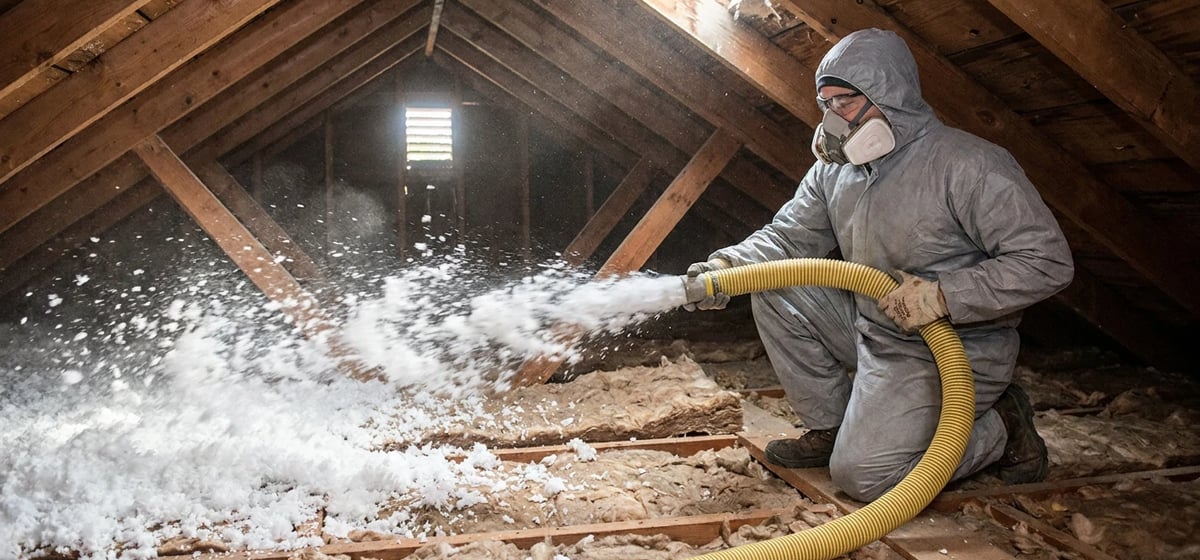
Blown-in insulation is exactly what it sounds like. It consists of loose, fluffy material that a machine blows through a long hose into your home. Installers usually spray it across your attic floor or into empty wall cavities. Instead of unrolling large sheets of fiberglass, the loose chunks settle like snow to create a thick thermal blanket. This method works great because the tiny pieces easily wrap around obstacles. Your attic is full of electrical wires, plumbing pipes, and light fixtures. Rolled insulation leaves small gaps around these items. Blown-in material fills every tiny crack and tight corner to stop air leaks.
Why It Matters for Your Home
Your attic is the main place where heat escapes your house in the winter. In the summer, a hot attic pushes heat down into your living rooms. A thick layer of blown-in insulation stops this heat transfer. It keeps your home comfortable and takes a huge load off your heating and cooling equipment. You can read more about keeping your home comfortable in our HVAC & Climate Control guide.
Adding more insulation is one of the fastest ways to lower your utility bills. If your house feels drafty or your energy bills spike in January, you might need more attic insulation. You measure insulation by its R-value. A higher R-value means better resistance to heat flow. Most building codes require an R-value between 30 and 60 in the attic. This usually means you need 10 to 20 inches of blown-in material. You'll normally pay 1.50 to 3.00 dollars per square foot for a professional installation. Prices vary based on your location, the material you choose, and how much old insulation needs to be removed.
Common Materials You Will See
When you hire a contractor, they'll usually offer two main types of loose-fill insulation. Both work well, but they have different features. Cellulose is ground-up recycled paper and cardboard treated with fire retardant. It blocks air very well and is eco-friendly. However, it can settle over time and lose some thickness. Fiberglass is tiny glass fibers spun together into small, fluffy chunks. It's very light and doesn't absorb water easily. It can irritate your skin and lungs if you touch it.
What to Watch For Over Time
Blown-in insulation is mostly maintenance-free. Once it's in your attic, you just leave it alone. However, a few common house problems can ruin it.
- Settling: Gravity pulls the loose chunks down over the years. Cellulose can shrink by up to 20 percent. If your insulation looks thin or flat, you might need a contractor to blow a fresh layer over the top.
- Water damage: A small roof leak will soak the fluffy material. Wet insulation stops blocking heat and can grow mold quickly. If you spot a leak, check our Roofing guide to fix the source before replacing the wet insulation.
- Critters: Mice, rats, and squirrels love to build warm nests in loose insulation. If you hear scratching noises above your ceiling, you might have visitors. You can learn more in our Pest Control guide.
Never step on blown-in insulation. It hides the wooden ceiling joists beneath it. If you step in the wrong spot, you'll fall right through the drywall ceiling into the room below. Stepping on it also crushes the material and ruins its ability to trap heat.
Should You Do It Yourself?
Many home improvement stores rent insulation blowing machines. You can buy bags of cellulose or fiberglass and do the job yourself. It takes two people to do the work. One person stays outside to feed the bags of material into the hopper. The second person crawls into the attic to aim the heavy hose. Doing it yourself saves money on labor. However, it's a dirty, itchy, and sweaty job. Attics get dangerously hot in the summer. You also have to be careful not to cover up your attic air vents. If you block the vents in your roof eaves, moisture will build up and rot your wood. For many homeowners, paying a professional is worth the extra cost just to avoid the mess.