What is a busbar?
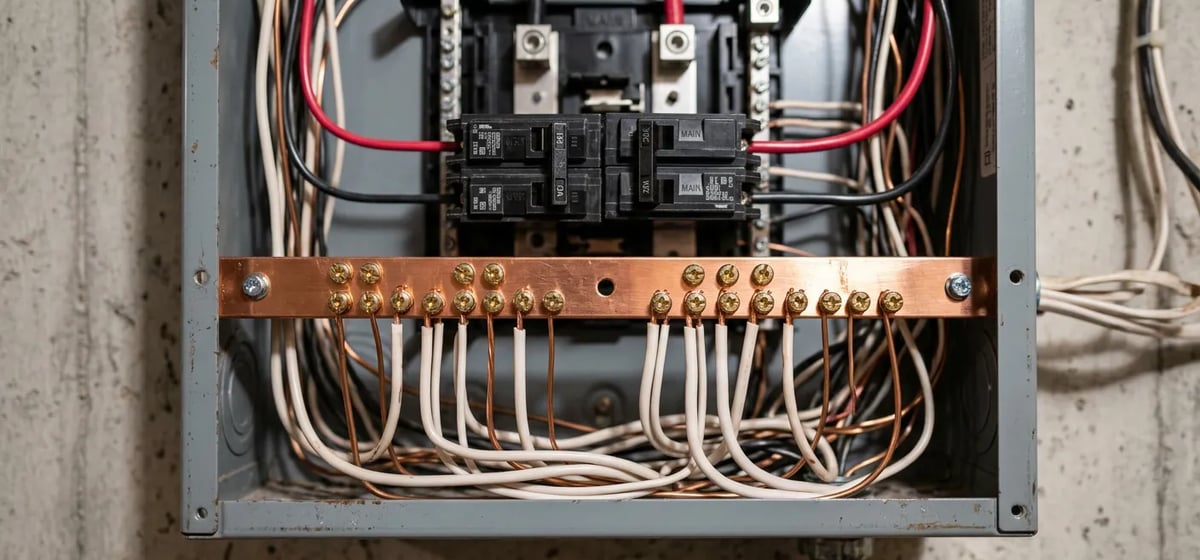
A busbar is the heavy metal spine inside your electrical panel. It's a thick, solid strip of metal made from either copper or aluminum. Power comes into your house from the utility company and hits this bar first. From there, the busbar shares that electricity with every single circuit breaker in the box. The word actually comes from omnibus bar. Omnibus is a Latin word meaning for all. It makes sense because this one piece of metal carries all the electrical current for your entire home in one central place. It handles massive amounts of power safely without melting.
Why it matters to your home
Your busbar is the main hub for your home power. When you plug in a toaster or turn on the air conditioning, the power flows through the busbar before it reaches the appliance. Because it handles so much electricity, it is built to be thick and heavy. A normal wire would easily melt under that much stress. Copper busbars are the most common and conduct electricity the best. Aluminum busbars are cheaper and lighter, but they can expand and contract more with heat.
The size of your busbar determines how much power your house can safely handle at one time. Older homes built decades ago might only have a busbar rated for 100 amps. Modern homes usually have a 200 amp busbar to support large modern appliances, central air, and electric car chargers. If you want to add a hot tub or finish your basement, an electrician will check your busbar first. They need to see if it can handle the extra load. You can learn more about your home power basics in our Electrical guide.
Where you will run into it
You'll likely never see your busbar unless you take the dead front cover off your breaker box. We strongly advise against doing this yourself. The busbar is always live. Even if you turn off the main breaker switch inside the panel, the busbar might still have power flowing from the meter outside. Touching a live busbar is deadly.
You'll hear about the busbar if you hire an electrician to upgrade your panel. You might also see it mentioned on a home inspection report when you buy a house. Inspectors look for signs that the busbar is damaged, burnt, or heavily corroded. Sometimes, water can leak into the panel from the outside meter box and rust the busbar.
Signs of trouble
A healthy busbar lasts for many decades. However, things can go wrong over time due to loose connections or moisture. Here are a few signs that your busbar might need professional attention:
- Flickering lights across multiple rooms in the house at the same time.
- A buzzing, humming, or crackling sound coming from the breaker panel.
- Circuit breakers that constantly trip or feel physically hot to the touch.
- A burning plastic smell or a fishy odor near your electrical box.
If you notice these serious warning signs, treat them as an emergency. Check our Home Emergencies guide for safety steps and call a professional right away.
Replacement and costs
You can't usually replace just the busbar if it goes bad. When a busbar burns out, melts, or corrodes, you have to replace the entire electrical panel. This is a major job that requires a licensed electrician and a permit from your local city or county.
A full panel replacement typically costs 1500 to 3000 dollars. Prices vary based on your location and the physical size of the panel. Upgrading from an old 100 amp service to a new 200 amp service will push the cost toward the higher end of that range. This is never a project you should try to tackle yourself to save money. Read our DIY vs. Hiring a Pro guide to understand why electrical panel work is strictly for licensed experts.