What is a Butterfly Roof?
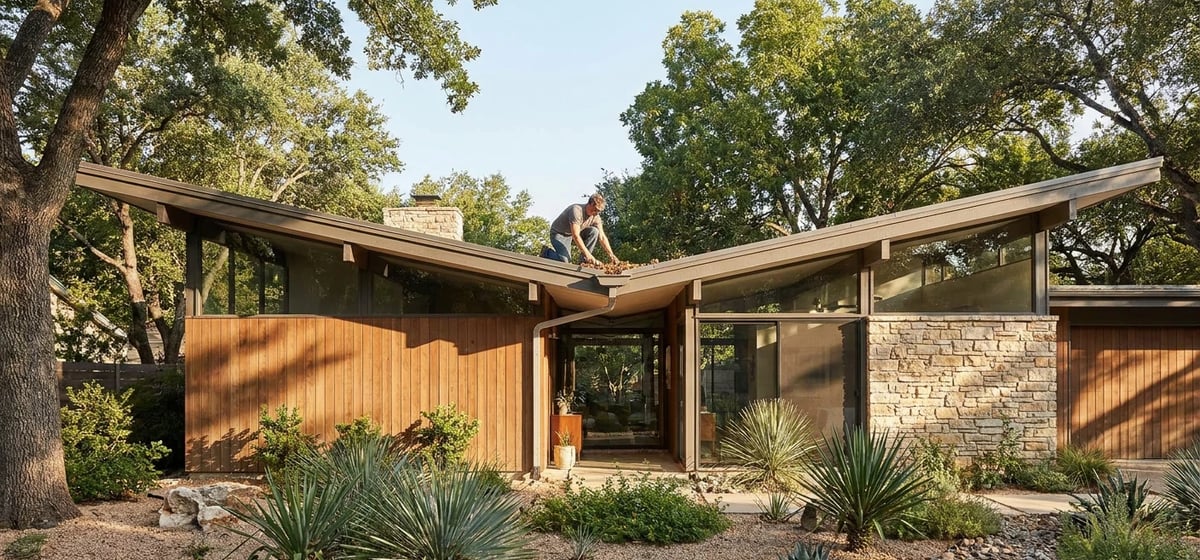
A butterfly roof flips the traditional house shape upside down. Instead of peaking in the middle like a triangle, the two sides of the roof slope downward and meet in the center. The outer edges point up toward the sky. This creates a V shape that looks exactly like a butterfly flapping its wings in flight. You will mostly see this style on midcentury modern homes built in the 1950s and 1960s.
The name comes strictly from its visual shape. Famous architect Le Corbusier first used the design in the 1930s. It eventually became incredibly popular in American architecture because it allowed builders to use taller walls on the outside edges of the house. Today, it remains a favorite choice for custom modern homes.
Why This Design Matters
Having a butterfly roof changes how your home functions on a daily basis. The upward angle of the roof edges allows for much taller outer walls. Builders usually fill these tall walls with large panes of glass to take advantage of the space. This brings massive amounts of natural light into your living space and makes small rooms feel huge. If you need to update these large panes to improve your energy bills, you can learn more in our guide to Windows & Doors.
This roof shape is also very environmentally friendly. The inward slope acts like a giant funnel. It directs all the rainwater into a single central channel. Many homeowners use this setup to collect rainwater in barrels for gardening and lawn care. The flat, angled panels are also perfect for catching sunlight throughout the day. This makes it an ideal shape if you want to install Solar Panels to power your home.
Maintenance and Risks
The unique shape of a butterfly roof brings a few special challenges. The biggest issue is the central valley where the two roof sections meet. This is the absolute lowest point of your roof. All rainwater, dead leaves, and falling branches flow directly into this middle channel.
You have to keep this central gutter completely clear all year long. When you inspect the roof, make sure you check these specific areas:
- Remove all dead leaves and pine needles from the central drain.
- Look for soft spots or cracks in the rubber membrane near the middle.
- Check the downspouts to make sure water flows out freely.
If leaves block the drain, water will pool in the middle of your roof. Standing water will eventually eat through your roofing materials and leak right into your living room. You should plan to hire a pro or get on a ladder to clean this valley at least twice a year.
This design is also not great for areas that get heavy snow. Snow slides down into the center valley and piles up fast. The heavy weight can damage the roof supports over time. As the snow melts during the day, the water can easily freeze again at night and create massive ice dams that tear apart your shingles.
What It Costs to Fix or Replace
Because a butterfly roof is more complex than a standard gable roof, repairs and total replacements cost more money. Roofers have to spend extra time waterproofing the central valley. They also need special materials like rubber membranes or standing seam metal to make sure water does not seep through the low slope.
If you need to replace the entire roof, you can expect to pay anywhere from $15,000 to $40,000. Keep in mind that ranges vary based on your location, the size of your home, and the specific materials you choose. If you just need a contractor to patch a small leak in the central valley, that repair typically costs $500 to $2,000.
Since water damage is the most common issue with this style, staying on top of regular maintenance is your absolute best defense. You can read more about standard maintenance schedules in our Roofing guide. Taking care of the central valley will help your roof last for decades without major problems.