What Is a Bypass Diode?
Think of a solar panel as a string of old holiday lights. If one bulb goes out, the whole string goes dark. Solar cells inside a panel work the exact same way. The electricity flows through them in a single line. If a shadow falls on just one cell, it acts like a clogged pipe. The power stops moving.
A bypass diode is a tiny electronic part that fixes this problem. It acts like a detour sign on a highway. When a cell gets covered by a leaf or a chimney shadow, the bypass diode kicks in. It gives the electricity a new path around the blocked area. The blocked section stops making power, but the rest of the panel keeps working perfectly. This small piece of hardware protects your home energy investment.
Why It Matters for Your Solar Setup
Every bit of sunshine counts when you power your home. You want your system to make as much electricity as possible. Without bypass diodes, a single bird dropping could shut down an entire panel. If your panels are wired in a series, that one blocked cell could even shut down your whole roof array. This would cause a huge drop in the power flowing into your electrical panel.
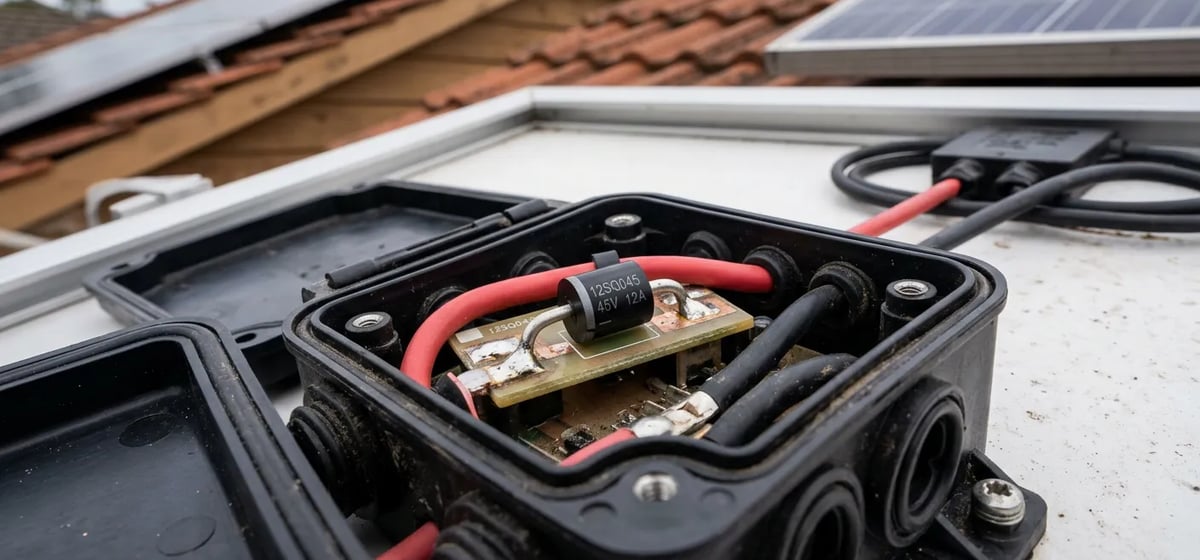
Modern solar panels usually have three bypass diodes built into a small box on the back. This splits the panel into three separate zones. If a shadow hits the bottom zone, the diode routes power around it. The top two zones keep generating full power. This smart design means you don't lose all your energy just because a cloud passes by or a tree branch sways in the wind.
How Shade Affects Your System
Shade is the biggest enemy of solar panels. Even a small shadow creates a bottleneck. The shaded cell tries to absorb power instead of making it. This creates a lot of heat. If the heat builds up too much, it can cause a hot spot that permanently damages the solar panel.
Bypass diodes prevent these hot spots. By routing the current around the shaded cell, the diode stops the heat from building up. This keeps your equipment safe from fire risks and extends the life of your entire system. Dirt, dust, and snow can also trigger these diodes to activate. It's a good idea to gently wash your panels if you live in a dusty area. When the whole panel is clean, the diodes get a chance to rest.
Keep an eye on your trees. The easiest way to protect your bypass diodes is to stop shade before it starts. Trim back any tree branches that cast shadows on your roof between 10 AM and 3 PM.
What to Watch For and When to Call a Pro
Bypass diodes sit inside the junction box on the back of your solar panel. You can't see them from the ground. You'll usually only know one is broken if you monitor your solar app. If you see a sudden, permanent drop in power from one specific panel, a diode might be stuck or burnt out. Lightning strikes or extreme power surges can easily destroy a bypass diode.
A broken diode can act in two ways. It can fail open, meaning it stops letting electricity detour around the shade. Or it can fail closed, meaning it constantly skips a section of your panel even in full sun. Both issues rob your home of valuable energy. You shouldn't try to fix this yourself. Climbing on a roof and messing with high voltage is incredibly dangerous. Instead, call a certified solar technician to test the panel.
- A professional diagnostic visit typically costs between 150 to 300 dollars.
- A brand new replacement panel costs roughly 250 to 500 dollars before labor.
- Prices always vary by region and contractor.
If the diode is broken, the technician might replace the small junction box on the back. In many cases, it's cheaper and safer to just replace the entire panel. Always check your warranty first, as many manufacturers cover these parts for 10 to 25 years. You can read more about finding the right pro in our guide on Hiring Contractors & What Things Cost.