What is a cable clamp?
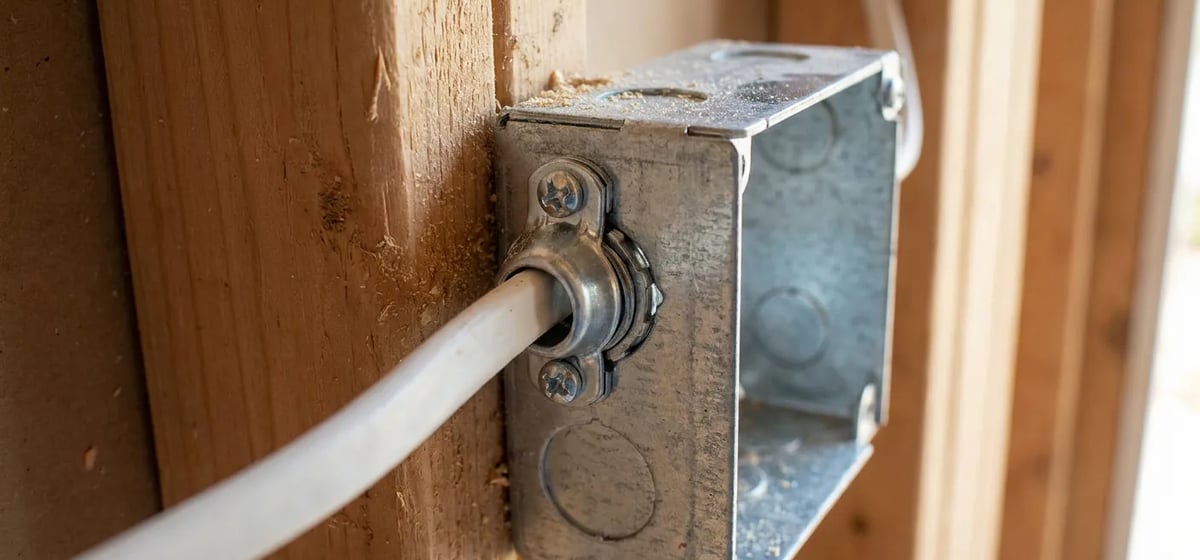
A cable clamp is a small metal or plastic fitting that holds electrical wires securely where they enter a junction box. The word clamp has roots in the Middle Dutch word klampe, meaning to fasten or grip. Electricians began using this term when safety codes first required wires to be mechanically secured to metal boxes. Today, these simple devices play a huge role in keeping your home safe from electrical fires.
When an electrician runs a wire through your walls, that wire eventually needs to connect to an outlet, a switch, or a light fixture. These connections happen inside a protective box. A cable clamp fits into the hole of that box. It tightens around the wire to hold it firmly in place. You'll see them made of shiny zinc-plated steel or durable plastic. Some screw together, while others snap into place.
Why it matters to you
Cable clamps do two very important jobs. First, they protect the wire jacket from sharp edges. Metal junction boxes have knockout holes that are punched out with a hammer. The edges of these holes are very sharp. If a wire rubs against that bare metal over time, the sharp edge can slice right through the insulation. This exposes the live copper wire and creates a major shock or fire hazard. The clamp acts as a smooth, safe barrier.
Second, they provide strain relief. If someone trips over a wire in the attic or pulls hard on a cable in the basement, the clamp takes the force. Without a clamp, that tug would transfer directly to the delicate connections inside the box. Wires could pull loose from their connectors. Loose wires cause sparks, and sparks cause fires. You can learn more about safe wiring practices in our Electrical guide.
Where you run into them
You'll spot cable clamps anywhere electrical wires are exposed and entering a box. They are common in unfinished spaces like basements, garages, and attics. If you look at the main electrical panel in your basement, you'll see a row of large cable clamps holding the thick wires that enter the top or sides of the metal cabinet.
You'll also find them behind ceiling light fixtures and outdoor floodlights. Keep in mind that not all boxes need separate clamps. Many modern plastic junction boxes have flexible plastic tabs molded right into the entry holes. When you push a wire through, the tab bends and grips the wire tightly. These built-in tabs do the exact same job as a traditional metal clamp.
What to watch for
If you're inspecting your home or planning a project, keep an eye out for a few common clamp issues. Look for these warning signs:
- Missing clamps where a wire goes through a bare metal hole.
- Loose clamps that wiggle or let the wire slide back and forth.
- Over-tightened clamps that pinch or crush the outer jacket of the wire.
- Multiple large wires crammed into a single small clamp.
If you spot crushed wires or missing clamps, you might need a pro to fix the issue safely. Deciding when to call an expert is an important part of homeownership, which you can read about in our DIY vs. Hiring a Pro guide.
What they cost
The clamps themselves are extremely cheap. If you're doing a small repair yourself, you can buy a bag of standard metal or plastic cable clamps at any hardware store for $5 to $15. However, if you find several missing clamps during a home inspection, you'll likely need to hire an electrician to fix them.
Electricians charge for their time and expertise, not just the cheap parts. A typical electrical service call to fix a few missing clamps will cost $150 to 300. These ranges vary depending on your local labor rates and how hard it is to reach the junction boxes. If the boxes are buried behind drywall, the repair will cost much more because the wall has to be opened and patched.