What is a caliper?
A caliper is a precise hand tool that measures the distance between two opposite sides of an object. It looks like a small metal ruler with two jaws attached to it. You slide the jaws open, place them around an object, and slide them closed until they touch the sides. This gives you an exact measurement. The word comes from the Arabic word qalib, which means a shoemaker's mold. Engineers adapted the term over centuries for tools that measure the exact shape and size of objects.
Today, you will find three main types in hardware stores:
- Vernier calipers: These have no moving dial or screen. You read the measurement directly from the engraved marks on the sliding metal scale.
- Dial calipers: These feature a round clock face with a needle that points to the exact measurement.
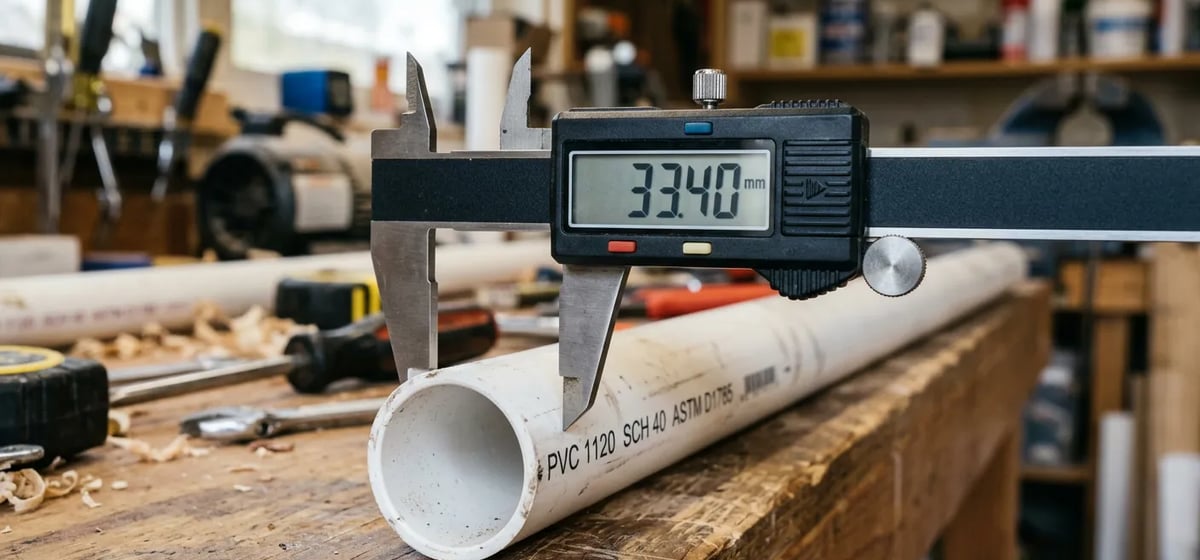
- Digital calipers: These have a small LCD screen that displays the exact number. Digital versions are the easiest to read and usually let you switch between inches and millimeters with the push of a button.
Why it matters to you
A standard tape measure works perfectly for framing a wall or hanging a picture. But a tape measure is not accurate enough for small, precise jobs. A caliper can measure things down to a thousandth of an inch. You need this level of detail when you work on Plumbing projects or fix household machines. If you buy a replacement part that is just a tiny fraction of an inch too wide, it will not fit.
A caliper removes the guesswork completely. It saves you from buying the wrong parts and making multiple frustrating trips to the hardware store. The tool actually measures in three different ways. The large bottom jaws measure the outside thickness of an object. The smaller top jaws point outward. You slip them inside a pipe or a drilled hole and open them to measure the inside diameter. Finally, a small metal rod slides out the bottom of the tool when you open it. You use this rod to measure the exact depth of a hole. This makes it a highly versatile measuring device for your toolbox.
Where you run into it
You will reach for a caliper during many common home repairs. If a water valve breaks under your sink, you need to know the exact outside diameter of the copper pipe to buy the right compression fitting. If you fix your own Appliances, you might need to measure the thickness of a worn out belt or the diameter of a motor shaft. You also use it to measure the exact thickness of sheet metal, glass panes, or wood veneer.
When you decide between DIY vs. Hiring a Pro, having the right measuring tools can make a DIY job much easier. A contractor will definitely use one if they need to match a custom piece of trim or replicate an old cabinet hinge. Plumbers also keep them handy to identify old, unmarked pipes in historic homes.
What to watch for when buying
You do not need to spend a fortune on a machinist grade tool for basic home repairs. Prices range from 15 to 400 dollars, though costs vary based on the brand and material. A basic digital caliper for home use usually costs around 20 to 35 dollars. Look for a tool made of hardened stainless steel rather than carbon fiber or cheap plastic. Plastic jaws bend easily when you press them against an object, and that gives you false readings.
Keep your caliper in a hard plastic or wooden case when you are not using it. If you drop it on a hard concrete garage floor, you can bend the sensitive metal jaws or crack the digital screen. You should also take the battery out if you only use the tool once or twice a year. The small coin batteries can leak acid over time and ruin the internal electronics. Wipe the metal jaws clean with a dry cloth before you put the tool away. Dirt and sawdust can build up on the sliding track and make the tool stick.