What is a cable tie?
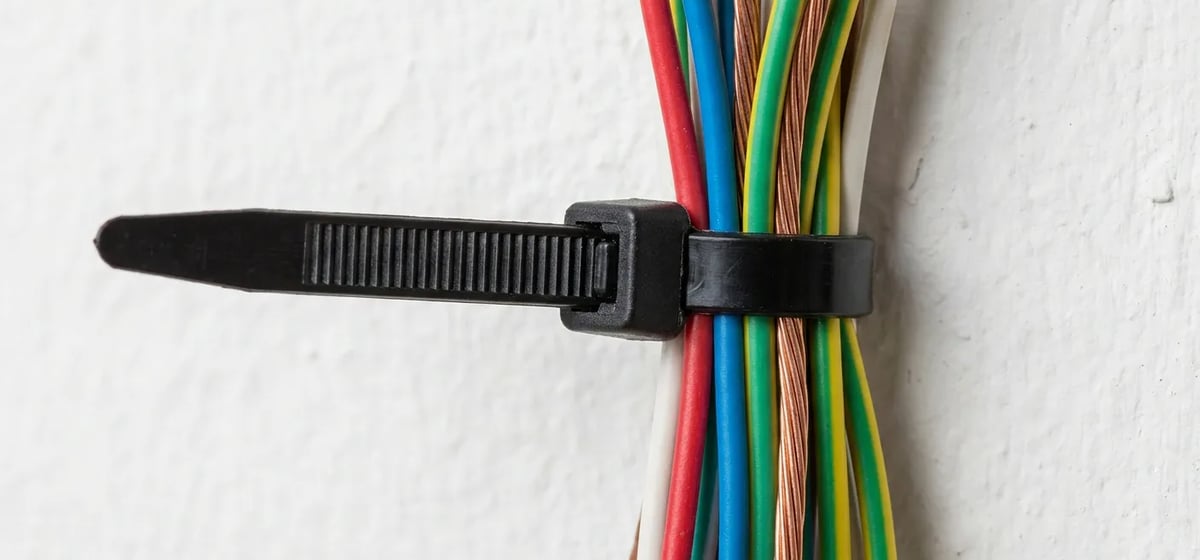
A cable tie is a small plastic strap that holds loose wires tightly together. You wrap it around a bundle of cables and pull the pointed end through the locking head. Tiny teeth on the strap catch inside the head. This makes a strong loop that won't pull apart. You can pull it tighter, but you can't loosen it without cutting the strap. The Thomas and Betts company invented this fastener in 1958 under the brand name Ty-Rap. They originally created it to organize thick wire harnesses inside commercial airplanes. Today, these cheap plastic strips keep your home neat and safe. You might also hear people call them zip ties, wire ties, or hose ties. They come in many colors, but black and white are the most common.
Why you need them in your home
Loose wires can cause big problems for a homeowner. A messy pile of cables behind your television gathers dust and makes it hard to clean. Tangled wires inside your walls or attic can get pinched or damaged. Pinched wires can spark and start a fire. Cable ties solve these problems quickly and cheaply. You can group loose cords together and secure them to a solid surface. This makes your Electrical system much safer. It also makes future repairs much easier. When a repair person visits, they can easily see which wire goes to which device. You can buy a pack of 100 standard ties at any hardware store for 3 to 10 dollars. Heavy duty packs might cost 15 to 25 dollars. Keep in mind that prices vary based on the length, thickness, and material of the ties. Having a pack in your toolbox is a smart move for any homeowner.
Where you will find them
You will spot cable ties all over your house once you know what they look like. Builders and repair crews use them constantly. They are incredibly common in utility spaces and around large equipment.
- Behind your television and computer desk to manage power cords and video cables.
- Inside the garage to bundle long extension cords, ropes, and garden hoses.
- Next to your outdoor HVAC & Climate Control unit to secure the thin thermostat wires to the thick refrigerant lines.
- Under the kitchen sink to hold dishwasher drain hoses in place and keep them out of the way.
- Behind large Appliances like your washing machine to keep power cords off the potentially wet floor.
- In the basement or crawlspace holding long runs of internet cable up against the floor joists.
What to watch out for
Cable ties are tough, but they don't last forever. Sunlight and extreme heat will eventually make standard plastic ties brittle. If you use them outdoors, you must buy special black nylon ties that resist ultraviolet light. Standard indoor ties will snap if you leave them in the sun for a year or two. You also need to be very careful when you cut them off. People often use scissors or a utility knife to remove old ties. It's incredibly easy to accidentally slice the soft wire insulation while cutting the hard plastic tie. You should use a pair of flush cutters or wire snips instead. Slip the tip of the cutters under the plastic head and snip it away from the wires.