What Is A Central Vacuum?
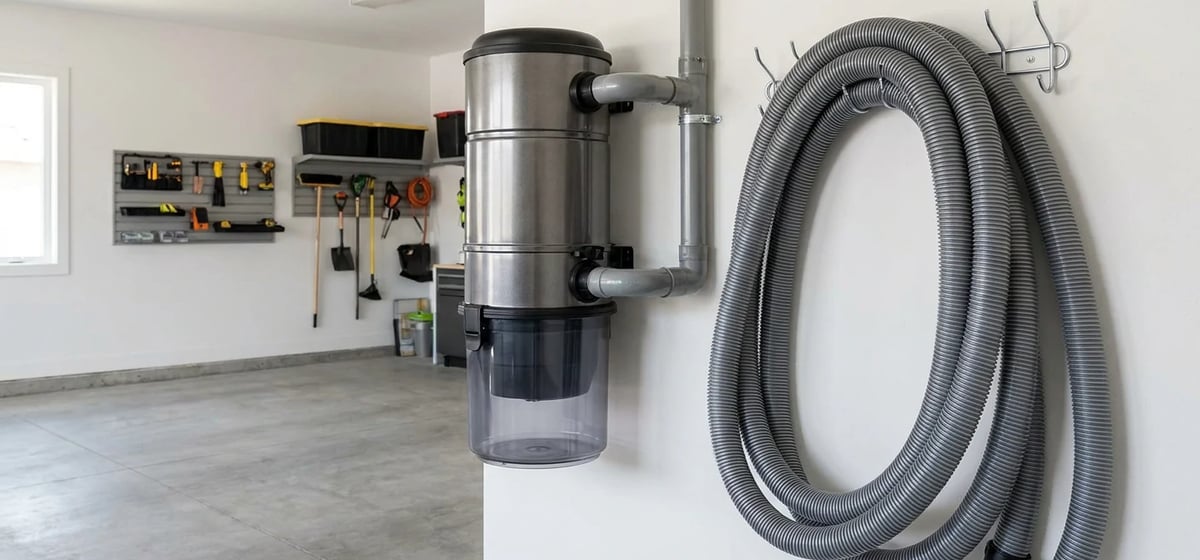
A central vacuum is a whole house cleaning system built right into your walls. You don't push a heavy machine around. Instead, you plug a long hose into special wall outlets to suck up dirt and dust from any room. The main motor and dirt canister usually live out of the way in your garage or basement. The concept dates back to the 1850s when early versions used hand pumped bellows. Modern motorized systems became popular in US homes during the 1930s. Today, they offer a highly powerful way to clean your hard floors and carpets.
Because the main unit is permanently installed, you never have to drag it up and down the stairs. You simply carry the lightweight hose from room to room. When you plug the hose into the wall, low voltage wires signal the main motor to turn on automatically.
Why They Are Popular
These systems pack a lot more power than a standard portable vacuum. The main motor is much larger, so it creates deeper suction. This means you pull more dirt out of thick carpets and tiny floor cracks.
They're also much quieter to use. Because the loud motor sits far away in the garage or basement, you only hear the sound of air rushing through the hose. You can easily hold a conversation or listen to music while you clean your house.
Better air quality is another big benefit. Regular vacuums often blow fine dust back into your living space through their exhaust vents. A central vacuum sends all the dirt and exhaust through hidden pipes straight to the main canister outside your living area. This keeps your indoor air much cleaner. If you suffer from allergies, this setup can make a huge difference. You can read more about keeping your indoor air fresh in our guide to HVAC & Climate Control.
The Main Parts
A central vacuum setup relies on three main components to work properly.
- Power Unit: This is the large metal tank mounted on a wall in a utility room, basement, or garage. It holds the heavy duty motor and the dirt collection bag or bin.
- Tubing System: Installers run special PVC pipes inside your walls, under your floors, or up in the attic. These pipes connect the main tank to the wall inlets throughout your home.
- Inlets and Hose: The wall inlets look like small plastic squares with a spring loaded door. You plug your 30 foot hose into an inlet to start cleaning. Some modern kitchens even have a floor level dustpan inlet. You just sweep crumbs to the baseboard with a broom, kick a switch with your foot, and the vacuum sucks them away.
Maintenance and Costs
Taking care of a central vacuum is fairly easy, but you must stay on top of routine tasks. You need to empty the main dirt canister or change the large filter bag two to three times a year. If you forget, the motor works too hard and the suction drops. You should also check the exhaust vent outside your house to make sure it isn't blocked by leaves or debris.
Clogs are the biggest headache you will face. If you suck up a large object like a sock or a toy, it can get stuck deep inside the wall pipes. You might need to call a professional to clear a bad clog using special plumbing snakes. Before you try to fix a major issue yourself, review our guide on DIY vs. Hiring a Pro.
If you want to install a new system in an existing house, expect to pay 1,500 to 3,000 dollars. Prices depend on how hard it is to fish pipes through your walls. Replacing just a broken main motor unit usually costs 500 to 1,000 dollars. Keep in mind that these ranges vary based on your location and the size of your home.