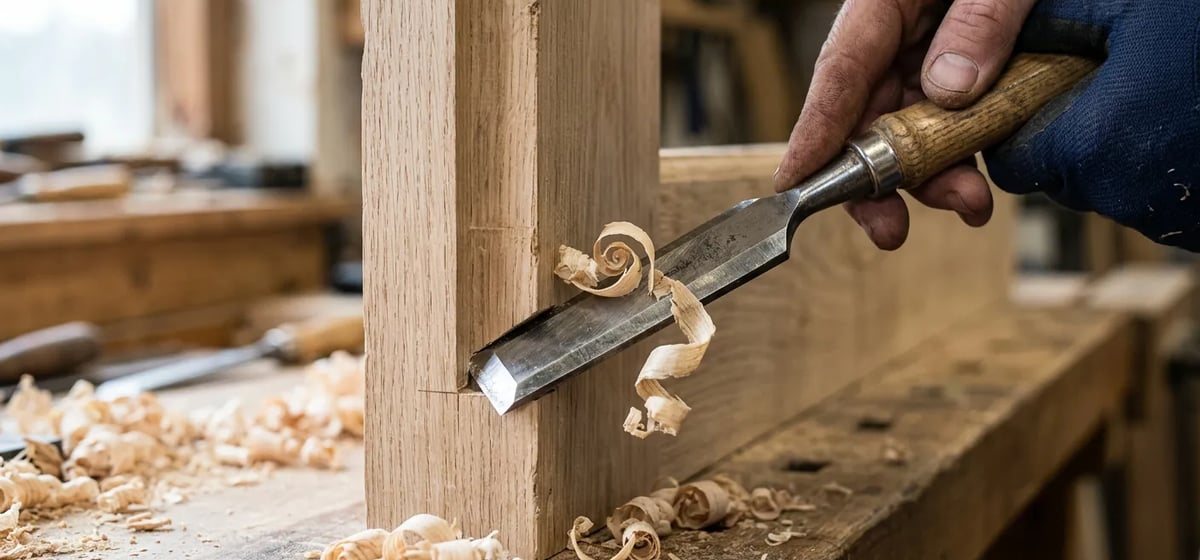
What is a chisel?
A chisel is a simple hand tool with a long metal blade and a sturdy handle. The very end of the blade has a sharp beveled edge. You use it to carve away small pieces of wood, chip off old mortar, or cut through stubborn materials. To use it properly, you place the sharp edge against your work surface. Then, you strike the back of the handle with a hammer or a mallet to drive the blade forward. The word itself comes from an Old French word meaning to cut. It is actually one of the oldest known hand tools in human history. Early humans made the very first versions out of sharpened stone and later out of bronze.
Why it belongs in your toolbox
You might think only professional carpenters need this specialized tool. However, it comes in handy for plenty of basic home repairs that pop up over the years. If you ever need to hang a new bedroom door, you will definitely need a wood chisel. You use it to carve out the shallow rectangular notches on the edge of the door so the metal hinges sit perfectly flat. You can learn more about taking care of these fixtures in our guide to Windows & Doors.
You also use this tool when you replace baseboards or fix broken wooden furniture. Sometimes you need to scrape away dried glue or shave off a tiny sliver of wood so two pieces fit tightly together. A chisel gives you exact, fine control that a handsaw or a power tool just can't provide. If you plan to tackle any custom trim work around your house, a good chisel is an absolute must. Check out our guide to Interior: Paint, Drywall & Trim for more details on those types of projects.
Common types of chisels
Not all chisels do the exact same job. You need to match the tool to the specific material you want to cut. Using the wrong one will quickly ruin the blade.
- Wood chisels: These have sharp, thin blades designed to slice cleanly through soft and hard woods. They usually have plastic or wooden handles. Always strike these with a wooden or rubber mallet to protect the handle.
- Cold chisels: These are made from a single piece of solid, heavy steel from top to bottom. You use them to cut through cold metal like rusty bolts or thick wire. You strike these with a regular metal hammer.
- Masonry chisels: These look very similar to cold chisels but have a much wider blade. You use them to score and break bricks, chip away old cement, or lift up broken ceramic floor tiles in a bathroom.
How much they cost
Adding a few of these tools to your workbench won't break the bank. You can buy a single wood chisel at any local hardware store for 10 to 15 dollars. If you want a basic starter set of three or four different sizes, expect to spend 20 to 45 dollars. Professional grade sets with high carbon steel blades cost 100 to 200 dollars. Masonry and cold chisels usually cost 15 to 30 dollars each. Keep in mind that prices range widely depending on the brand and your location.
If you take on a larger project and need to hire someone, professional carpenters and masons bring their own specialized tools. You can read up on what to expect in our guide to Hiring Contractors & What Things Cost.
What to watch out for
The most important rule of ownership is to keep the blade very sharp. A dull edge is actually quite dangerous. When the blade is dull, it tends to bounce off the wood instead of cutting into it. This makes you push much harder to get the job done. If the tool slips while you are pushing with all your body weight, you can easily cut your hand or ruin your expensive project. You can buy a simple sharpening stone for 15 to 25 dollars to keep the edge in perfect shape. Always point the sharp edge away from your body and keep your free hand behind the blade when you work.