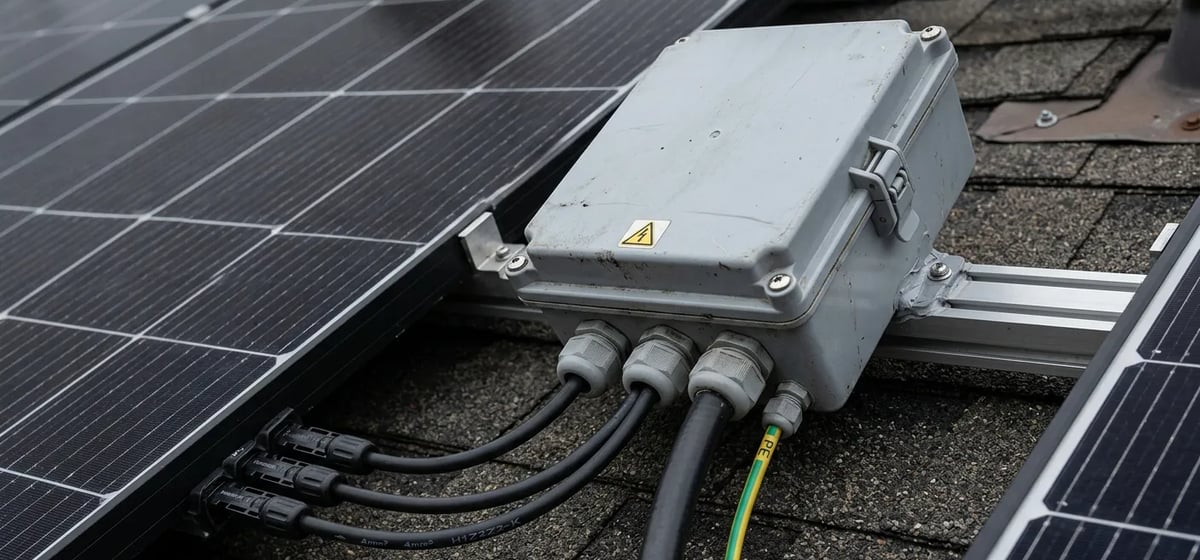
What is a Combiner Box?
If you have solar panels, you have a lot of wires. Each panel creates electricity and sends it down a cable. A combiner box is a small metal or plastic enclosure that takes all those separate cables and joins them together. It acts exactly like a funnel. It takes the electricity from several different solar cables and merges it into one main wire. This single thick wire then travels down to your inverter or main electrical panel.
The term comes from the early days of solar power engineering. It literally describes the box where electrical circuits combine their voltage and current before moving to the next step. Without this box, you would have a messy web of wires running all over your roof and down the side of your house.
Why It Matters for Your Home
A combiner box keeps your solar power system safe and organized. It holds important safety parts like fuses and breakers. If a power surge happens, the fuses inside the box will blow. This stops the surge from traveling down the line and ruining your expensive inverter or your main electrical panel.
It also makes repairs much faster. If one solar panel stops working, a technician can open this box and test each wire. They don't have to climb all over your roof to find the broken panel. If you're learning about Solar Panels, you'll quickly see why this simple box is so important.
Where to Find Your Combiner Box
You'll usually find this box in one of two places. It might sit right on your roof next to the solar panels. Or, it might be mounted on an exterior wall near your main electrical meter.
- On the roof: Installers often place it near the panels to keep the small wires as short as possible. This is very common on modern homes.
- On the wall: Sometimes the box sits at ground level. This makes it easier for technicians to reach without a ladder.
If your box is on the roof, you should leave it alone. Let a professional handle any problems up there. You can read more about staying safe up high in our guide to Roofing.
What is Inside the Box?
When a technician opens the box, they will see a few standard parts. Each part has a specific job to keep your home safe.
| Fuses | These protect the wires from carrying too much power. They burn out to stop a surge. |
| Busbars | These are thick metal strips. They collect the power from all the small wires and pass it to the big wire. |
| Disconnect Switch | This switch lets a worker turn off the power flowing from the roof. It's vital for safe repairs. |
These parts work together to manage the raw electricity your roof generates. They are small but mighty. If a fuse blows, a pro can swap it out in a few minutes. That simple fix gets your panels producing power again.
What to Watch For and Costs
Combiner boxes are tough, but they sit outside in the weather all day. Over time, the sun and rain can cause wear and tear. You should have a professional check the box during your annual solar inspection.
Watch out for a few common warning signs. If you see rust on the metal box, water might be getting inside. If the plastic housing looks cracked or faded from the sun, it might need replacing. You might also notice your solar app reporting lower power output. This can happen if a fuse inside the box blows.
If your box breaks, you'll need to pay for a replacement. A new combiner box usually costs between 150 to 400 dollars for the part itself. With labor, expect to pay a solar technician 300 to 600 dollars to install it. Keep in mind that prices vary based on where you live and the size of your solar setup. If you're looking to hire someone, check out our tips on Electrical work.