What is a roof cricket?
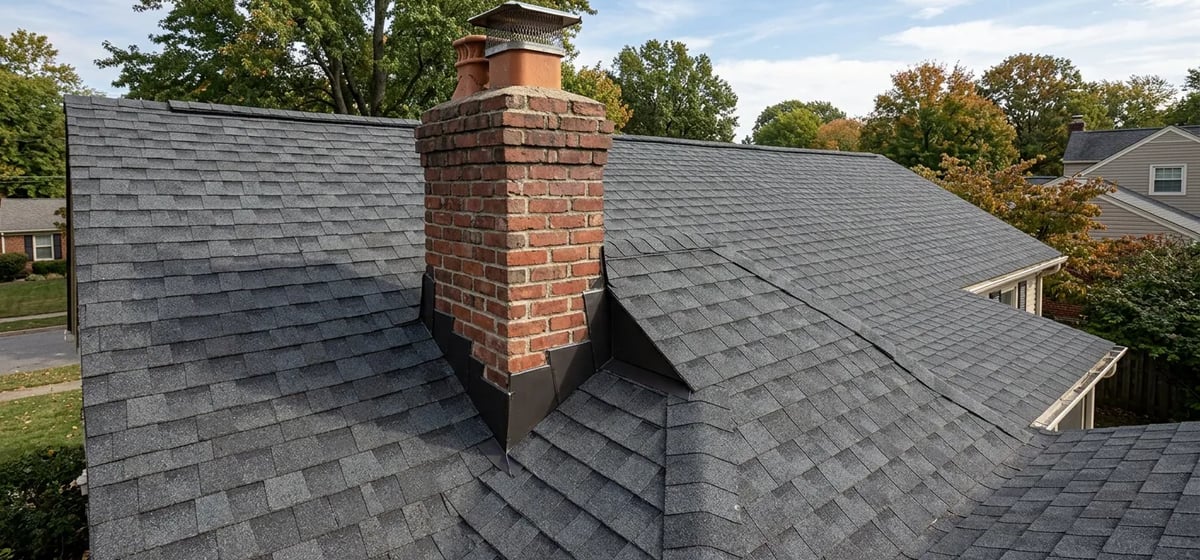
If you look closely at a chimney on a sloped roof, you might see a smaller, mini roof sitting right behind it. This small peaked structure is called a cricket. It has two angled sides that meet at a ridge. Roofers build this structure onto your main roof to connect the flat back side of your chimney to the upward slope of your house. Roofers frame the cricket out of wood, just like the rest of your roof structure. They cover it with plywood, waterproof underlayment, and metal flashing. Finally, they cover the top with the exact same shingles used on the rest of your house so it blends in perfectly.
Roofers likely named it after the insect because of its small, tented shape that sits on top of the main roof. The term first appeared in carpentry manuals in the late 1800s.
Why it matters to you
A cricket has one main job. It stops water and debris from pooling against the flat back side of your chimney brickwork. When it rains, water flows down your roof. If your chimney sits right in the path of that water, the flat back acts like a dam. The water stops moving and pools up. Leaves, pine needles, and twigs also pile up in this flat area.
Standing water is the enemy of any house. If water sits against your chimney, it will eventually find a way inside. It can seep through the bricks, rot the wood underneath, or sneak past the metal flashing. A cricket splits the water flow. It directs the water and debris around the sides of the chimney and down the rest of the roof slope. Keeping this area dry protects your ceiling from stains and prevents major water damage. You can learn more about how your roof sheds water in our guide to Roofing.
When you need one
Not every chimney needs a cricket. Building codes usually require one if your chimney is wider than 30 inches. If your chimney is narrow, standard metal flashing is usually enough to guide the water around it. You might also see crickets built behind large skylights or where two different roof slopes meet awkwardly.
If you buy an older home, you might discover it does not have a cricket where it should. Building rules were different decades ago. Many older homes just rely on a flat piece of metal flashing behind the chimney. If you have a wide chimney and no cricket, you are at a higher risk for leaks.
What to watch for
Even with a cricket, the area behind your chimney needs some attention. The valleys where the cricket meets the main roof can still catch leaves and sticks. If debris piles up too high, it traps moisture against the shingles. If you live in an area that gets a lot of snow, a cricket is even more important. Snow can pile up heavily behind a chimney. When that snow melts, it creates a massive puddle. A cricket helps split the snowpack and gives the melting ice a clear path to drain away.
Here are a few things to keep an eye on:
- Piles of leaves or pine needles sitting behind the chimney.
- Curling or missing shingles on the slopes of the cricket.
- Rusted or loose metal flashing where the cricket touches the brick.
- Water stains on your ceiling right below the chimney area.
What it costs to add or fix a cricket
If you are getting a new roof, your roofer might suggest adding a cricket to bring your house up to modern building codes. It is much cheaper to build one while the old shingles are already torn off. Adding a cricket during a full roof replacement usually costs 200 to 500 dollars.
If you need to add a cricket to an existing roof to stop a leak, the price goes up. The roofer has to remove the existing shingles around the chimney, build the wooden frame, install new flashing, and match the new shingles to your old ones. This retrofit project typically costs 600 to 1,500 dollars. Keep in mind that prices for Hiring Contractors & What Things Cost will vary based on your location and the steepness of your roof.