What is a cripple stud?
Have you ever looked at a house being built and noticed the short pieces of wood above the doors and below the windows? Those are called cripple studs. Carpenters have used the word cripple since the 1600s. It describes any structural piece that is cut shorter than its normal length. The word comes from an old English term meaning to bend or yield.
A normal wall stud runs all the way from the floor to the ceiling. But when you put a window or a door in a wall, you break that continuous line of support. The heavy weight of the roof and the floors above still needs to travel down to the ground. If that weight presses directly on a glass window or a hollow door frame, those items will crush or jam.
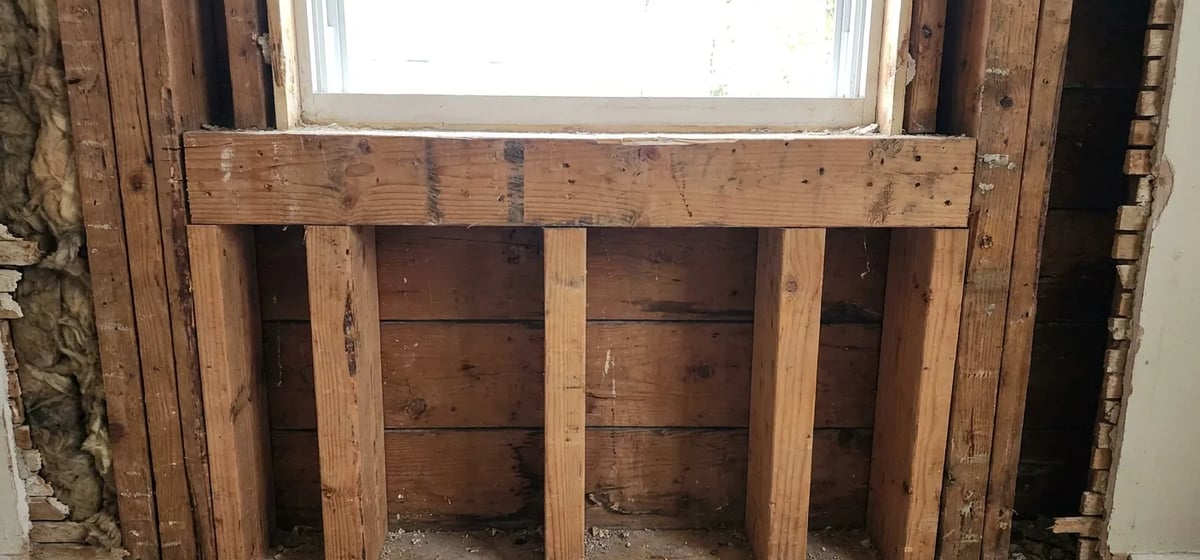
That is where the cripple stud steps in. Builders place a strong horizontal beam called a header across the top of the window or door opening. Then they place short vertical boards between the top of the wall and that header. If there is a window, they also put short boards between the bottom of the window sill and the floor. These short vertical boards are your cripple studs.
Why they matter to your home
These short boards do a massive amount of structural work. They bridge the gap in the wall and carry the heavy load down to the main frame of the house. Without them, your wall would eventually sag. The sagging weight would press down on the window glass until it shattered. It would also press down on the door frame until the door refused to open or close.
You can learn more about how your home supports its own weight in our guide to Foundation & Structure. The framing around your openings is a carefully designed system. Every piece has a specific job to keep the opening square and strong. Here is how the pieces fit together:
- King studs run all the way from the floor to the ceiling on the outside edges of the hole.
- Jack studs sit inside the king studs and hold up the heavy horizontal beam at the top.
- Cripple studs fill the empty spaces above the beam and below the window sill to keep the wall rigid.
Where you run into them
You will mostly interact with these short wall supports when you want to hang things. When you install heavy curtains, blinds, or a television over a window, you need to drive your screws into solid wood. Since these short studs are usually spaced exactly 16 inches apart, just like the regular studs, they give you a predictable grid of solid wood above and below your openings.
You will also hear about them if you ever decide to remodel. If you want to make a window taller or wider, your contractor will have to remove and rebuild this section of the wall. You can read more about planning these types of upgrades in our guide to Windows & Doors.
What to watch out for
The biggest threat to these short pieces of wood is water damage. Windows are prime spots for water to sneak inside your walls. If water gets behind the exterior siding, it drips down onto the window sill and rots the short studs directly below it.
If you catch a window leak early, fixing the drywall and the window seal might only cost 150 to 400 dollars. But if the short studs under the window rot completely away, you have a major structural problem. Hiring a pro to open the wall, brace the ceiling, and replace rotten framing can cost 800 to 2500 dollars or more. These ranges vary widely depending on where you live and how much water damage there is inside the wall.
If you plan to cut a new hole in a wall to add a window, you must install these short pieces correctly. Never just cut a hole and stick a window in. If you are unsure about cutting into your walls, check out our guide on DIY vs. Hiring a Pro to see if you need to call a professional carpenter.