What Is a Curb Stop?
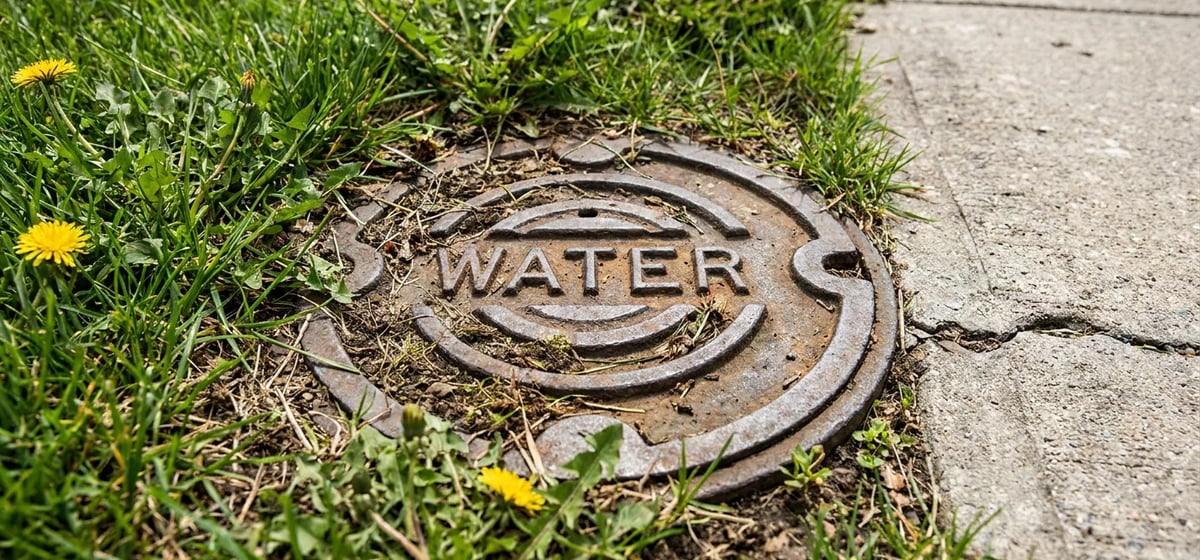
A curb stop is a primary water shutoff valve located underground near your property line. Utility workers use this connection to turn the water supply to your house on or off. You usually only see a small round iron cover flush with the grass or sidewalk.
The name comes from its common location near the street curb and its function to stop water flow. Plumbers and city workers adopted the term in the late 19th century as municipal water systems expanded across the country.
This valve connects the city water main to your private water line. It acts as the official dividing line between public property and your home Plumbing system. The valve itself sits several feet underground to protect it from freezing temperatures.
How to Find Your Curb Stop
You can usually find the curb stop between the street and your front sidewalk. Look for a heavy iron lid about the size of a baseball. It often has the word water stamped right on top.
Sometimes the cover sits perfectly flush with your lawn. Over the years, grass and dirt can easily grow over the metal lid. You might have to poke around with a screwdriver to find it if it gets buried.
If you cannot locate it near the street, check near your driveway apron. The location depends on how the city laid out the water mains in your neighborhood. You can always call your local water utility and ask them to mark it for you.
Why Your Curb Stop Matters
Most of the time, you will never need to think about this valve. You already have a main water shutoff valve inside your house or garage. You use that indoor valve for everyday plumbing repairs.
However, the curb stop becomes vital during Home Emergencies if your indoor valve breaks. If a pipe bursts and your indoor shutoff fails, a plumber will rush outside to turn off the water at the curb stop.
The utility company also uses this valve on a regular basis. They will shut it off if a homeowner does not pay their water bill. They also close it when they need to repair the main pipes out in the street without flooding your yard.
Who Pays for Repairs?
Rules vary by city, but the curb stop usually marks the exact edge of your responsibility. The local water utility owns the curb stop valve itself. They also own the large pipe running from the valve out to the street.
You own the water line that runs from the curb stop into your house. If that private line springs a leak, you have to pay to dig up the yard and fix it. The city will not help cover the cost of a broken pipe on your side of the valve.
Replacing a private water main is expensive. You can expect to pay $1,500 to $3,000 for a typical replacement, though ranges vary based on the length of the pipe. You can check What Home Repairs Cost to help budget for big plumbing jobs.
What to Watch For
You should keep the metal cover visible and clear of debris. Do not bury it under deep mulch or landscaping stones. A plumber needs to find it fast during a major leak to prevent water damage to your home.
Watch out for a cover that sinks into the ground or sticks up too high. A raised cover can easily damage your lawnmower blades. A sunken cover creates a nasty trip hazard in your front yard.
You should also look for unusual puddles around the metal lid. If the ground stays soggy when it has not rained, the valve or the pipe below might be leaking. You will need to call the city water department to investigate the damp area.