What is a damper?
A damper is a small metal plate installed inside your heating and cooling ducts. You can think of it as a valve or a traffic cop for your air flow. When your furnace or air conditioner blows air, the damper controls how much of that air goes down a specific pipe. You can open the plate all the way, close it completely, or leave it somewhere in the middle.
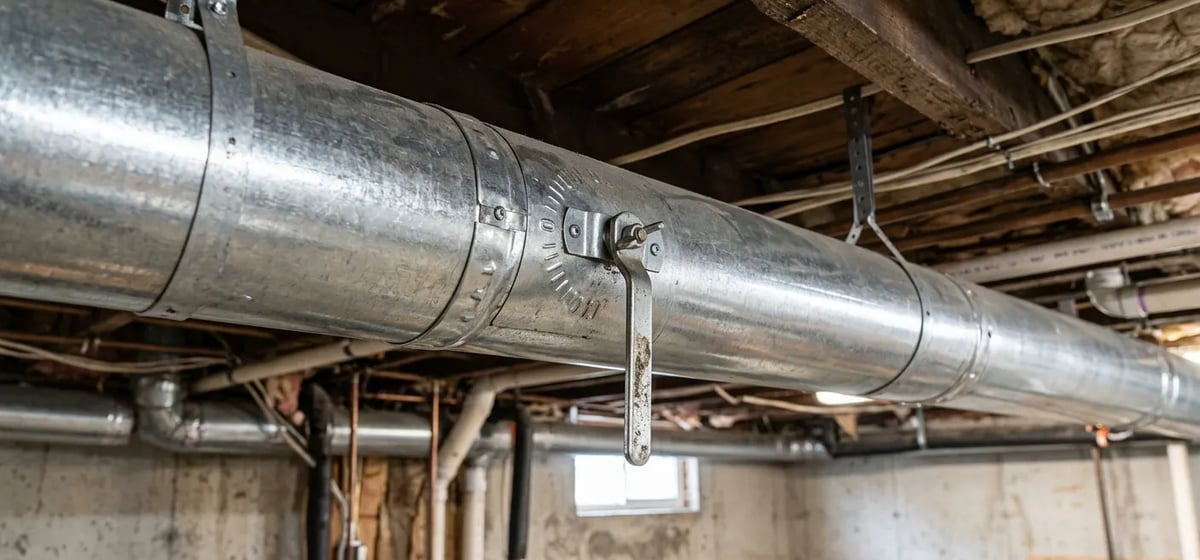
Most basic dampers are manual. They have a small metal lever on the outside of the duct. When the lever is parallel to the duct, the damper is open. When the lever is turned across the duct, the damper is closed. Some modern systems use motorized dampers. These open and close on their own based on what your thermostat tells them to do.
Why dampers matter to you
Dampers are the key to keeping your whole house comfortable. Hot air rises and cold air sinks. This means your upstairs rooms often get too hot in the summer and your downstairs rooms get too cold in the winter. Dampers let you fix this problem without buying a new system.
By adjusting these plates, you balance your system. In the summer, you can partially close the dampers feeding the first floor. This forces more cold air upstairs where you need it most. In the winter, you do the opposite. Balancing your system helps you avoid running your HVAC & Climate Control system all day just to cool one stubborn bedroom.
Where you run into them
You will usually find manual dampers close to your main furnace or air handler. Look at the large metal trunks branching off the main unit. You might see small metal handles, wingnuts, or levers sticking out of the round pipes. If your basement is finished, these handles might be hidden behind ceiling panels.
It is important to note that dampers are different from registers. Registers are the slatted vent covers on your floors or ceilings. While registers also have small levers to block air, closing them can cause pressure problems in your system. It is much better to control air flow using the dampers down in the main ductwork.
How to adjust your dampers
Adjusting your dampers is a simple trial and error process. Start by turning on your system fan so air is actively blowing. Go to the main ductwork and find the levers. Turn the lever slightly to restrict air to the rooms that get too much heating or cooling. Wait a full day to see how the temperature changes in the house.
You might have to tweak the levers a few times over a week to get it exactly right. Make small changes. Never close a damper completely unless a professional tells you to. Closing off too much air can build up pressure inside the ductwork. This makes your blower motor work too hard and can shorten the life of your equipment.
What to watch for and what it costs
Manual dampers are simple, but they can still cause headaches. Sometimes the wingnut comes loose and the plate flaps around inside the pipe. This can cause a rattling noise when the fan kicks on. Other times, the lever gets stuck because of rust or dust.
If you have a zoned heating and cooling system, your motorized dampers can fail. If a motor burns out, the plate might get stuck closed. This will completely cut off air to one part of your house.
- Manual damper replacement: The part itself is cheap. It usually costs between 10 and 30 dollars. If you hire a professional to cut the duct and install it, expect to pay 100 to 200 dollars per damper.
- Motorized damper replacement: These are more expensive. The parts cost 150 to 400 dollars. With labor, replacing a broken motorized damper usually costs 300 to 600 dollars.
Keep in mind that all price ranges vary based on your location and the specific contractor you hire. If you are trying to map out your home systems during Your First Week as a Homeowner, take a flashlight down to the basement and locate your damper levers. Knowing where they are will save you a lot of sweating or shivering later on.