What a Drain Pump Is
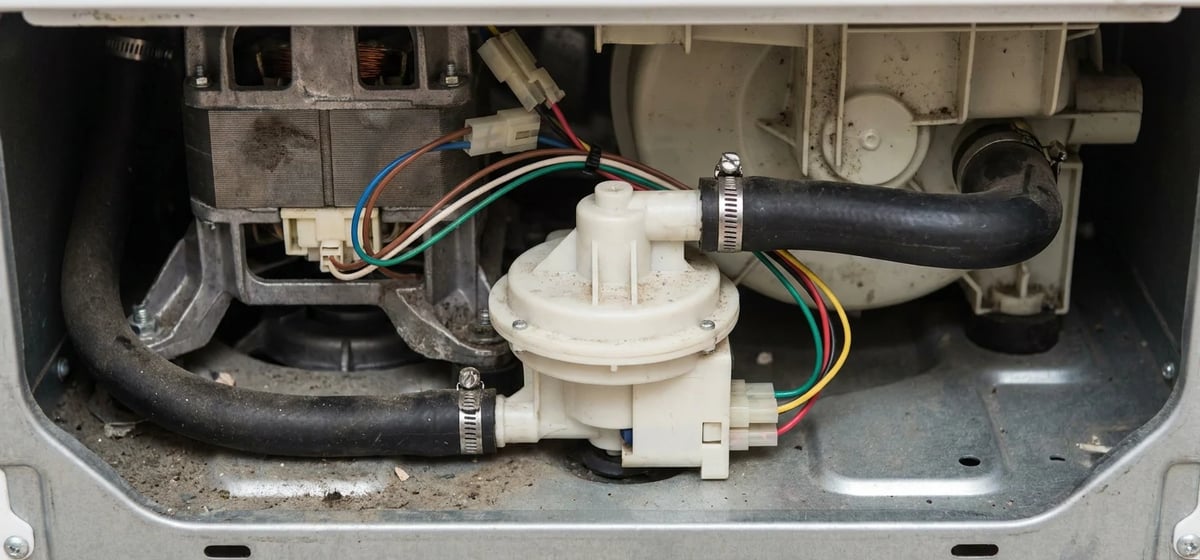
A drain pump is a small motorized device inside your washing machine or dishwasher. It has one main job. It pushes dirty water out of the appliance tub and into your home plumbing pipes. When your wash cycle finishes, the main control board turns on this pump. It clears the dirty, soapy water before the next clean rinse begins. Without a working drain pump, your machine would just fill up and overflow.
Most drain pumps use a small electric motor connected to a plastic fan called an impeller. As the motor spins, the impeller forces the water through a rubber hose. That hose connects to the drains in your walls or under your sink. The word drain originates from the Old English word dreahnian, meaning to strain or filter a liquid. Appliance makers added mechanical water pumps to early electric washing machines in the 1920s to save users from draining tubs by hand.
Where You Find the Drain Pump
You will usually find this pump near the very bottom of your appliance. Gravity naturally pulls the water down, so the pump sits at the lowest point to push the water up and out.
In a front-load washing machine, the drain pump often sits right behind a small access door near the floor on the front panel. Top-load washers usually hide the pump inside the main metal cabinet. You have to take the back or front panel off to reach it. Dishwasher drain pumps live right under the bottom spray arm and the main filter screen. They push water up through a hose that connects to your garbage disposal or sink pipes. If you are having issues with water backing up into your sink, you might actually have an issue with your home Plumbing rather than the appliance itself.
Signs Your Drain Pump Is Failing
Drain pumps work hard every time you do laundry or wash dishes. Over time, they catch things they should not. Coins, bobby pins, toothpicks, and pet hair can easily jam the plastic impellers. You will know you have a problem if you notice a few clear signs.
- Standing water is left in the bottom of the tub after a cycle finishes.
- You hear a loud humming, buzzing, or grinding noise during the drain cycle.
- The machine stops mid-cycle and flashes an error code on the display.
- Your clothes are still soaking wet at the end of a spin cycle.
- You smell a foul, swampy odor coming from standing water hidden under the drum.
Repair Costs and When to Replace
If the pump motor burns out or a piece of the plastic impeller snaps off, you will need to buy a new one. Sometimes a simple clog just needs to be cleaned out by hand. If you hire a professional appliance repair technician, replacing a drain pump usually costs 150 to 300 dollars. The exact price depends on your specific appliance brand and your local labor rates, so keep in mind that ranges vary.
The pump part itself is fairly cheap. It usually costs between 30 and 80 dollars. A DIY repair can save you money if you feel comfortable unplugging the machine and working with basic hand tools like pliers and screwdrivers. You can learn more about tackling these types of projects yourself in our guide to DIY vs. Hiring a Pro.
Since the pump connects directly to your main water pipes, a bad leak here can cause serious water damage to your floors. It is a good idea to check your Appliances regularly. Look for small puddles underneath them or water stains on the baseboards nearby. Catching a failing pump early can save you from a major flood in your laundry room or kitchen.