What Ghost Voltage Is
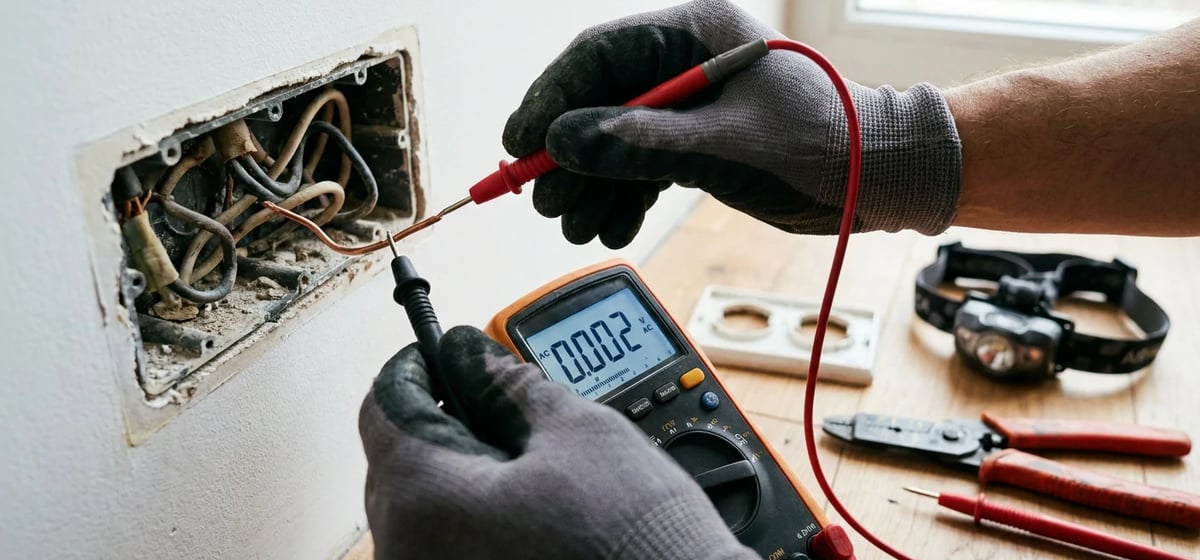
Ghost voltage is a false electrical reading that shows up on a digital multimeter. You turn off a circuit breaker to work on a light switch. You test the wire with your digital meter to be safe. The screen says there are 40 or 70 volts still in the wire. You might panic and think the power is still on. In reality, this is just ghost voltage. It happens when a dead wire runs right next to a live wire inside the same wall cavity or plastic conduit. The live wire creates a very small magnetic field. The dead wire absorbs a tiny bit of this stray energy. Electricians coined this slang term because the voltage seems to appear out of nowhere like a phantom. It became a common trade phrase in the 1980s when highly sensitive digital meters replaced older analog testing equipment.
Why It Matters To You
This false reading causes a lot of confusion and wastes your time. You might spend hours trying to figure out why a circuit won't turn off completely. You might even hire an electrician to fix a problem that doesn't actually exist. A standard service call just to have an electrician look at your panel costs 150 to 300 dollars. Rates vary depending on where you live. You want to avoid paying a professional just to learn your wiring is perfectly fine. More importantly, ghost voltage creates a major safety risk. It makes it hard to know if a wire is truly dead or actually live. If you get lazy and assume a reading is just a ghost charge, you might touch a live wire. This can give you a very dangerous shock. You must always take basic safety steps when dealing with your home Electrical system.
Where You Run Into It
You usually see this issue in places with long wire runs. You will most likely encounter ghost voltage in these specific areas:
- Three-way light switches where traveler wires run parallel for long distances.
- Thick cables where many different wires are bundled tightly together.
- Homes built with long stretches of plastic conduit instead of metal pipes.
If you are doing DIY vs. Hiring a Pro projects like changing a ceiling fan, you might encounter these false readings.
How To Test Safely
You need the right tools to know for sure if a wire is safe to touch. Standard digital multimeters are simply too sensitive for basic home wiring checks. They pick up every tiny bit of stray energy in the air. To get an accurate reading, you need a meter with a low-impedance setting. This special setting is often labeled as LoZ on the meter dial. A low-impedance meter puts a small load on the wire. This completely filters out the weak ghost voltage. It only shows a reading if the wire has real, dangerous power flowing through it. You can buy a good low-impedance multimeter at any local hardware store for 50 to 120 dollars.
Other Tools You Can Use
You can also use a simple non-contact voltage tester. This tool looks like a thick pen. You touch the tip of the pen to the plastic outside of the wire. It will beep or flash a red light if it senses active power. These pen testers are cheap and usually cost 15 to 30 dollars. However, highly sensitive pen testers can sometimes be fooled by ghost voltage if they touch a tight bundle of wires. To be completely safe, use a low-impedance meter for your final check.